To start a car with a dead battery, you’ll need either a functional vehicle with jump leads, a portable battery pack, or in manual cars, a push start. The process involves connecting the positive and negative terminals correctly, allowing the power source to charge briefly, then attempting ignition whilst maintaining the connection throughout.
Tools and parts required
Having the right equipment ready before attempting to start your car with a dead battery saves time and prevents potential damage to your vehicle’s electrical system.
Parts needed:
- Jump leads (minimum 16mm² cable thickness)
- Portable battery booster pack (alternative option)
- Working vehicle with 12V battery
- Battery terminal cleaner spray
Tools required:
- Wire brush or sandpaper
- Protective gloves
- Safety glasses
- Multimeter (optional)
- Spanner set for terminal cleaning
Always ensure your jump leads are rated for your engine size. Smaller cables can overheat and fail when starting larger engines, particularly diesels.
Safety precautions
Working with car batteries requires careful attention to safety protocols. Batteries contain corrosive acid and can produce explosive hydrogen gas during charging.
Always work in a well-ventilated area away from naked flames or sparks. Wear protective gloves and safety glasses to prevent acid burns. Ensure both vehicles are switched off with handbrakes engaged before connecting any cables.
Never allow the positive and negative jump lead terminals to touch each other, as this creates a dangerous short circuit. Keep metal tools away from the battery terminals whilst making connections.
Step-by-step instructions
Step 1: Position the vehicles
Park the working vehicle close enough to your car so the jump leads reach both batteries comfortably. Leave sufficient space between vehicles to open both bonnets fully. Engage both handbrakes and ensure all electrical accessories are switched off.
Remove any corrosion from battery terminals using a wire brush. Clean terminals ensure better electrical contact and reduce the risk of sparking during connection.
Step 2: Connect the positive terminals
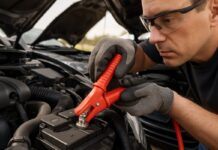
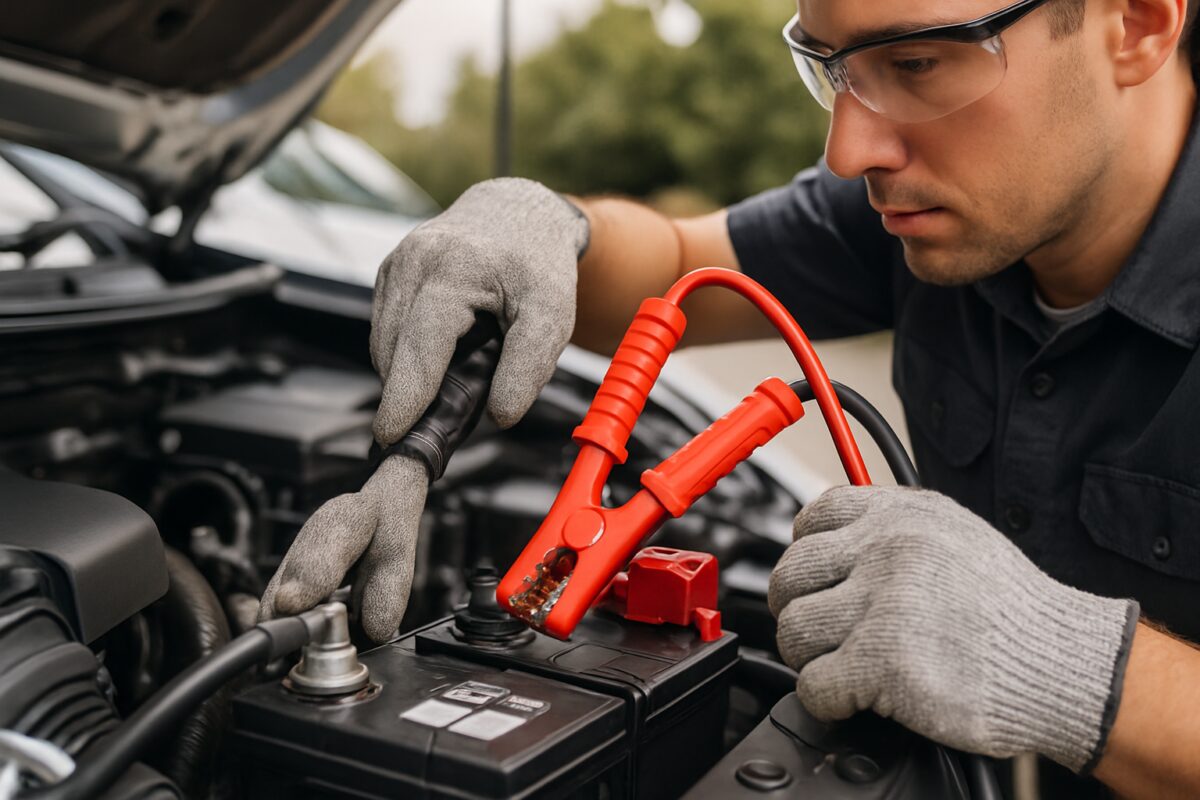
Attach the red jump lead to the positive terminal of the dead battery first. The positive terminal is marked with a ‘+’ symbol and is usually larger than the negative terminal.
Connect the other red lead end to the positive terminal of the working vehicle’s battery. Ensure the connection is tight and secure to prevent arcing during the starting process.
Step 3: Connect the negative terminals
Attach the black jump lead to the negative terminal of the working vehicle’s battery. For the final connection, attach the remaining black lead to an unpainted metal part of your car’s engine block, away from the battery and fuel system.
This earthing point reduces the risk of hydrogen ignition and provides a better electrical path for starting current.
Step 4: Start the donor vehicle
Start the working vehicle and let it run for 2-3 minutes. This allows the alternator to begin charging your dead battery and provides additional current for the starting attempt.
Rev the donor vehicle slightly to increase charging current, but avoid excessive revving which can damage sensitive electronic components in modern cars.
Step 5: Attempt to start your car
Turn the ignition key in your car whilst the donor vehicle continues running. If the engine doesn’t start immediately, wait 30 seconds before trying again to prevent starter motor overheating.
Once your engine starts, keep both vehicles running for several minutes to allow the alternator to begin recharging your battery properly.
Step 6: Disconnect the cables safely
Remove the jump leads in reverse order of connection. Start with the black lead from your car’s earth point, then the black lead from the donor vehicle, followed by both red leads.
Keep your engine running during disconnection. If it stalls, the battery likely needs replacement rather than just charging.
Common mistakes to avoid
Many drivers make critical errors when jump-starting that can damage expensive electronic components or cause personal injury.
Never connect the final negative lead directly to the dead battery’s negative terminal. This increases the risk of hydrogen gas ignition from any sparks created during connection.
Avoid touching the jump lead clamps together whilst connected to either battery. This creates a dangerous short circuit that can damage the charging system and potentially cause the battery to explode.
Don’t attempt to jump-start a battery that’s leaking, cracked, or frozen. These conditions make the battery extremely dangerous and it should be replaced immediately by a qualified technician.
Resist the temptation to remove jump leads whilst attempting to start your engine. The sudden current draw can damage the donor vehicle’s electrical system, particularly sensitive control units.
Alternative starting methods
When jump leads aren’t available, several alternative methods can get your car running again, depending on your vehicle type and circumstances.
Portable battery boosters eliminate the need for a second vehicle. These compact units provide sufficient current for most cars and are particularly useful in remote locations where help isn’t available.
Manual transmission vehicles can be push-started if the battery has enough power for ignition. This method requires a slight downhill slope or several people to push the car to sufficient speed.
Battery charging from mains electricity takes longer but provides a more thorough charge. A proper battery charger can restore full capacity overnight and is gentler on the battery’s internal structure.
Professional mechanics at AutoPartsPro recommend keeping a portable jump starter in your boot. Modern lithium units are compact enough to fit in your glovebox and can start most engines multiple times on a single charge.
When should you replace the battery?
Understanding when your car battery needs replacement prevents unexpected breakdowns and ensures reliable starting in all weather conditions.
Most car batteries last 3-5 years depending on usage patterns and climate conditions. Frequent short journeys prevent full charging cycles and reduce battery life significantly.
Warning signs include slow engine cranking, dashboard warning lights, and the need for frequent jump-starts. If your battery repeatedly dies overnight, the alternator may not be charging properly.
Cold weather severely reduces battery capacity. A battery that struggles in winter but works fine in summer likely needs replacement before the next cold season arrives.
Professional load testing reveals battery condition accurately. Many auto parts stores offer free testing services that measure the battery’s ability to deliver starting current under load conditions.
Related maintenance you can do at the same time
When dealing with battery issues, it’s an ideal opportunity to check related electrical components that affect starting and charging performance.
Inspect the alternator regulator connections for corrosion or looseness. Poor connections prevent proper charging and lead to premature battery failure.
Check your spark plug condition if the engine cranks slowly. Worn plugs require more electrical energy to create ignition, placing extra strain on the starting system.
Clean and apply petroleum jelly to battery terminals after jump-starting. This prevents corrosion buildup that increases electrical resistance and reduces charging efficiency.
Test your vehicle’s ignition coil and related components if starting problems persist. Weak ignition components can mask themselves as battery problems, leading to incorrect diagnosis.
Frequently asked questions
How long should I leave jump leads connected before starting?
Connect jump leads and run the donor vehicle for 2-3 minutes before attempting to start your car. This allows some surface charge to build up.
Can I damage my car’s electronics when jump-starting?
Modern cars have sensitive electronics that can be damaged by voltage spikes. Always ensure proper connection sequence and avoid revving the donor vehicle excessively.
Why won’t my car start even with jump leads connected?
If jump-starting fails, the battery may be completely dead, or you may have starter motor, alternator, or ignition system problems requiring professional diagnosis.
Is it safe to jump-start in wet weather?
Jump-starting in rain is safe if you keep connections dry and avoid standing in puddles. Modern jump leads have insulated clamps for weather protection.
How long should I drive after jump-starting?
Drive for at least 30 minutes after jump-starting to allow the alternator to recharge the battery sufficiently for the next start attempt.
Jump-starting a car with proper technique and equipment ensures safe, reliable results every time. Using quality jump leads and following correct connection procedures protects both vehicles’ electrical systems whilst getting you back on the road quickly. Remember that repeated jump-starts indicate underlying charging system problems that require professional attention to prevent future breakdowns.

 Loading...