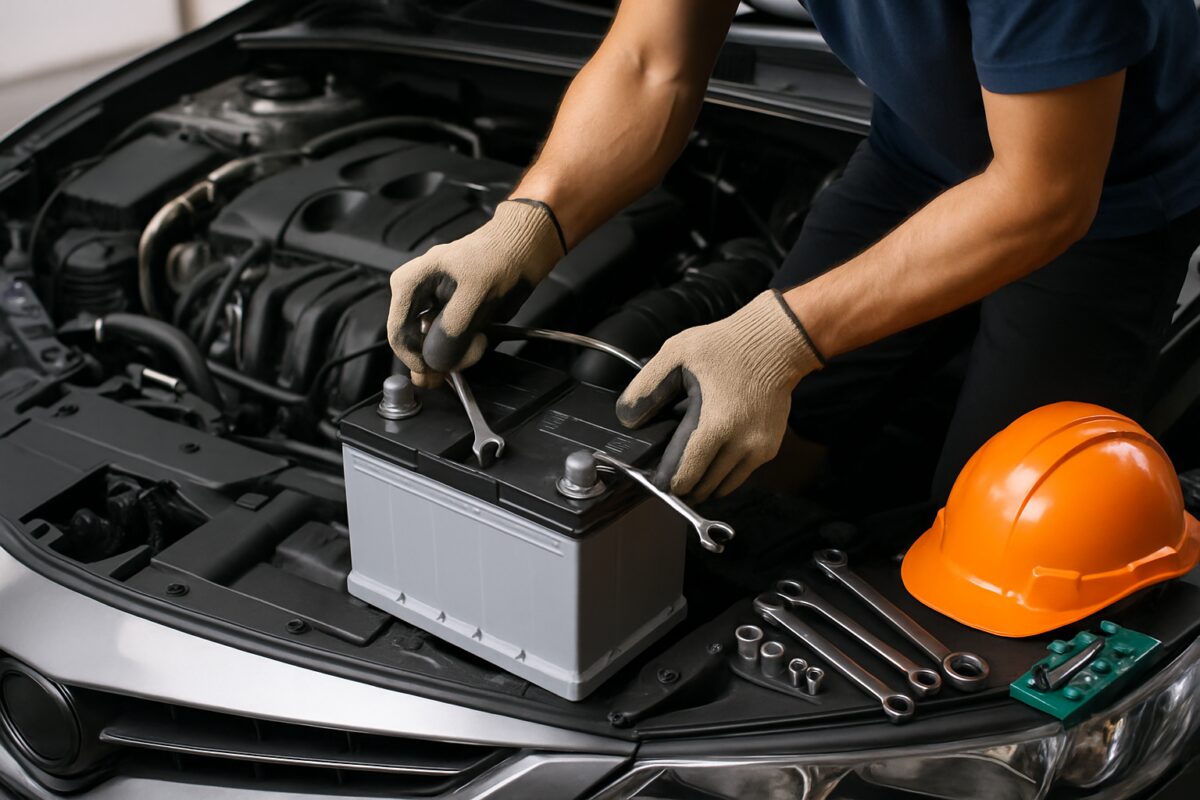
To remove a car battery, you’ll need basic tools like spanners and safety equipment including gloves. The process involves disconnecting the battery terminals, removing hold-down brackets, and lifting out the battery safely. Always disconnect the negative terminal first, followed by the positive terminal to prevent electrical shorts.
Tools & parts required
Before starting your battery removal, gather the essential tools and safety equipment. Having everything ready makes the job quicker and safer.
Parts needed:
- Terminal cleaning brush (optional)
- Anti-corrosion spray
- Terminal protectant
Tools required:
- Socket set or combination spanners
- Battery terminal puller (if needed)
- Multimeter for testing
- Battery carrier or lifting strap
- Safety gloves and eye protection
- Wire brush for cleaning
Always check your vehicle’s manual for specific battery specifications and terminal sizes before purchasing replacement parts.
Safety precautions
Battery removal involves handling heavy components and potentially corrosive materials. Take proper safety measures to protect yourself and your vehicle’s electrical system.
Work in a well-ventilated area away from sparks or flames. Wear safety gloves and eye protection to prevent contact with battery acid. Ensure the engine is completely cool before starting work.
Keep a fire extinguisher nearby when working with batteries. Remove all jewellery, especially rings and watches, to prevent accidental electrical contact.
Step-by-step instructions
Follow these detailed steps to safely remove your car battery. Take your time and double-check each connection before proceeding.
Step 1: Prepare the vehicle
Park on level ground and engage the handbrake. Turn off the engine and remove the keys. Open the bonnet and locate the battery, usually found in the engine bay corner.
Some vehicles have batteries in the boot or under seats. Check your owner’s manual if you can’t locate it immediately.
Step 2: Disconnect the negative terminal
Identify the negative terminal, marked with a minus (-) symbol and typically black. Using your spanner, loosen the terminal clamp by turning anticlockwise.
Wiggle the terminal clamp gently to remove it from the battery post. Push the cable away from the battery to prevent accidental contact.
Step 3: Disconnect the positive terminal
Locate the positive terminal, marked with a plus (+) symbol and usually red. Loosen the clamp using the same technique as the negative terminal.
Remove the positive cable carefully, ensuring it doesn’t touch any metal parts of the vehicle. Some vehicles may have a plastic cover over the positive terminal.
Step 4: Remove the hold-down bracket
Most batteries are secured with a hold-down bracket or clamp at the base. Locate the retaining bolt or bracket, typically at the bottom of the battery tray.
Use the appropriate socket or spanner to remove the hold-down hardware. Keep all bolts and brackets safe for reinstallation.
Step 5: Lift out the battery
Car batteries are heavy, typically weighing 15-25 kilograms. Use proper lifting technique, bending your knees and keeping your back straight.
Lift the battery straight up and out of the tray. Some batteries have built-in carrying handles, whilst others may require a battery carrier strap.
Professional tip from AutoPartsPro mechanics: Always lift batteries with both hands and get assistance if needed. A dropped battery can cause serious injury and damage.
Common mistakes to avoid
Several common errors can lead to problems during battery removal. Understanding these pitfalls helps ensure a smooth process.
Never disconnect the positive terminal first, as this increases the risk of electrical shorts. Avoid using metal tools near the positive terminal whilst the negative is still connected.
Don’t force stuck terminals, as this can damage the battery posts. If terminals are corroded and stuck, use a proper terminal puller tool or penetrating oil.
Never smoke or use open flames around batteries, as they produce explosive hydrogen gas. Avoid tilting the battery excessively, which can spill acid.
When should you remove your battery?
Several situations require battery removal beyond simple replacement. Understanding when removal is necessary helps maintain your vehicle properly.
Remove your battery for replacement when it’s over three years old and showing signs of weakness. Starter problems, dim lights, and slow engine cranking indicate battery issues.
Battery removal is also necessary for deep cleaning of terminals and the battery tray. During major engine work, removing the battery prevents accidental electrical damage.
Long-term storage situations, such as winter storage, benefit from battery removal to prevent discharge and freezing damage.
Related maintenance you can do at the same time
With the battery removed, you have excellent access to surrounding components. This is an ideal time for additional maintenance tasks.
Clean the battery tray and terminals thoroughly with a wire brush and baking soda solution. Inspect the engine radiator hoses and clamps that are now more accessible.
Check the condition of nearby air filter housing and replace if necessary. Inspect electrical connections and clean any corrosion from other components.
This is also an excellent time to check engine oil levels and inspect belts that are now more visible with the battery removed.
Frequently asked questions
Do I need to reset anything after removing the battery?
Yes, removing the battery resets various electronic systems. You may need to reset radio presets, clock, and window calibrations after reconnection.
How long can I leave the battery disconnected?
You can safely leave a battery disconnected indefinitely. However, some vehicle computers may lose learned settings after extended disconnection periods.
Will removing the battery damage my car’s computer?
No, properly disconnecting the battery won’t damage modern vehicle computers. They’re designed to handle power disconnection without issues when done correctly.
Should I disconnect both terminals even for short removal?
Always disconnect both terminals completely when removing a battery. This ensures complete electrical isolation and prevents accidental shorts during handling.
Can I remove the battery with the engine running?
Never attempt battery removal with the engine running. This can cause severe electrical damage to your vehicle’s charging system and computer modules.
Battery removal is a fundamental maintenance skill that every car owner should master. With proper tools, safety precautions, and technique, you can confidently handle this task. Remember to work systematically, always disconnecting the negative terminal first, and use proper lifting techniques to avoid injury. When it’s time for a replacement, choosing the correct battery specification ensures reliable performance and longevity.

 Loading...