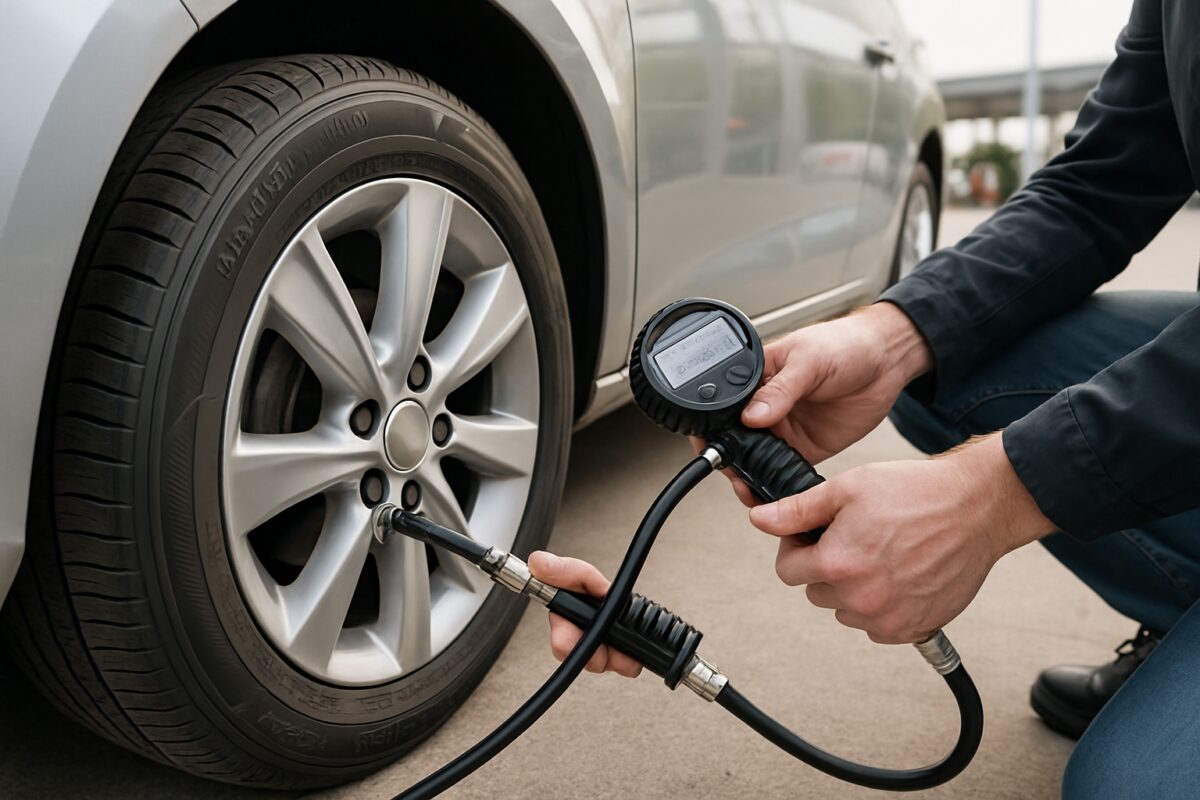
To put air in tyres, you’ll need a tyre pressure gauge, an air compressor or pump, and your vehicle’s recommended pressure specifications. The process involves checking current pressure, removing valve caps, attaching the pump securely, inflating to the correct PSI, and verifying the final pressure. This essential maintenance task takes just 10-15 minutes and should be done monthly.
Tools and equipment required
Having the right equipment makes tyre inflation straightforward and accurate. Quality tools ensure proper pressure readings and prevent damage to your valve stems.
Essential tools needed:
- Digital tyre pressure gauge (most accurate)
- Air compressor or manual pump
- Valve cap remover (if stuck)
- Clean cloth or rag
- Torch or mobile phone light
Optional accessories:
- Portable 12V compressor
- Tyre pressure monitoring system
- Valve stem caps with pressure indicators
- Extension hose for difficult-to-reach valves
Always choose equipment rated for your vehicle’s maximum pressure requirements. Most passenger cars need 30-35 PSI, whilst commercial vehicles may require higher pressures.
Professional tip from AutoPartsPro mechanics: Invest in a quality digital gauge rather than relying on petrol station equipment, which can be inaccurate by 2-4 PSI.
Safety precautions
Proper safety measures prevent accidents and equipment damage during tyre inflation. These precautions are particularly important when working with compressed air.
Essential safety steps:
- Check tyres when cold (not driven for 3+ hours)
- Inspect valve stems for cracks or damage
- Ensure compressor is rated for your tyre size
- Never exceed maximum sidewall pressure
- Stand to the side whilst inflating
- Wear safety glasses when using high-pressure equipment
Avoid inflating tyres in direct sunlight or immediately after driving, as heat increases internal pressure and can lead to over-inflation.
Step-by-step tyre inflation instructions
Following these detailed steps ensures accurate pressure and prevents common mistakes that can damage your tyres or wheels.
Step 1: Find recommended pressure
Locate your vehicle’s recommended tyre pressure on the driver’s side door jamb, fuel cap, or owner’s manual. This specification is measured in PSI (pounds per square inch) or bar. Don’t use the maximum pressure printed on the tyre sidewall, as this represents the tyre’s absolute limit, not the optimal operating pressure.
Step 2: Check current pressure
Remove the valve cap and press your tyre pressure gauge firmly onto the valve stem. You’ll hear a brief hiss of air – this is normal. Read the measurement immediately and compare it to your vehicle’s specification. Most passenger vehicles require between 30-35 PSI for optimal performance and fuel efficiency.
Step 3: Prepare the compressor
Connect your air compressor to a power source and ensure all connections are secure. If using a petrol station compressor, set the target pressure using the digital display. For portable units, simply ensure they’re fully charged or properly connected to your vehicle’s 12V socket.
Step 4: Inflate the tyre
Attach the compressor chuck to the valve stem, ensuring a tight seal to prevent air leakage. Activate the compressor and monitor the pressure gauge closely. Add air in short bursts rather than continuous inflation to maintain better control over the final pressure.
Step 5: Check and adjust
Remove the compressor and immediately check the pressure with your gauge. If slightly over-inflated, press the small pin in the centre of the valve stem to release excess air. If under-inflated, repeat the inflation process. Replace the valve cap securely to prevent dirt and moisture from entering.
Step 6: Repeat for all tyres
Check and adjust all four tyres, including your spare. Don’t forget that spare tyres often require higher pressure (typically 60 PSI) and should be inspected monthly like your regular tyres.
Expert advice: Our AutoPartsPro specialists recommend checking your spare tyre pressure every three months, as spares lose pressure faster than regular tyres due to less frequent use.
Common mistakes to avoid
Avoiding these frequent errors prevents tyre damage and ensures accurate pressure readings that optimise vehicle performance and safety.
Critical mistakes that damage tyres:
- Checking pressure on hot tyres after driving
- Over-inflating beyond recommended specifications
- Using inaccurate or damaged pressure gauges
- Ignoring the spare tyre during regular checks
- Forgetting to replace valve caps after inflation
- Cross-threading valve caps during installation
Over-inflation reduces the tyre’s contact patch with the road, leading to premature centre tread wear and reduced grip. Under-inflation causes excessive sidewall flexing, generating heat that can result in catastrophic tyre failure.
Many drivers make the mistake of checking only one or two tyres. Uneven pressures across your vehicle create handling imbalances and accelerate tyre wear on the under-inflated wheels.
When should you check tyre pressure?
Regular pressure monitoring extends brake rotor life and improves overall vehicle performance through optimal contact patch distribution.
Recommended checking schedule:
- Monthly as part of routine maintenance
- Before long motorway journeys
- When temperature changes significantly (10°C+ difference)
- After hitting potholes or kerbs
- When the TPMS warning light activates
- Before MOT testing
Seasonal temperature changes affect tyre pressure significantly. For every 10°C temperature drop, tyres lose approximately 1-2 PSI. This means winter months require more frequent pressure checks to maintain optimal levels.
Signs indicating immediate pressure checks:
- Vehicle pulling to one side whilst driving
- Increased fuel consumption
- Unusual tyre wear patterns
- Harder steering or reduced responsiveness
- Visible tyre sidewall bulging
Related maintenance you can do simultaneously
Combining tyre pressure checks with other maintenance tasks maximises efficiency and helps identify potential issues before they become expensive problems.
Complementary maintenance tasks:
- Visual tyre tread depth inspection using the 20p coin test
- Check brake pads through wheel spokes for wear indicators
- Inspect suspension springs for sagging or damage
- Examine shock absorbers for oil leaks
- Check hub bearings for excessive play or noise
- Inspect wheel bolts for proper torque
While checking tyres, examine the brake calipers for signs of corrosion or damage. This visual inspection can prevent costly repairs later.
Consider checking your air filter and cabin filter during the same maintenance session, as clean filters improve engine efficiency and interior air quality.
Frequently asked questions
How often should I check my tyre pressure?
Check tyre pressure monthly and before long journeys. Temperature changes and natural air permeation cause gradual pressure loss over time.
Can I use different pressure in front and rear tyres?
Yes, many vehicles specify different pressures for front and rear tyres. Always follow manufacturer recommendations found in your handbook.
What happens if I drive with incorrect tyre pressure?
Incorrect pressure causes uneven wear, reduced fuel economy, poor handling, and increased risk of tyre failure or blowouts.
Should I check tyre pressure when tyres are hot?
No, always check when tyres are cold. Hot tyres show inflated readings due to heat expansion of air inside.
Do I need to check my spare tyre pressure?
Yes, spare tyres lose pressure over time and often require higher inflation (typically 60 PSI) than regular tyres.
Maintaining proper tyre pressure is fundamental to vehicle safety and efficiency. Regular monitoring using quality equipment prevents premature tyre wear and optimises fuel consumption. Remember that sensors in modern TPMS systems can alert you to pressure changes, but manual checking remains the most reliable method for maintaining optimal performance.

 Loading...