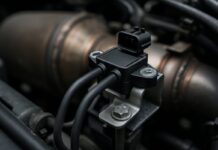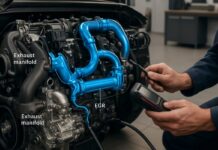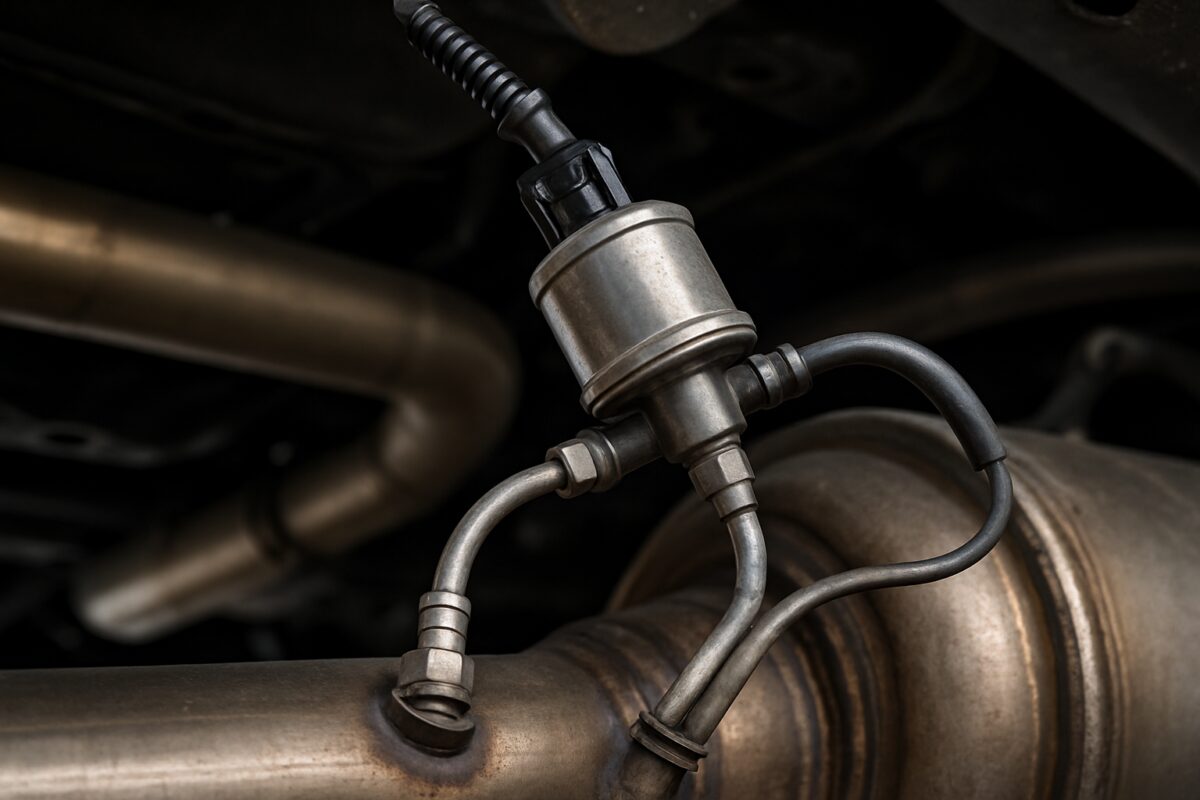
The DPF pressure sensor monitors exhaust backpressure before and after the diesel particulate filter to determine soot accumulation levels. This differential pressure transducer measures the resistance to exhaust flow through the filter, triggering regeneration cycles when backpressure exceeds normal operating parameters. Located in the exhaust system, it ensures optimal DPF performance whilst preventing engine damage from excessive exhaust restriction.
Understanding the DPF differential pressure sensor function
Modern diesel vehicles rely on sophisticated emission control systems to meet stringent environmental standards. The diesel particulate filter pressure sensor plays a crucial role in this complex network of components.
This sensor measures the pressure difference between the inlet and outlet of the DPF unit. When soot particles accumulate inside the filter, exhaust flow becomes restricted, creating higher backpressure. The sensor detects this increase and sends signals to the engine control unit (ECU).
The ECU uses this data to determine when automatic regeneration should begin. During regeneration, the exhaust temperature rises significantly to burn off trapped soot particles. This process maintains filter efficiency and prevents complete blockage.
Key functions of the pressure differential sensor
The primary responsibilities of this sensor extend beyond simple pressure measurement:
- Monitoring soot loading levels throughout the DPF structure
- Triggering forced regeneration when backpressure exceeds safe thresholds
- Protecting the engine from excessive exhaust restriction damage
- Optimising fuel consumption during regeneration cycles
- Alerting drivers to potential filter malfunctions through dashboard warnings
Locating the DPF pressure sensor on your vehicle
Finding the pressure sensor requires understanding your vehicle’s exhaust system layout. The location varies between manufacturers, but certain patterns remain consistent across different models.
Most differential pressure sensors mount directly onto the DPF housing or nearby exhaust pipes. Manufacturers design these sensors to withstand extreme temperatures and corrosive exhaust gases.
Common sensor mounting positions
Vehicle manufacturers typically install these sensors in several standard locations:
- Directly threaded into the DPF housing inlet and outlet ports
- Mounted on brackets near the particulate filter assembly
- Integrated into the exhaust pipe sections immediately before and after the filter
- Attached to the vehicle underbody with protective heat shielding
- Combined with other sensors in multi-function exhaust monitoring units
Access to the sensor often requires removing underbody panels or heat shields. Some vehicles position the sensor in easily accessible locations, whilst others require significant disassembly for service access.
Identification tips for technicians
Professional mechanics at Autopartspro recommend looking for these identifying features when locating pressure sensors. The sensor typically connects to the DPF via flexible tubes or rigid pipes that sample exhaust pressure.
Electrical connections usually feature weatherproof connectors designed for harsh underbody environments. The sensor housing often displays part numbers or manufacturer markings for positive identification.
Common DPF pressure sensor failures and symptoms
Pressure sensor malfunctions create various symptoms that alert drivers to potential problems. Understanding these warning signs helps prevent costly engine damage from delayed repairs.
Sensor failures typically result from exposure to extreme temperatures, vibration, or contamination from exhaust gases. Age-related deterioration also affects sensor accuracy over time.
Primary failure symptoms
Drivers commonly experience these warning signs when pressure sensors begin failing:
- DPF warning lights illuminating on the dashboard display
- Frequent or unsuccessful regeneration attempts by the engine management system
- Reduced engine performance and power output during acceleration
- Increased fuel consumption without apparent cause
- Excessive black smoke from the exhaust during normal driving
Diagnostic trouble codes and interpretation
Modern diagnostic equipment reveals specific fault codes when pressure sensors malfunction. These codes help technicians pinpoint exact failure modes and determine appropriate repair strategies.
Table showing common DPF pressure sensor fault codes:
| Fault Code | Description | Typical Cause |
|---|---|---|
| P2002 | Particulate filter efficiency below threshold | Faulty pressure sensor reading |
| P2452 | Pressure sensor circuit low | Wiring damage or sensor failure |
| P2453 | Pressure sensor circuit high | Short circuit or ECU malfunction |
Professional tip: Always check connecting tubes for blockages before replacing the pressure sensor. Clogged sampling lines often cause incorrect readings that mimic sensor failures.
Troubleshooting and repair procedures
Systematic diagnosis prevents unnecessary component replacement and reduces repair costs. Experienced technicians follow established procedures to isolate pressure sensor problems from other system faults.
Visual inspection should precede electronic testing to identify obvious damage or contamination. Many sensor failures result from external factors rather than internal component deterioration.
Step-by-step diagnostic approach
Professional diagnosis follows these logical steps to identify genuine sensor faults:
- Retrieve diagnostic trouble codes using professional scan equipment
- Inspect sensor housing for physical damage or contamination
- Check electrical connections for corrosion or loose terminals
- Test sensor output voltage against manufacturer specifications
- Verify sampling tube integrity and cleanliness throughout the system
Replacement considerations
Sensor replacement requires careful attention to torque specifications and sealing procedures. Over-tightening can damage sensor housings, whilst insufficient torque allows exhaust leaks that affect readings.
Quality replacement sensors from reputable manufacturers ensure reliable long-term performance. Cheap aftermarket alternatives often fail prematurely due to inferior materials and construction standards.
Preventive maintenance for optimal sensor performance
Regular maintenance extends sensor life and prevents unexpected failures. Simple procedures performed during routine services help maintain system reliability.
Autopartspro’s technical specialists recommend incorporating specific checks into standard service intervals. These preventive measures identify developing problems before they cause complete system failures.
Maintenance schedule recommendations
Table showing recommended maintenance intervals for DPF pressure sensors:
| Service Interval | Maintenance Task | Expected Outcome |
|---|---|---|
| Every 12,000 miles | Visual inspection of sensor and connections | Early detection of damage |
| Every 24,000 miles | Clean sampling tubes and check for blockages | Accurate pressure readings |
| Every 36,000 miles | Test sensor output voltage and calibration | Reliable system operation |
Environmental protection measures
Protecting sensors from contamination extends their operational life significantly. Heat shields and protective covers prevent damage from road debris and excessive temperatures.
Regular cleaning of the vehicle’s underbody removes corrosive salt and chemicals that attack sensor housings. This simple procedure prevents premature failure in harsh operating conditions.
Cost considerations and replacement options
Replacement costs vary depending on vehicle make, sensor type, and labour requirements. Understanding these factors helps owners make informed repair decisions.
OEM sensors typically cost more than aftermarket alternatives but offer superior reliability and warranty coverage. Professional installation ensures proper calibration and system integration.
Quality air filters and regular engine oil changes help maintain clean exhaust conditions that reduce sensor contamination. These preventive measures represent excellent value compared to sensor replacement costs.
When selecting replacement components, consider the complete exhaust system condition. Failing turbocharger components or damaged exhaust manifold gaskets can affect DPF performance and sensor accuracy.
Understanding your DPF pressure sensor’s role in emission control helps maintain vehicle performance and environmental compliance. Regular monitoring and prompt attention to warning signs prevent costly repairs and ensure reliable operation. Professional diagnosis and quality replacement parts from trusted suppliers like Autopartspro provide the best long-term value for maintaining your vehicle’s emission control system.
Frequently Asked Questions (FAQ)
How often should DPF pressure sensors be replaced?
Most DPF pressure sensors last 80,000-120,000 miles under normal conditions. Regular maintenance and clean operating environments extend sensor life significantly beyond minimum expectations.
Can I drive with a faulty DPF pressure sensor?
Limited driving is possible, but continued operation risks expensive engine damage from excessive backpressure. Seek professional diagnosis within 50 miles of warning light activation.
What causes DPF pressure sensors to fail prematurely?
Common causes include contaminated sampling tubes, excessive vibration, extreme temperatures, and poor quality fuel. Regular servicing prevents most premature failures effectively.
How much does DPF pressure sensor replacement typically cost?
Replacement costs range from £150-400 including parts and labour. Vehicle complexity and sensor accessibility significantly affect final repair expenses.
Can blocked sampling tubes cause incorrect DPF pressure readings?
Yes, blocked tubes create false pressure readings that trigger unnecessary regeneration cycles. Regular tube cleaning prevents this common diagnostic confusion effectively.

 Loading...