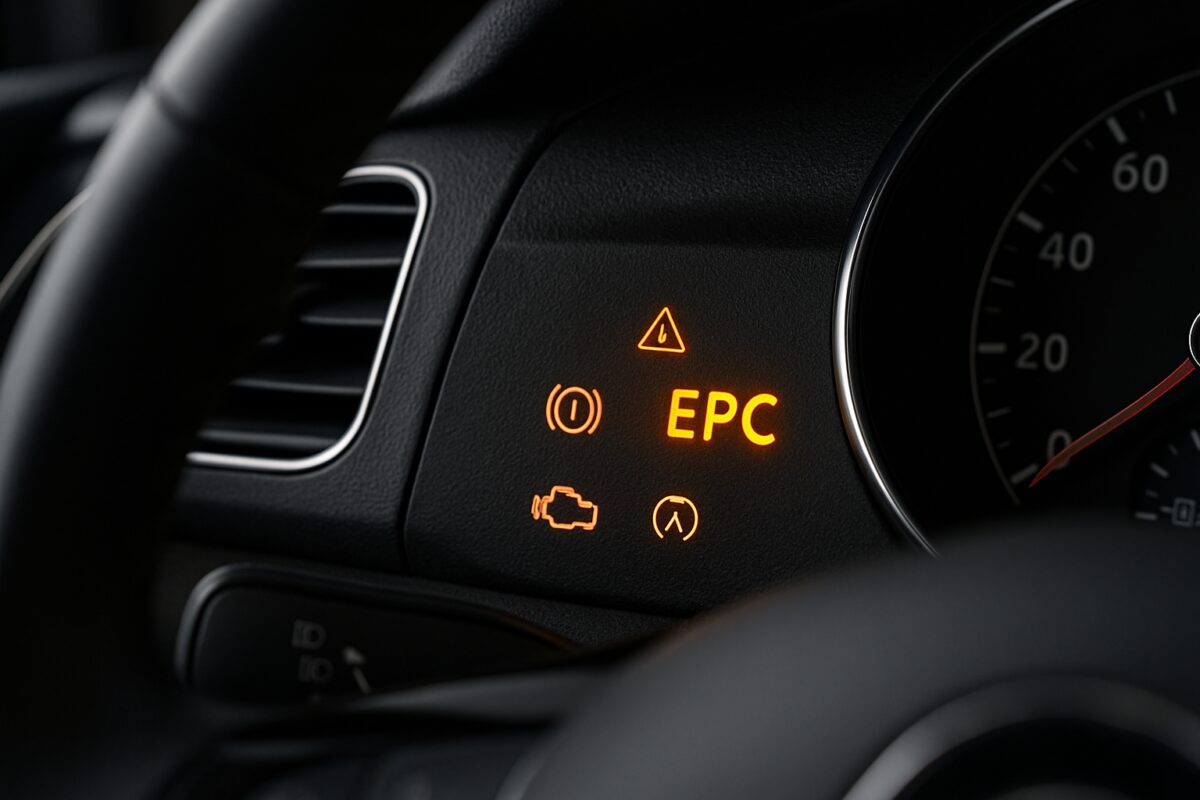
The EPC car warning light can send chills down any driver’s spine when it suddenly appears on the dashboard. This Electronic Power Control system indicator warns of potential engine or transmission problems that require immediate attention. Understanding what triggers this warning light and knowing the proper response can save you from costly repairs and dangerous driving situations.
Throttle body malfunctions
The throttle body controls airflow into your engine, and when it fails, the EPC light often illuminates. Carbon deposits accumulate over time, causing the throttle plate to stick or move sluggishly. This creates erratic idle speeds and poor acceleration response.
Modern vehicles rely on electronic throttle control rather than mechanical cables. When the throttle position sensor sends incorrect readings to the engine management system, the EPC warning activates. The throttle position sensor measures the exact angle of the throttle plate, enabling precise fuel delivery calculations.
Symptoms include rough idling, sudden loss of power, and the engine going into limp mode. The vehicle may struggle to accelerate or maintain consistent speeds. In severe cases, the engine might stall completely, creating dangerous driving conditions on busy roads.
Professional cleaning or complete throttle body replacement often resolves these issues. The throttle assembly requires careful calibration after any maintenance work to ensure proper operation with the engine control unit.
Brake system failures
The EPC system monitors brake pedal position and brake light switch functionality. When these components malfunction, the warning light appears even if your brakes work normally. The brake light switch tells the EPC system when you’re applying the brakes.
A faulty brake light switch affects more than just your rear lights. Modern vehicles use this signal for cruise control, transmission shift points, and engine management decisions. When the switch fails, the EPC system assumes a fault condition exists.
Brake pedal position sensors also contribute to EPC warnings. These sensors help the stability control system understand driver intentions during emergency braking situations. Corrosion or mechanical wear can cause false readings.
The brake servo and master cylinder pressure sensors provide additional data to the EPC system. Problems with brake servo operation or hydraulic pressure irregularities trigger warning conditions. Even minor brake fluid leaks can affect sensor readings and activate the EPC light.
Mass airflow sensor problems
The mass air flow sensor measures incoming air volume, providing crucial data for fuel injection calculations. When this sensor fails or becomes contaminated, the EPC system detects the inconsistency between expected and actual air readings.
Dirty or damaged MAF sensors send incorrect signals to the engine control unit. The system struggles to maintain proper air-fuel ratios, leading to poor performance and increased emissions. Carbon deposits, oil residue, or physical damage commonly affect sensor accuracy.
Symptoms include hesitation during acceleration, irregular idle behaviour, and reduced fuel economy. The engine may run too rich or too lean, causing potential damage to the catalytic converter or other emission control components.
Regular air filter maintenance helps prevent MAF sensor contamination. Clean filters reduce the amount of debris reaching the sensor element, extending its service life and maintaining accurate readings.
Acceleration pedal sensor faults
Electronic throttle control systems depend on acceleration pedal position sensors to interpret driver demands. These sensors contain multiple circuits that provide redundant signals to the engine management system. When sensor circuits fail or provide conflicting readings, the EPC warning activates immediately.
Pedal position sensors face constant mechanical stress from driver inputs. Internal components wear over time, creating dead spots or erratic signal transmission. Electrical connections may corrode, interrupting communication with the control modules.
The symptoms often include sudden power loss, inability to accelerate, or the vehicle entering limp mode. Some drivers notice delayed throttle response or the engine refusing to rev beyond idle speed. These conditions create serious safety hazards, especially during overtaking or merging manoeuvres.
Modern pedals integrate multiple sensors within a single assembly. Complete pedal replacement typically provides more reliable long-term solutions than attempting individual sensor repairs.
Warning signs your car has a problem
Recognising early warning signs helps prevent complete system failures and expensive repairs. Your vehicle communicates problems through various symptoms that often appear before the EPC light activates.
**Engine performance symptoms:**
- Rough or irregular idling patterns
- Hesitation during acceleration
- Sudden loss of power while driving
- Engine stalling at traffic lights
- Unusual exhaust smoke colours
**Electrical and control symptoms:**
- Dashboard warning lights flickering
- Unresponsive throttle pedal
- Brake lights staying on constantly
- Cruise control malfunctioning
- Transmission shifting irregularly
**Physical and mechanical indicators:**
- Strange noises from the engine bay
- Vibrations during idle or acceleration
- Fuel consumption increasing noticeably
- Difficulty starting the engine
- Burning smells from under the bonnet
Professional tip: Never ignore multiple warning lights appearing simultaneously, as this often indicates serious electrical system problems requiring immediate professional diagnosis.
How to fix the problems
Addressing EPC warning light issues requires systematic diagnosis and targeted repairs. Different problems demand specific solutions, from simple cleaning procedures to complete component replacement.
| Problem Type | Common Fixes | Approximate Cost | Difficulty Level |
|---|---|---|---|
| Throttle Body Issues | Professional cleaning, sensor replacement, complete assembly | £80-£400 | Moderate |
| Brake Switch Faults | Switch replacement, wiring repair, calibration | £30-£120 | Easy |
| MAF Sensor Problems | Sensor cleaning, replacement, air filter service | £60-£250 | Easy to Moderate |
| Pedal Sensor Faults | Complete pedal assembly replacement | £200-£600 | Difficult |
| Wiring Issues | Connector cleaning, wire repair, harness replacement | £50-£300 | Moderate to Difficult |
**Basic troubleshooting steps:**
Start with simple checks before assuming expensive component failures. Loose connections and dirty sensors cause many EPC warnings. Clean battery terminals ensure proper electrical system operation.
Check all fuses related to engine management and brake systems. A blown fuse costs pennies to replace but can trigger multiple warning lights. Inspect visible wiring for damage, corrosion, or loose connections.
**Component-specific repairs:**
Throttle body cleaning requires special solvents and careful handling. Remove the air intake ducting and clean carbon deposits from the throttle plate and housing. The throttle cable connections need inspection during this process.
Brake light switch replacement involves accessing the brake pedal assembly. Disconnect the battery before working on electrical components. Test the new switch operation before reassembling everything.
Safety reminder: Always disconnect the battery when working on electronic components to prevent damage to sensitive control modules and avoid potential injury from airbag systems.
| Diagnostic Tool | Purpose | Professional Use |
|---|---|---|
| OBD-II Scanner | Read fault codes, monitor live data | Essential for initial diagnosis |
| Multimeter | Test electrical circuits, sensor voltages | Verify component operation |
| Oscilloscope | Analyse sensor waveforms, timing signals | Advanced troubleshooting |
| Vacuum Gauge | Check engine vacuum levels | Diagnose mechanical problems |
When to see a mechanic
Certain EPC warning situations require immediate professional attention to prevent vehicle damage or safety hazards. Don’t attempt DIY repairs when dealing with complex electronic systems or safety-critical components.
**Immediate professional help needed:**
Contact a qualified technician immediately if the EPC light appears alongside other warning indicators like ABS, airbag, or engine management lights. This combination suggests serious electrical system problems affecting multiple vehicle systems.
When the vehicle enters limp mode, restricting speed and power, professional diagnosis becomes essential. Continued driving in this condition may cause expensive engine or transmission damage. The control units require specialist equipment for proper fault diagnosis.
**Safety concerns requiring expert attention:**
Brake system-related EPC warnings need professional evaluation, even if the brakes seem to work normally. Modern vehicles integrate brake performance with stability control and other safety systems. Problems with ABS sensor operation can trigger EPC warnings.
If the accelerator pedal becomes unresponsive or shows delayed reaction, stop driving immediately and seek professional help. These symptoms indicate potential throttle system failures that could cause loss of vehicle control.
**Diagnostic capability requirements:**
Professional workshops possess manufacturer-specific diagnostic equipment that standard OBD-II scanners cannot access. Many EPC problems require detailed live data analysis and component activation tests beyond basic fault code reading.
Calibration procedures for throttle bodies, pedal sensors, and brake components need specialised tools and software. Incorrect calibration can worsen existing problems or create new fault conditions.
Frequently asked questions (FAQ)
Can I continue driving with the EPC light on?
Avoid driving when possible. The EPC light indicates potential safety system problems that could affect vehicle control or cause sudden power loss.
Will the EPC light reset itself after repairs?
Most EPC lights require manual reset using diagnostic equipment after completing repairs and ensuring all systems function correctly.
How much does EPC light diagnosis typically cost?
Professional diagnosis usually costs £60-£120, depending on the workshop and complexity of the fault codes present.
Does EPC light affect MOT test results?
Yes, illuminated warning lights typically result in MOT failure as they indicate system malfunctions affecting vehicle safety or emissions.
Can cold weather trigger false EPC warnings?
Extreme temperatures can affect sensor readings and electrical connections, potentially causing temporary EPC warnings until components reach normal operating temperature.
Final recommendation
Based on our automotive specialists’ extensive experience at AutoPartsPro, the EPC warning light demands prompt attention regardless of how well your vehicle seems to be running. This sophisticated system monitors critical components affecting both performance and safety.
Don’t gamble with warning lights that involve throttle control, brake systems, or engine management. While some fixes might seem straightforward, modern vehicles integrate these systems in complex ways that require professional understanding.
Our recommendation is clear: have the fault codes read professionally within 24 hours of the warning appearing. Early diagnosis prevents minor issues from becoming major repairs. Quality replacement parts and proper installation ensure reliable, long-lasting solutions that keep you safely on British roads.

 Loading...