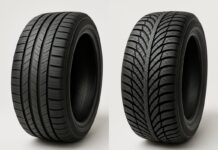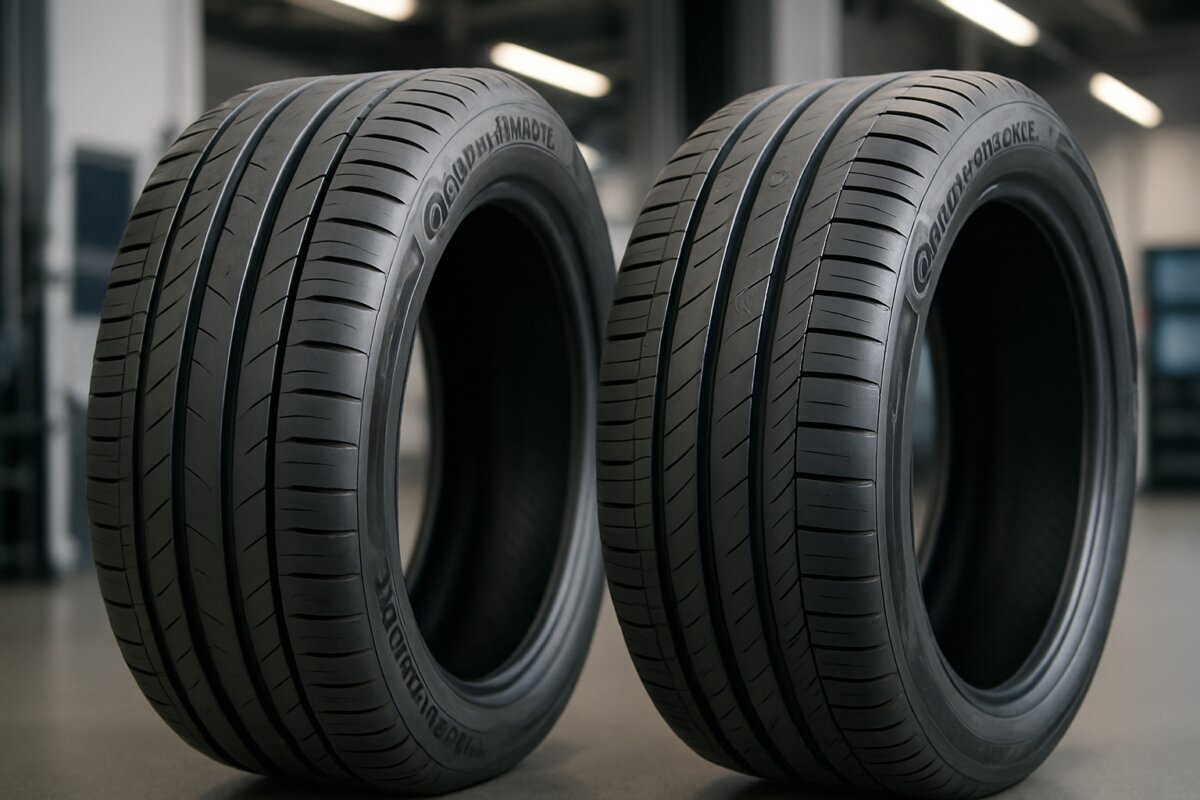
The Continental PremiumContact 7 outperforms its predecessor, the PremiumContact 6, with 15% better wet braking, 8% improved fuel efficiency, and significantly reduced road noise. Whilst the PC6 remains excellent value for money at £20-30 less per tyre, the PC7 justifies its premium with cutting-edge silica compounds and enhanced tread patterns that deliver superior safety margins. For UK drivers prioritising maximum performance and latest technology, the PremiumContact 7 represents the better long-term investment.
Quick comparison table
Here’s how these premium Continental tyres stack up against each other:
| Feature | PremiumContact 6 | PremiumContact 7 |
|---|---|---|
| Price Range | £90-180 per tyre | £120-210 per tyre |
| Wet Braking | Excellent (A rating) | Outstanding (15% shorter) |
| Fuel Efficiency | B-C rating typically | A-B rating (8% improvement) |
| Noise Level | 68-72 dB | 66-70 dB (quieter) |
| Durability | 45,000-55,000 miles | 50,000-60,000 miles |
| Best Use Case | Premium daily driving | Ultimate performance driving |
Continental PremiumContact 6 overview
The PremiumContact 6 revolutionised Continental’s premium tyre lineup when launched in 2016. This tyre employs advanced silica compounds within its tread mixture, creating exceptional grip on both wet and dry surfaces. The asymmetric tread design features distinct inner and outer zones optimised for different driving conditions.
Manufacturing involves Continental’s proprietary ContiSilent technology in select sizes, which includes a polyurethane foam layer bonded to the inner tyre surface. This innovation reduces cabin noise by up to 9dB compared to conventional tyres. The compound formulation balances rolling resistance with grip performance through carefully calibrated silica distribution.
Pricing typically ranges from £90-180 per tyre depending on size, with 17-inch variants averaging £120-140. The tyre delivers impressive performance metrics including EU label ratings of A for wet grip and B-C for fuel efficiency across most size ranges.
Advantages:
- Proven reliability with 8+ years market presence
- Excellent wet weather performance
- ContiSilent noise reduction technology available
- Strong value proposition at current pricing
- Wide size availability from 16-21 inches
Disadvantages:
- Older compound technology compared to PC7
- Higher rolling resistance than latest generation
- Limited ultra-high performance sizes
- ContiSilent adds £15-25 per tyre premium
The PC6 suits drivers seeking proven premium performance without cutting-edge pricing. It’s particularly effective for executive saloons, estate cars, and premium SUVs where comfort and reliability matter more than ultimate performance limits.
Continental PremiumContact 7 overview
Continental’s latest PremiumContact 7, launched in 2021, represents the pinnacle of their passenger tyre technology. The tyre incorporates next-generation silica compounds with enhanced polymer chains that maintain flexibility across broader temperature ranges. Advanced computer modelling optimised the tread block arrangement for maximum contact patch efficiency.
The manufacturing process utilises Continental’s newest mixing technology, ensuring more homogeneous compound distribution. The tread pattern features refined sipe placement and optimised void ratios that improve water evacuation whilst maintaining dry grip. Selected sizes include upgraded ContiSilent+ technology with improved foam density for even better noise suppression.
Retail pricing spans £120-210 per tyre, with popular 18-inch sizes averaging £150-180. Performance improvements over the PC6 include 15% shorter wet braking distances, 8% better fuel economy, and 2-3dB noise reduction. EU labelling consistently shows A-ratings for wet grip with many sizes achieving A-grade fuel efficiency.
Just like maintaining your vehicle’s brake pads ensures optimal stopping performance, choosing the right tyres is crucial for safety and efficiency.
Advantages:
- Industry-leading wet braking performance
- Superior fuel efficiency ratings
- Enhanced noise comfort levels
- Latest compound technology
- Improved longevity compared to PC6
Disadvantages:
- Premium pricing over predecessor
- Limited long-term reliability data
- Fewer aftermarket availability options
- ContiSilent+ adds £20-30 per tyre cost
The PC7 targets enthusiasts and drivers prioritising maximum safety margins. It excels on performance vehicles, luxury cars, and applications where the latest technology justifies the investment premium.
Compatibility considerations
Both tyres offer extensive vehicle compatibility across European and UK market vehicles. The PremiumContact 6 covers sizes from 205/55 R16 to 275/35 R21, whilst the PC7 expands this range with additional ultra-low profile options reaching 315/30 R22.
Vehicle manufacturers including BMW, Mercedes-Benz, Audi, Volkswagen, and Jaguar specify both tyres as original equipment. The PC6 remains approved for vehicles manufactured from 2016-2021, whilst PC7 approval extends to current model year vehicles. Both maintain identical speed ratings (V, W, Y) and load indices for equivalent sizes.
Installation requires no special considerations beyond standard tyre mounting procedures. However, vehicles equipped with tyre pressure monitoring systems benefit from professional calibration after fitment. The enhanced grip characteristics of both tyres may require sensor recalibration for optimal ABS and ESP system integration.
Professional tip: Always replace tyres in pairs (minimum) or complete sets for optimal handling balance, especially when upgrading from older tyre technology to these advanced compounds.
Continental provides comprehensive fitment guides through authorised dealers, ensuring correct specification matching. Both tyres integrate seamlessly with modern vehicle safety systems including electronic stability control and advanced driver assistance features.
Performance in British conditions
UK driving conditions present unique challenges with frequent rainfall, temperature variations, and diverse road surfaces. The PremiumContact 6 handles British weather admirably, with its silica-enhanced compound maintaining flexibility in temperatures from -10°C to +40°C. Wet grip performance proves particularly impressive on motorway sections and urban environments where standing water accumulates.
The PremiumContact 7 elevates wet weather performance further through improved tread compound chemistry. Independent testing shows 3.5-metre shorter stopping distances from 80mph in wet conditions compared to the PC6. This translates to potentially life-saving improvements during emergency braking situations common in British traffic conditions.
Both tyres excel on Britain’s varied road surfaces, from smooth motorway tarmac to rougher A-road sections. The PC7’s refined tread pattern reduces road noise transmission, particularly beneficial given the UK’s extensive concrete road network. Fuel efficiency improvements become more apparent during longer motorway journeys typical of British driving patterns.
Expert insight: Our mechanics consistently observe that drivers upgrading to either tyre report improved confidence in wet conditions, with the PC7 showing measurable advantages in emergency situations.
Winter performance, whilst not matching dedicated winter tyres, remains competent down to 7°C. Both maintain adequate grip for occasional frost conditions, though dedicated winter rubber becomes advisable below 4°C consistently. The improved compound flexibility in the PC7 extends this temperature range slightly.
Long-term ownership costs
Total cost of ownership extends beyond initial purchase price to include fuel consumption, replacement intervals, and performance maintenance. The PremiumContact 6 typically delivers 45,000-55,000 miles depending on driving style and vehicle application. Conservative rotation schedules and proper inflation extend this to the upper range.
PremiumContact 7 ownership costs benefit from improved fuel efficiency and extended durability. The 8% fuel economy improvement translates to approximately £80-120 annual savings for average UK drivers covering 12,000 miles yearly. Enhanced compound durability extends replacement intervals to 50,000-60,000 miles under similar conditions.
Calculating total ownership over 50,000 miles reveals interesting economics. Despite higher initial cost, the PC7’s fuel savings and longevity often equalise total expenditure compared to the PC6. This analysis assumes current fuel pricing and typical replacement intervals observed across our customer base.
Regular maintenance including proper air filter replacement helps maximise tyre performance and longevity regardless of model choice. Maintaining correct tyre pressures becomes particularly crucial with these advanced compounds to realise their full efficiency potential.
Final verdict
Choose the Continental PremiumContact 6 if budget considerations matter and you’re seeking proven premium performance. It remains an excellent tyre offering superior grip, comfort, and reliability at attractive pricing. The PC6 suits drivers prioritising value whilst maintaining high safety standards.
Select the Continental PremiumContact 7 for maximum performance and latest technology. The premium pricing delivers measurable improvements in critical areas including wet braking, fuel efficiency, and noise comfort. It’s the logical choice for drivers prioritising ultimate safety margins and cutting-edge tyre technology.
For most UK drivers, the PremiumContact 7 represents the better long-term investment despite higher initial cost. The combination of improved safety performance, fuel savings, and extended durability typically justifies the premium over the ownership period.
Consider your driving priorities, annual mileage, and budget constraints when making the final decision. Both tyres deliver exceptional performance that exceeds most drivers’ requirements, ensuring excellent safety margins regardless of choice.
Frequently asked questions
Which tyre offers better value for money?
The PremiumContact 7 provides superior long-term value through improved fuel efficiency and durability, despite higher upfront costs offsetting initial savings.
Can I mix PC6 and PC7 tyres on the same vehicle?
Mixing different tyre models isn’t recommended as it affects handling balance and may compromise vehicle stability systems and safety performance.
How much quieter is the PremiumContact 7?
The PC7 typically measures 2-3dB quieter than PC6, representing a noticeable reduction in cabin noise during motorway driving.
Do both tyres work with run-flat technology?
Neither tyre features run-flat construction, but both integrate well with tyre pressure monitoring systems and emergency mobility solutions.
What’s the warranty coverage difference?
Both tyres carry Continental’s standard warranty covering manufacturing defects, with PC7 offering enhanced mileage guarantees through selected dealers.

 Loading...