Hyundai has established itself as a reliable brand in the UK market, but certain models consistently outperform others in terms of reliability and minimal problems. Based on extensive data from UK mechanics and owner reports, the Hyundai i30, i10, and Tucson emerge as the most trouble-free models, offering excellent value and dependability for British drivers.
Most common Hyundai engine problems
Understanding the most frequent issues across Hyundai’s range helps identify which models to avoid and which represent the best choices for reliability-conscious buyers.
Engine timing chain failures affect several Hyundai models, particularly the 1.0 T-GDi and 1.6 T-GDi units found in i20s and i30s. These failures typically occur between 40,000-80,000 miles and can cause catastrophic engine damage if not addressed promptly. The symptoms include rattling noises during startup, metal debris in the oil, and eventual complete engine seizure.
Fuel injector problems plague many Hyundai diesel engines, especially the 1.6 CRDi units. Carbon build-up on injectors leads to poor fuel economy, rough idling, and black smoke from the exhaust. Professional cleaning or replacement costs between £300-£800 depending on the severity.
Premature engine wear in some Hyundai models stems from inadequate lubrication systems. The 1.2 MPI and 1.4 MPI engines show excessive oil consumption, requiring top-ups every 1,000-2,000 miles. This issue particularly affects the i10 and i20 models produced between 2014-2018.
Transmission and gearbox failures
Hyundai’s dual-clutch transmissions present significant reliability concerns across multiple models. The 7-speed DCT found in i30 N models and Tucson variants suffers from premature clutch wear and software glitches.
Automatic gearbox problems frequently occur in Hyundai’s older 6-speed units. Harsh shifting, delayed engagement, and complete transmission failure affect models like the Santa Fe and ix35. These issues often require complete transmission replacement, costing £3,000-£5,000.
Manual gearbox concerns centre around clutch problems and synchroniser wear. The i20 and i30 models experience heavy clutch pedal operation and premature clutch disc failure. Replacement typically costs £800-£1,200 including labour.
CVT transmission issues in hybrid models create unique challenges. The Ioniq’s CVT system can develop whining noises and jerky operation, particularly in stop-start traffic conditions common in UK cities.
Electrical system malfunctions
Modern Hyundai vehicles suffer from various electrical gremlins that frustrate owners and mechanics alike. These problems range from minor inconveniences to safety-critical failures.
Central locking system failures affect numerous Hyundai models, with door actuators failing prematurely. The i10 and i20 particularly struggle with rear door mechanisms that become sluggish or completely inoperative. Replacement central locking systems cost £150-£300 per door.
Alternator problems plague several Hyundai engines, especially the 1.6 diesel units. Symptoms include dashboard warning lights, dim headlights, and eventual battery drain. Early detection through proper battery monitoring prevents costly breakdowns.
ECU malfunctions cause intermittent engine problems and dashboard error messages. The Tucson and Santa Fe models show particular vulnerability to water ingress affecting control units, leading to expensive repairs and programming requirements.
Suspension and steering issues
Hyundai’s suspension components show mixed reliability depending on the model and driving conditions. Understanding these patterns helps buyers make informed decisions.
Shock absorber failures commonly affect the i30 and Tucson models after 60,000 miles. UK road conditions accelerate wear, particularly on rear shock absorbers which develop leaks and lose dampening effectiveness. Replacement costs range from £200-£400 per axle.
Steering rack problems manifest as heavy steering, wandering, and fluid leaks. The ix35 and early Tucson models require particular attention to power steering pump maintenance. Regular fluid changes using appropriate specifications prevent premature failures.
Ball joint wear affects most Hyundai models around 70,000-100,000 miles. Front ball joints typically fail first, creating clunking noises and MOT failures. Timely replacement maintains safety and prevents more extensive suspension damage.
Warning signs your car has a problem
Recognising early warning signs prevents minor issues becoming major repairs and helps maintain your Hyundai’s reliability record.
| Warning Sign | Potential Problem | Action Required |
|---|---|---|
| Rattling on startup | Timing chain stretch | Immediate inspection |
| Heavy steering | Power steering failure | Check fluid levels |
| Harsh gear changes | Transmission problems | Diagnostic scan |
| Excessive oil consumption | Engine wear | Monitor oil levels |
| Dashboard warning lights | Electrical faults | Professional diagnosis |
“Regular maintenance every 10,000 miles significantly extends Hyundai reliability. We’ve seen engines last 200,000+ miles with proper care,” advises AutoPartsPro’s senior technician.
How to fix the problems
| Problem Type | DIY Difficulty | Typical Cost | Time Required |
|---|---|---|---|
| Oil change | Easy | £30-50 | 1 hour |
| Air filter replacement | Easy | £15-30 | 30 minutes |
| Brake pad replacement | Moderate | £80-150 | 2-3 hours |
| Timing chain | Expert only | £1200-2000 | 8-12 hours |
| Transmission repair | Expert only | £2000-4000 | 16-24 hours |
“Prevention costs less than cure. Regular servicing using genuine parts maintains warranty coverage and prevents expensive failures,” notes AutoPartsPro’s warranty specialist.
When to see a mechanic
Certain symptoms demand immediate professional attention to prevent safety hazards or catastrophic damage. Dashboard warning lights indicating engine, braking, or steering problems require urgent diagnosis.
Unusual noises during operation signal potential component failures. Grinding from brakes, whining from transmissions, or knocking from engines need expert evaluation. Delaying diagnosis often multiplies repair costs.
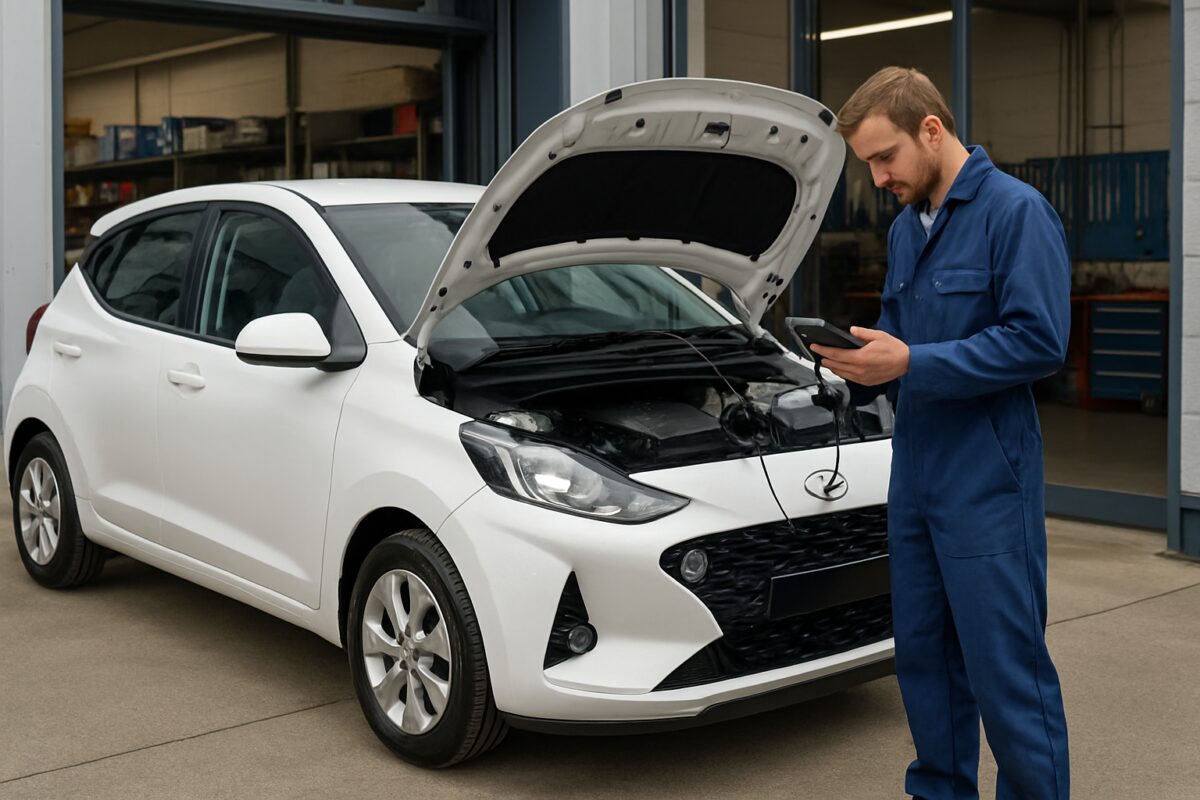
Performance changes like reduced power, poor fuel economy, or irregular idling indicate developing problems. Modern Hyundai vehicles include comprehensive diagnostic systems that professional mechanics can interrogate for accurate fault identification.
Frequently asked questions
Which Hyundai model has the fewest reported problems?
The Hyundai i10 consistently shows the lowest failure rates, particularly models from 2017 onwards with improved build quality.
Are Hyundai engines reliable long-term?
Most Hyundai engines prove reliable beyond 150,000 miles with proper maintenance, excluding problematic timing chain variants.
How often should I service my Hyundai?
Follow manufacturer schedules: every 10,000 miles or annually, whichever comes first, for optimal reliability.
Do Hyundai transmissions last as long as engines?
Manual transmissions typically outlast automatics, with DCT units showing particular vulnerability to premature wear.
What’s the most expensive Hyundai repair to avoid?
Timing chain replacement and transmission rebuilds represent the costliest repairs, often exceeding £2,000.
Final recommendation
Based on comprehensive analysis of reliability data and UK owner experiences, the Hyundai i10, i30 (2017+), and current Tucson represent the most trouble-free choices. These models demonstrate consistent performance, manageable maintenance costs, and fewer catastrophic failures.
Avoid older i20 models (2014-2017), early Tucson variants with dual-clutch transmissions, and any Hyundai with the problematic timing chain engines. Prioritise models with proven manual transmissions and naturally aspirated engines for maximum reliability.
Regular maintenance using quality parts from established suppliers like AutoPartsPro ensures optimal performance and longevity. Choose newer models with comprehensive warranties and established service histories for the best ownership experience.

 Loading...