The Volkswagen Touran represents a practical family MPV that has served British households since 2003. This seven-seater’s success largely depends on its engine options, ranging from efficient turbocharged petrol units to robust diesel powerplants. With output ranging from 105 to 200 horsepower and torque figures reaching up to 320 Nm, these engines deliver both family-friendly economy and surprising performance when needed.
Comparison table of all engines
| Engine | Power Output | Torque | Fuel Consumption | Reliability |
|---|---|---|---|---|
| 1.2 TSI | 105 HP | 175 Nm | 45-50 MPG | Good |
| 1.4 TSI | 140-150 HP | 250 Nm | 42-47 MPG | Very Good |
| 1.8 TSI | 180 HP | 280 Nm | 38-42 MPG | Good |
| 2.0 TSI | 200 HP | 280 Nm | 35-40 MPG | Good |
| 1.6 TDI | 105-115 HP | 250 Nm | 55-65 MPG | Excellent |
| 2.0 TDI | 140-177 HP | 320 Nm | 50-60 MPG | Very Good |
1.2 TSI petrol engine overview
The 1.2-litre TSI represents Volkswagen’s entry-level turbocharged petrol option for the Touran. This direct-injection engine features a single turbocharger and produces 105 horsepower with 175 Nm of torque. The compact displacement paired with forced induction provides adequate power whilst maintaining reasonable fuel economy for daily family duties.
Pros
- Excellent fuel economy for petrol engine
- Low emissions and road tax
- Smooth operation and refinement
- Affordable maintenance costs
- Proven reliability record
Cons
- Limited power for fully loaded seven-seater
- Struggles with motorway overtaking
- Requires frequent gear changes
- Timing chain tensioner issues in early models
1.4 TSI petrol engine overview
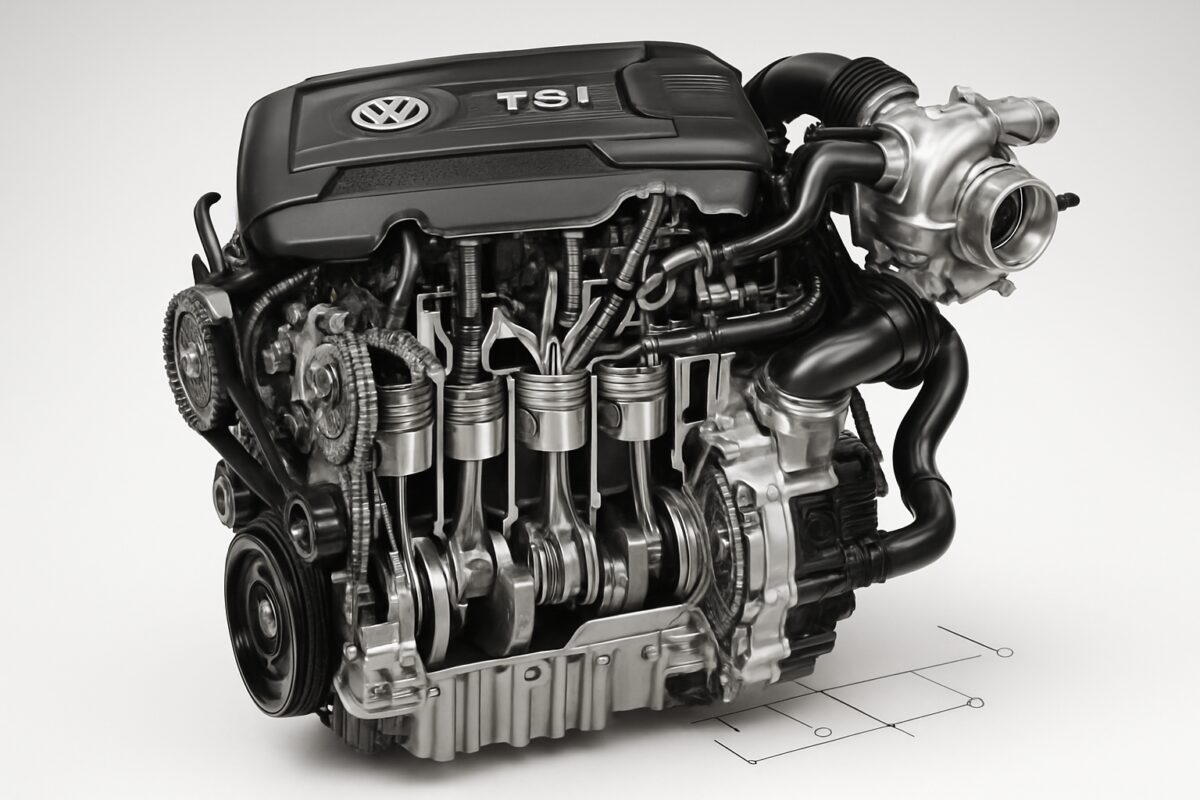
The 1.4-litre TSI engine serves as the sweet spot in Volkswagen’s petrol lineup. Available in 140 and 150 horsepower variants, this turbocharged unit delivers 250 Nm of torque. The engine utilises direct fuel injection and variable valve timing to optimise performance across the rev range whilst maintaining impressive fuel efficiency.
“According to our Autopartspro mechanics, the 1.4 TSI offers the best balance of performance and economy for most Touran owners, providing adequate power without compromising fuel costs significantly.”
Pros
- Ideal power-to-economy ratio
- Strong mid-range torque delivery
- Relatively quiet operation
- Good availability of spark plugs
- Proven long-term reliability
Cons
- Carbon build-up on inlet valves
- Timing chain stretch in high-mileage examples
- Water pump failures around 100,000 miles
- Premium fuel recommended for optimal performance
1.6 TDI diesel engine overview
The 1.6-litre TDI diesel engine represents Volkswagen’s most economical option for the Touran. This common-rail diesel produces between 105-115 horsepower with 250 Nm of torque. The engine features advanced emissions control systems including a diesel particulate filter to meet Euro 6 standards whilst delivering exceptional fuel economy.
Pros
- Outstanding fuel economy (up to 65 MPG)
- Strong low-end torque for family hauling
- Excellent long-distance cruising ability
- Lower CO2 emissions than petrol equivalents
- Robust engine construction
Cons
- DPF regeneration issues in city driving
- EGR valve carbon build-up
- Dual-mass flywheel failures
- Higher maintenance costs than petrol
- Potential for expensive fuel injector problems
2.0 TDI diesel engine overview
The flagship 2.0-litre TDI engine delivers the strongest performance in the Touran range. With outputs ranging from 140 to 177 horsepower and peak torque of 320 Nm, this turbocharged diesel provides effortless acceleration and excellent overtaking capability. The engine incorporates sophisticated emission control technology whilst maintaining impressive fuel efficiency.
“Our specialists at Autopartspro rate the 2.0 TDI as the most versatile engine choice, offering impressive pulling power for towing caravans or fully-loaded family trips whilst still achieving over 50 MPG in real-world conditions.”
Pros
- Excellent torque delivery across rev range
- Superior towing capacity
- Refined operation at motorway speeds
- Good fuel economy despite larger displacement
- Strong resale value retention
Cons
- Higher purchase price premium
- Complex emissions system prone to faults
- Timing belt replacement every 80,000 miles
- Potential for turbocharger wear in high-mileage examples
- AdBlue system on newer variants requires regular top-ups
Maintenance cost
| Engine | Recommended Interval | Estimated Cost | Cost per 10,000 miles |
|---|---|---|---|
| 1.2 TSI | 12,000 miles/12 months | £180-220 | £150-185 |
| 1.4 TSI | 12,000 miles/12 months | £200-250 | £165-210 |
| 1.6 TDI | 20,000 miles/24 months | £280-350 | £140-175 |
| 2.0 TDI | 20,000 miles/24 months | £320-400 | £160-200 |
These figures include oil filter changes, basic fluid top-ups, and routine inspection costs. Major services involving air filter replacement, brake fluid changes, and comprehensive system checks typically cost 40-60% more.
Engine sound and character
The petrol TSI engines deliver a refined driving experience with minimal intrusion into the cabin. The 1.2 TSI produces a subtle three-cylinder thrum under acceleration, whilst the 1.4 TSI maintains four-cylinder smoothness throughout the rev range. Both units remain pleasantly quiet during motorway cruising.
Diesel TDI engines exhibit characteristic compression ignition clatter at idle, particularly noticeable in the smaller 1.6-litre variant. However, road noise isolation improves significantly once underway. The 2.0 TDI demonstrates superior noise suppression and delivers a more sophisticated acoustic signature, especially in higher trim levels with enhanced sound deadening materials.
Who each engine is best for
| Engine | Best For |
|---|---|
| 1.2 TSI | Budget-conscious owners, urban commuting, occasional family use |
| 1.4 TSI | Daily commuters, balanced performance needs, moderate family hauling |
| 1.6 TDI | High-mileage drivers, economy-focused owners, regular long-distance travel |
| 2.0 TDI | Performance enthusiasts, towing requirements, fully-loaded family transport |
Regular maintenance using quality components from reputable suppliers like brake specialists ensures optimal engine longevity. Consider your driving patterns carefully – urban drivers should favour petrol TSI variants to avoid diesel particulate filter complications, whilst high-mileage motorway users benefit significantly from TDI efficiency.
Frequently Asked Questions (FAQ)
Which VW Touran engine is most reliable?
The 1.6 TDI diesel engine demonstrates the strongest reliability record, with fewer reported mechanical failures and excellent longevity when properly maintained.
Are VW Touran engines expensive to maintain?
Maintenance costs remain reasonable compared to premium competitors. Diesel variants require less frequent servicing but individual service costs are higher than petrol equivalents.
Can I use regular unleaded fuel in TSI engines?
Yes, all TSI engines accept regular 95 RON unleaded. However, premium 98 RON fuel may improve performance and reduce carbon deposits over time.
How often should I replace the timing belt on TDI engines?
The 2.0 TDI requires timing belt replacement every 80,000 miles. The 1.6 TDI uses a timing chain with extended service intervals.
Which engine offers the best fuel economy?
The 1.6 TDI delivers superior fuel efficiency, achieving up to 65 MPG in optimal conditions whilst providing adequate performance for family transport requirements.

 Loading...