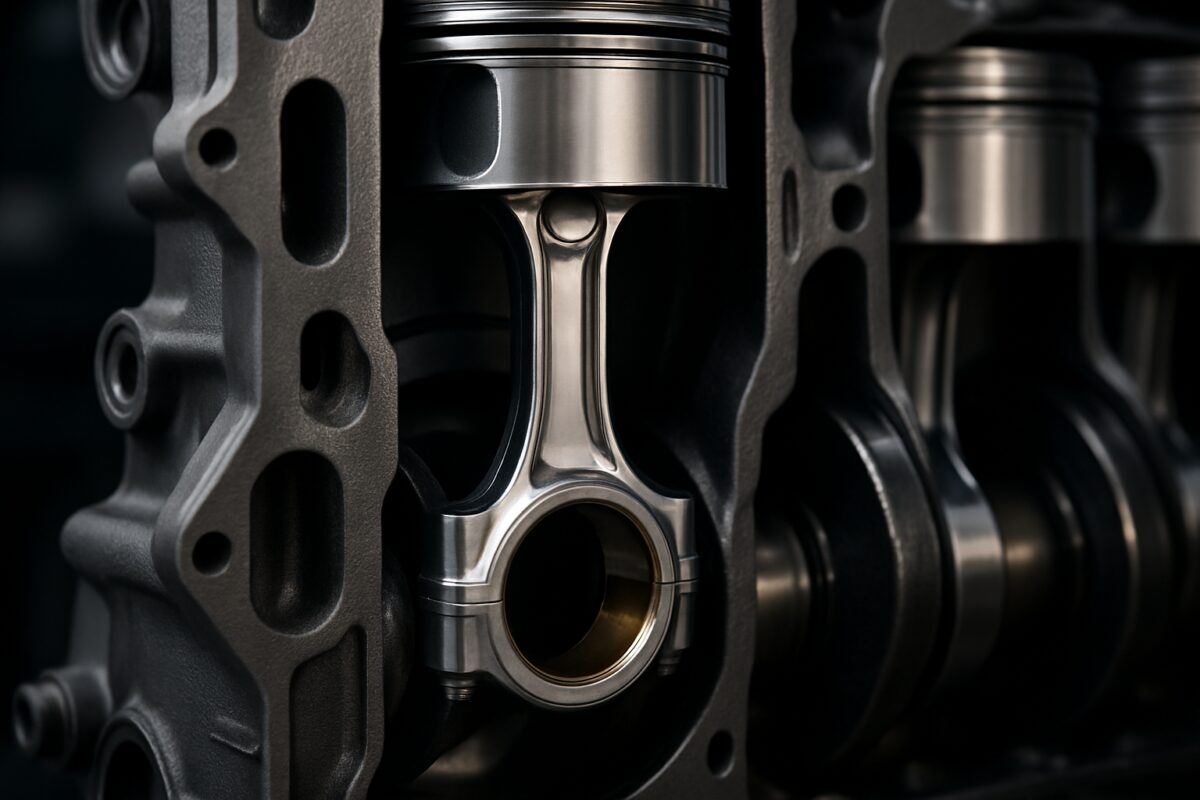
The engine connecting rod serves as a critical link between the piston and the crankshaft in your vehicle’s motor. This metal component transforms the up-and-down motion of pistons into rotational force that powers your car. Understanding connecting rod issues helps prevent catastrophic engine damage and expensive repairs.
Worn big end bearings
Big end bearings sit between the connecting rod and [crankshaft](https://www.autopartspro.co.uk/carparts-online/crankshaft), allowing smooth rotation whilst maintaining proper clearances. These bearings wear down over time due to friction and heat.
The primary causes include inadequate lubrication, contaminated [engine oil](https://www.autopartspro.co.uk/carparts-online/engine-oil), or extended service intervals. When oil pressure drops or becomes dirty, the protective film between moving parts breaks down.
Symptoms of worn big end bearings include:
- Metallic knocking sounds from the engine bay
- Noise intensity increases with engine load
- Oil pressure warning lights
Professional tip: Check your oil level weekly and change it according to manufacturer recommendations. Fresh oil prevents bearing wear and extends engine life significantly.
Ignoring worn bearings leads to complete connecting rod failure. The damaged bearing material can block oil passages, starving other engine components of lubrication.
Bent or twisted connecting rods
Connecting rods can bend or twist when subjected to excessive forces beyond their design limits. This typically occurs during engine over-revving, hydraulic lock situations, or timing belt failures.
When pistons hit valves due to timing problems, the connecting rod absorbs tremendous stress. Similarly, water entering the combustion chamber creates incompressible resistance that bends the rod.
Common scenarios causing rod damage:
- Driving through deep water and hydrolocking the engine
- [Timing chain](https://www.autopartspro.co.uk/carparts-online/timing-chain) or belt failure allowing piston-valve contact
- Excessive engine speeds beyond the redline
A bent connecting rod changes piston alignment within the cylinder bore. This creates uneven wear patterns on cylinder walls and reduces compression ratios. The engine loses power and develops rough idle characteristics.
Repair requires complete engine disassembly and professional machining services. Often, multiple components need replacement including [pistons](https://www.autopartspro.co.uk/carparts-online/piston), rings, and cylinder head work.
Small end bush wear
The small end of the connecting rod connects to the piston via a wrist pin or gudgeon pin. A bronze bush or bearing facilitates this connection, allowing the piston to pivot as it moves.
Small end bushes wear gradually through normal operation. High mileage engines, poor lubrication, or excessive heat accelerate this process. Carbon deposits from combustion can also contaminate the bearing surface.
Warning signs include:
- Rattling noises during idle
- Metallic tapping that varies with engine speed
- Reduced engine performance
Unlike big end bearing failure, small end problems develop slowly. The noise typically becomes noticeable during cold starts when oil circulation hasn’t reached optimal levels.
AutoPartsPro mechanics recommend using high-quality [oil filters](https://www.autopartspro.co.uk/carparts-online/oil-filter) to prevent contaminants from reaching critical bearing surfaces.
Replacement involves removing the piston and connecting rod assembly. Machine shops can press out the worn bush and install a new one with proper clearances.
Connecting rod bolt failure
Connecting rod bolts secure the rod cap to the main body, maintaining proper bearing preload. These bolts endure constant stress cycles and can stretch or break over time.
Bolt failure often results from improper torque specifications during assembly, fatigue from high-performance applications, or manufacturing defects. Some engines use stretch bolts designed for single-use applications.
When connecting rod bolts fail, the consequences are severe. The rod cap can separate, allowing the [crankshaft](https://www.autopartspro.co.uk/carparts-online/crankshaft-bearing) to damage the engine block. This typically results in complete engine replacement.
Prevention involves using manufacturer-specified bolts and torque values during engine rebuilds. High-performance applications may benefit from upgraded aftermarket bolts with superior materials.
Warning signs your car has a problem
Recognising connecting rod problems early prevents catastrophic engine damage. Several symptoms indicate potential issues requiring immediate attention.
Engine knocking represents the most common symptom. This metallic rattling intensifies under load and indicates bearing wear or rod damage. The noise often disappears when the engine warms up initially but returns as problems worsen.
Oil pressure drops signal bearing clearance issues. Modern vehicles display warning lights when pressure falls below safe levels. Older cars may require manual gauge monitoring.
Unusual vibrations through the steering wheel or chassis indicate internal engine imbalance. Bent connecting rods create uneven forces that manifest as shaking during idle or acceleration.
Metal particles in the [engine oil](https://www.autopartspro.co.uk/carparts-online/engine-oil) reveal component wear. Regular oil analysis can detect microscopic metal fragments before major failure occurs.
How to fix the problems
Connecting rod repairs require professional expertise and specialised equipment. The following table outlines repair procedures and associated costs:
| Problem | Repair Method | Estimated Cost | Labour Time |
|---|---|---|---|
| Worn big end bearings | Replace bearing shells | £200-400 | 8-12 hours |
| Bent connecting rod | Replace rod and piston | £500-800 | 12-16 hours |
| Small end bush | Machine new bush | £150-300 | 6-8 hours |
| Rod bolt failure | Replace bolts and inspect | £100-250 | 4-6 hours |
Most repairs require complete engine disassembly. Professional workshops measure bearing clearances, inspect crankshaft journals, and check cylinder bore dimensions.
The following components often need attention during connecting rod repairs:
| Component | Inspection Required | Common Issues |
|---|---|---|
| [Crankshaft](https://www.autopartspro.co.uk/carparts-online/crankshaft) | Journal measurement | Scoring, wear, out-of-round |
| [Piston rings](https://www.autopartspro.co.uk/carparts-online/piston-rings) | Gap measurement | Excessive wear, breakage |
| Cylinder bores | Diameter check | Scoring, taper, ovality |
| [Oil pump](https://www.autopartspro.co.uk/carparts-online/oil-pump) | Pressure testing | Worn rotors, housing damage |
When to see a mechanic
Immediate professional attention becomes necessary when specific symptoms appear. Engine knocking sounds require urgent diagnosis to prevent complete motor failure.
Oil pressure warning lights demand immediate engine shutdown. Continuing to drive risks seizing the entire powerplant and requiring full replacement.
Unusual engine vibrations indicate potential connecting rod problems. Professional diagnosis can differentiate between rod issues and other causes like [engine mounts](https://www.autopartspro.co.uk/carparts-online/engine-mount) or [suspension components](https://www.autopartspro.co.uk/carparts-online/suspension-arm).
Regular servicing helps identify problems before major failure occurs. AutoPartsPro specialists recommend comprehensive inspections every 12 months or 12,000 miles, whichever comes first.
Frequently asked questions
What causes connecting rod bearing failure in modern engines?
Poor oil quality, extended service intervals, and contaminated lubrication cause most bearing failures. Regular oil changes prevent these issues.
Can you drive with a bad connecting rod?
No, driving with connecting rod problems risks complete engine destruction. Stop immediately when knocking sounds appear.
How much does connecting rod replacement cost?
Replacement costs range from £500-1500 depending on engine complexity and additional damage. Labour comprises most expenses.
What’s the difference between rod knock and [piston](https://www.autopartspro.co.uk/carparts-online/piston) slap?
Rod knock occurs under load with metallic sounds. Piston slap happens during cold starts with hollow tapping noises.
How long do connecting rods typically last?
Well-maintained connecting rods can last 150,000-200,000 miles. Proper lubrication and regular servicing maximise component life.
Final recommendation
Connecting rod problems represent serious engine issues requiring immediate professional attention. Early detection through regular maintenance prevents catastrophic failures and expensive repairs.
Our AutoPartsPro specialists emphasise the importance of quality [engine oil](https://www.autopartspro.co.uk/carparts-online/engine-oil) and frequent changes. Using manufacturer-approved lubricants with proper viscosity ratings protects bearing surfaces and extends component life.
When connecting rod symptoms appear, stop driving immediately and seek professional diagnosis. Attempting repairs without proper expertise often causes additional damage and increases overall costs.
Trust qualified mechanics with specialised equipment for connecting rod work. At AutoPartsPro, we stock genuine replacement parts and provide expert technical support for all your engine component needs.

 Loading...