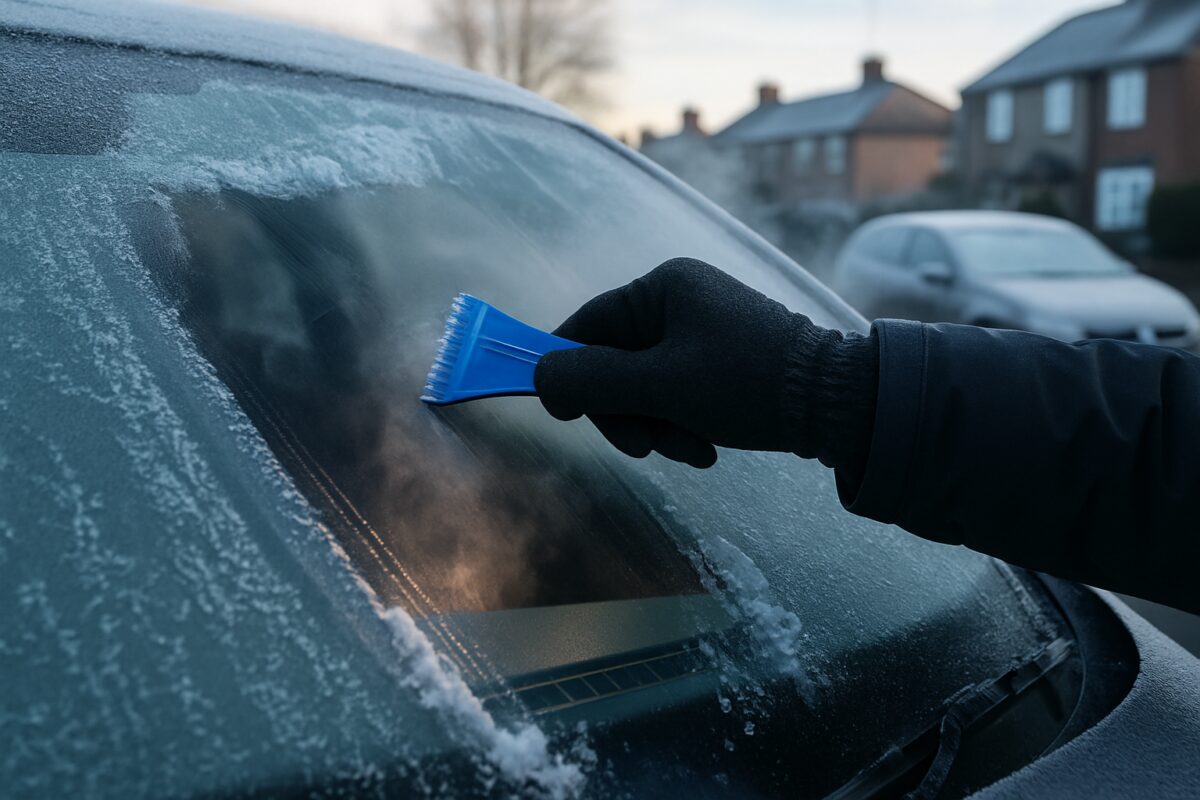
To safely remove ice from your windshield, use lukewarm water, an ice scraper, or de-icer spray. Never use hot water as it can crack the glass. Start your engine and turn on the heater and defroster whilst gently scraping from top to bottom in overlapping strokes.
Tools and parts required
Having the right equipment makes ice removal much safer and more efficient. These items will help you clear your windshield without causing damage.
Essential items needed:
- Quality ice scraper with plastic blade
- De-icer spray (commercial or homemade)
- Soft brush for snow removal
- Clean cloth or squeegee
- Lukewarm water in spray bottle
Optional tools:
- Remote car starter
- Windshield cover or frost guard
- Rubber gloves for grip
- Credit card as emergency scraper
Safety precautions
Never use hot or boiling water on frozen glass as thermal shock can cause cracks. Avoid metal objects that might scratch the windshield. Ensure your vehicle’s exhaust pipe isn’t blocked by snow before starting the engine. Always clear your entire windshield before driving – partial visibility is dangerous and illegal.
Expert tip: Our specialists at AutoPartsPro recommend keeping a small bottle of de-icer in your pocket during winter months. Body heat prevents it from freezing, ensuring it’s always ready when needed.
Step-by-step instructions
Step 1: Start your vehicle
Begin by starting your engine and immediately turn on the heating system. Set the blower to windshield defrost mode at maximum heat. This warms the glass from inside, making ice removal much easier. Allow the engine to run for 3-5 minutes whilst you gather your tools.
Step 2: Remove loose snow
Use a soft brush to gently sweep away any snow covering the ice. Work from the centre outwards to avoid pushing snow onto already cleared areas. This prevents the snow from refreezing and creating additional ice layers during the scraping process.
Step 3: Apply de-icer solution
Spray commercial de-icer or lukewarm water evenly across the iced surface. Allow it to penetrate for 2-3 minutes. The solution breaks down ice crystals, significantly reducing the effort needed for scraping. Avoid using hot water, which can cause thermal stress fractures.
Step 4: Scrape systematically
Using your ice scraper, start at the top of the windshield and work downwards in overlapping strokes. Apply steady, moderate pressure – forcing it can damage both the scraper and glass. Keep the blade at a 45-degree angle for optimal efficiency whilst avoiding scratches.
Step 5: Clear remaining residue
Wipe away any remaining water or ice particles with a clean cloth. Check that all areas are completely clear, including the edges where ice often persists. Test your windscreen wipers to ensure they move freely before driving.
Common mistakes to avoid
Many drivers make critical errors when removing ice that can damage their vehicle or create safety hazards. Understanding these pitfalls helps protect your investment and ensures safe winter driving.
Using boiling water is perhaps the most dangerous mistake. The extreme temperature difference can crack or shatter your windshield, requiring expensive replacement. Similarly, using metal tools like knives or coins will scratch the glass permanently.
Another common error is rushing the process. Trying to scrape thick ice without proper preparation creates tiny scratches that accumulate over time. These microscopic damages eventually compromise visibility and structural integrity.
Never drive with partially cleared windows. This creates dangerous blind spots and is illegal in the UK. Police can fine drivers up to £60 and add three penalty points for driving with obscured vision.
Professional insight: According to our automotive specialists, 70% of windshield damage during winter occurs from improper ice removal techniques rather than road debris. Taking time to do it properly saves money long-term.
When should you address ice formation?
Ice typically forms when temperatures drop below freezing, especially during clear nights when radiational cooling occurs rapidly. Morning frost appears when overnight temperatures fall below 2°C, whilst thicker ice develops during prolonged freezing periods.
Address ice formation immediately before driving. UK law requires drivers to have full visibility through all windows. Even thin frost layers significantly reduce visibility and create legal liability in accidents.
Consider preventative measures when forecasts predict freezing conditions. Covering your windshield overnight or parking in sheltered areas reduces ice formation. Regular maintenance of your windscreen washer jet system ensures effective winter operation.
Replace worn wiper blades before winter arrives. Damaged blades can’t clear residual moisture effectively, leading to increased ice formation. Quality maintenance prevents many winter visibility problems.
Related maintenance you can do simultaneously
Winter conditions provide excellent opportunities to address other vehicle maintenance needs. Combining tasks saves time and ensures comprehensive winter readiness.
Check your battery condition whilst the engine warms. Cold weather reduces battery capacity by up to 50%. Test voltage levels and clean terminals to prevent starting problems during continued cold spells.
Inspect your radiator thermostat operation. If the engine takes excessive time to warm up, the thermostat might be stuck open. Proper heating system function is crucial for effective windshield defrosting.
Examine your light bulbs whilst clearing ice from other windows. Winter’s reduced daylight hours increase lighting demands. Replace any dim or failed bulbs to maintain visibility and safety during shorter days.
Top up your windshield washer fluid with winter-grade solution. Standard fluid freezes in cold temperatures, potentially damaging the washer pump. Winter-grade fluid contains antifreeze agents that prevent freezing down to -20°C.
Frequently asked questions
Can I use salt to melt windshield ice?
Avoid using road salt on your windshield as it’s corrosive and can damage glass seals, paintwork, and metal components around the window frame.
How long should I warm up my car before scraping?
Allow 3-5 minutes for the engine to warm and the defroster to begin working effectively before starting the scraping process.
Is it safe to use credit cards as ice scrapers?
Credit cards work in emergencies but aren’t ideal long-term solutions as they can crack in cold temperatures and lack proper scraping edges.
Why does ice form more on some parts of the windshield?
Ice forms unevenly due to temperature variations across the glass surface, vehicle orientation, and heat transfer patterns from the engine compartment.
Can I prevent ice formation completely?
Complete prevention is difficult, but windshield covers, garage parking, and applying preventative treatments can significantly reduce ice formation during mild freezing conditions.
Proper ice removal protects your windshield investment whilst ensuring safe winter driving. Using appropriate techniques and quality tools prevents damage and reduces clearing time. Remember that patience and preparation are your best allies when dealing with winter ice formation on your vehicle’s glass surfaces.

 Loading...