To increase your vehicle’s MPG (miles per gallon), focus on maintaining proper tyre pressure, performing regular maintenance, adopting efficient driving habits, and keeping up with essential services like replacing your air filter and ensuring your engine runs optimally. Simple changes like removing excess weight, avoiding aggressive acceleration, and maintaining steady speeds can improve fuel efficiency by 10-25%.
Rising fuel costs make maximising fuel economy more important than ever. Whether you’re driving a petrol or diesel vehicle, implementing proven strategies can significantly reduce your fuel consumption without requiring expensive modifications or new technology.
Tools and parts required
Improving your vehicle’s fuel efficiency requires specific tools and replacement parts. Having the right equipment ensures you can perform maintenance tasks properly and safely.
Parts needed:
- Air filter (vehicle-specific)
- Fuel filter (manufacturer recommended)
- Engine oil (correct viscosity)
- Spark plugs (if applicable)
- Replacement fluids and filters
Tools required:
- Tyre pressure gauge
- Basic socket set
- Oil drain pan
- Filter wrench
- Jack and axle stands
Safety precautions
Always ensure your vehicle is on level ground when checking fluids or performing maintenance. Allow the engine to cool completely before working on any components. Use proper lifting equipment and never rely solely on a jack for support when working underneath your vehicle.
Step-by-step instructions
Step 1: Check and maintain proper tyre pressure
Underinflated tyres create unnecessary rolling resistance, forcing your engine to work harder. Check your tyre pressure monthly using a reliable gauge. Refer to your owner’s manual or the placard inside the driver’s door for the correct pressure specifications.
Cold tyres provide the most accurate readings, so check pressure before driving or after the vehicle has been parked for several hours. Properly inflated tyres can improve fuel economy by up to 3%.
Step 2: Replace your air filter regularly
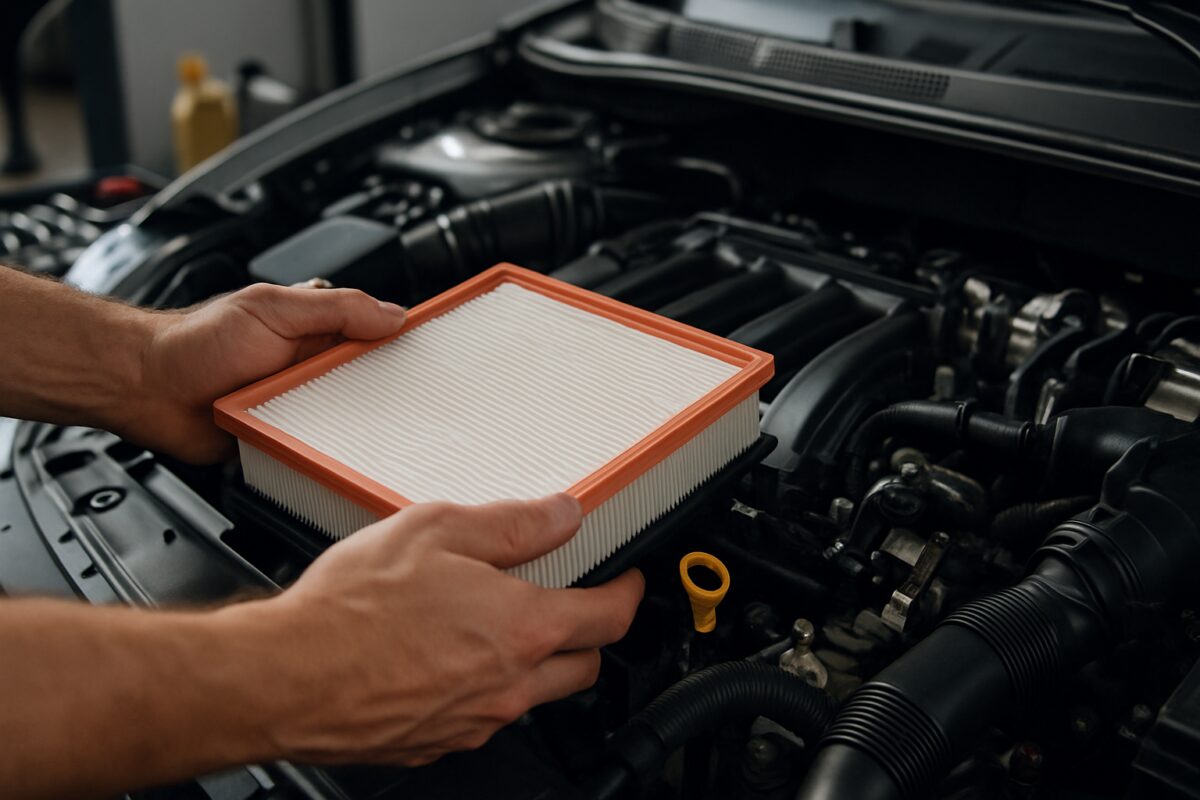
A clogged air filter restricts airflow to your engine, reducing efficiency and increasing fuel consumption. Most vehicles need a new air filter every 12,000-15,000 miles, though this varies based on driving conditions.
Locate your air filter housing, typically a rectangular or round plastic box near the engine. Remove the old filter and inspect it for dirt and debris. A clean filter should appear white or off-white, while a dirty filter will look brown or black.
Step 3: Service your fuel system
Clean fuel injectors and a fresh fuel filter ensure optimal fuel delivery to your engine. Replace your fuel filter according to manufacturer recommendations, typically every 20,000-40,000 miles.
Consider using a quality fuel injector cleaner every few thousand miles to remove deposits that can affect fuel spray patterns and combustion efficiency.
Step 4: Maintain your engine oil
Using the correct oil viscosity and changing it regularly reduces internal engine friction. Thinner oils (like 5W-30 instead of 10W-40) can improve fuel economy in suitable engines by reducing drag on moving parts.
Follow your vehicle’s service schedule for oil changes, typically every 5,000-7,500 miles for conventional oil or up to 10,000 miles for synthetic oil.
Step 5: Optimise your driving habits
Your driving style significantly impacts fuel consumption. Accelerate gradually and maintain steady speeds when possible. Use cruise control on motorways to maintain consistent velocity.
Anticipate traffic conditions and coast to decelerate rather than braking hard. Aggressive driving can reduce fuel economy by 15-30% on motorways and 10-40% in stop-and-go traffic.
Professional tip: According to AutoPartsPro’s mechanics, maintaining engine temperature within the optimal range is crucial for fuel efficiency. A faulty thermostat can cause your engine to run too cold, increasing fuel consumption by forcing the engine management system to run rich.
Common mistakes to avoid
Many drivers unknowingly reduce their vehicle’s fuel efficiency through simple oversights. Avoid these common errors that can significantly impact your MPG.
Using incorrect oil viscosity can increase internal friction and reduce efficiency. Always consult your owner’s manual for the recommended grade. Additionally, don’t ignore warning lights on your dashboard, as they often indicate issues affecting fuel economy.
Carrying unnecessary weight reduces fuel efficiency. Remove heavy items from your boot and avoid using roof boxes when not needed. Every extra 50kg can reduce efficiency by up to 2%.
Skipping regular maintenance allows small problems to compound. Replace your oil filter with each oil change and don’t delay replacing worn components that affect engine performance.
Expert insight: Our specialists at AutoPartsPro recommend checking your vehicle’s mass air flow sensor if you notice decreased fuel economy alongside rough idling. A faulty sensor provides incorrect data to the engine management system, leading to improper fuel delivery.
When should you replace key components?
Timing your maintenance correctly maximises fuel efficiency improvements. Different components have varying service intervals based on driving conditions and manufacturer recommendations.
Replace your air filter every 12,000-15,000 miles under normal conditions, or more frequently if you drive in dusty environments. Fuel filters typically last 20,000-40,000 miles, whilst spark plugs can last 30,000-100,000 miles depending on type.
Monitor your vehicle’s performance for signs indicating replacement needs. Symptoms like reduced acceleration, rough idling, or decreased fuel economy often point to specific components requiring attention.
Keep detailed maintenance records to track component ages and plan future services. This proactive approach prevents efficiency-reducing problems before they impact your fuel consumption.
Related maintenance you can do at the same time
Combining multiple maintenance tasks saves time and ensures your vehicle operates at peak efficiency. When replacing your air filter, consider checking other engine bay components that affect performance.
Inspect your radiator hoses for cracks or leaks that could cause overheating. Check belt tension and condition, as loose or worn belts reduce accessory efficiency.
Service your cooling system by checking coolant levels and condition. Clean debris from your radiator fins to maintain proper engine operating temperature, which directly affects fuel efficiency.
Consider replacing your cabin filter simultaneously, as this simple step improves airflow through your ventilation system, reducing the load on your air conditioning compressor.
Frequently asked questions
Does using premium fuel improve MPG in regular cars?
Premium fuel typically doesn’t improve MPG in engines designed for regular petrol. Use the octane rating recommended by your manufacturer for optimal performance and efficiency.
How much can proper maintenance improve my fuel economy?
Regular maintenance can improve fuel economy by 10-25%. Key services include air filter replacement, oil changes, tyre pressure maintenance, and keeping fuel systems clean.
Do fuel additives actually work to improve MPG?
Quality fuel system cleaners can help maintain injector efficiency, potentially improving MPG by 2-5%. However, they won’t compensate for poor maintenance or aggressive driving habits.
Should I warm up my engine before driving?
Modern engines don’t require extended warm-up periods. Drive gently for the first few minutes instead of idling, which wastes fuel and increases emissions.
How does air conditioning affect fuel consumption?
Air conditioning can reduce fuel economy by 5-20% depending on usage. At low speeds, windows down is more efficient; at motorway speeds, air conditioning is typically better.
Achieving better fuel economy requires consistent attention to both vehicle maintenance and driving habits. Regular servicing with quality components from trusted suppliers ensures your engine operates efficiently, while adopting fuel-conscious driving techniques maximises the benefits of your maintenance efforts. Remember that small improvements in multiple areas combine to create significant overall gains in your vehicle’s MPG performance.

 Loading...