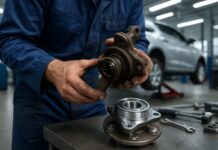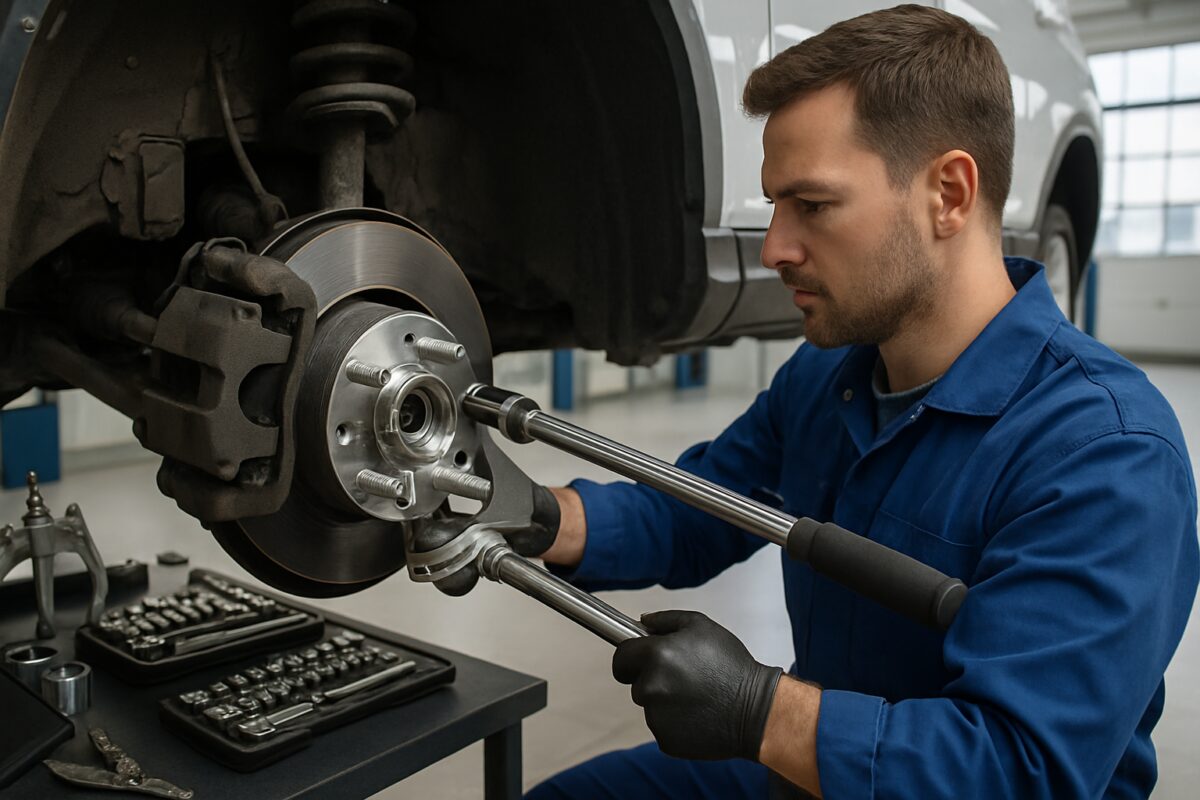
The cost to replace a wheel hub in the UK ranges from £180 to £450 per hub, including parts and labour. This essential repair typically costs between £120-280 for the hub assembly itself, with labour charges adding another £60-170 depending on your vehicle’s complexity and local garage rates.
Understanding wheel hub replacement costs
When your wheel hub begins to fail, understanding the replacement costs helps you budget for this critical repair. The total expense varies significantly based on several factors that affect both parts and labour pricing.
Hub assemblies differ considerably in price depending on your vehicle’s make and model. Basic hubs for popular cars like the Ford Focus or Vauxhall Corsa typically cost less than premium vehicle components. European luxury brands often command higher prices due to sophisticated engineering and materials.
Factors affecting wheel hub replacement pricing
Several elements influence the final cost of your hub replacement project:
- Vehicle make and model – luxury brands cost more than standard manufacturers
- Hub type – standard hubs versus integrated ABS sensor units
- Drive configuration – front-wheel drive, rear-wheel drive, or all-wheel drive systems
- Labour rates – independent garages versus main dealers
- Geographic location – London prices exceed rural garage rates
According to our specialists at AutoPartsPro, modern vehicles with integrated ABS sensors typically cost 15-25% more to replace than conventional hub assemblies. This additional expense reflects the complexity of the integrated systems and calibration requirements.
Breaking down wheel hub assembly costs
Understanding the component costs helps you evaluate quotes from different suppliers and garages. Hub assemblies include various elements that affect pricing structures.
| Component Type | Price Range | Notes |
|---|---|---|
| Standard hub assembly | £120-200 | Basic units without integrated sensors |
| ABS sensor integrated hub | £180-280 | Includes magnetic ring and sensor components |
| Premium/OE specification | £220-350 | Original equipment quality for luxury vehicles |
| Performance/upgraded units | £250-400 | Enhanced materials for modified vehicles |
Professional mechanics typically recommend OE-quality replacements for reliability and longevity. Whilst budget alternatives exist, our experience shows that premium components often provide better value through extended service life.
Labour costs for hub replacement
Labour charges represent a significant portion of your total replacement cost. The complexity varies dramatically between vehicle designs, affecting work time and specialist tool requirements.
Most garages charge between £60-90 per hour for mechanical work. Hub replacement typically requires 1.5-2.5 hours, depending on access complexity and whether additional components need removal.
Time factors affecting labour costs
Several elements influence the labour time required for hub replacement:
- Vehicle design – some manufacturers provide excellent hub access whilst others require extensive disassembly
- Corrosion levels – seized components increase removal time significantly
- ABS integration – sensor calibration adds 15-30 minutes to the job
- Brake disc condition – worn discs often require replacement during hub work
- Suspension modifications – lowered vehicles may require additional time
Independent mechanics often provide more competitive labour rates than main dealers. However, specialist tools for certain vehicles may only be available at authorised service centres, potentially affecting your choice.
Additional costs and considerations
Hub replacement projects frequently reveal additional maintenance requirements. Experienced technicians inspect related components during the repair process, identifying potential issues.
Common additional items include brake discs, which often show wear patterns when hubs fail. Replacing these simultaneously saves labour costs and ensures optimal braking performance.
- Brake pads – typically £25-65 per set
- Brake discs – usually £40-120 each
- ABS sensor wiring – sometimes £15-35 for damaged cables
- Hub nuts/bolts – occasionally £5-15 for security fasteners
- Wheel alignment – recommended after suspension work, £30-60
Our technical specialists recommend addressing these items during hub replacement to maximise value and prevent future problems. Combining repairs reduces overall labour costs whilst ensuring comprehensive maintenance.
Symptoms requiring wheel hub replacement
Recognising hub failure symptoms helps prevent dangerous driving conditions and expensive secondary damage. Early intervention typically reduces overall repair costs significantly.
The most common indicator involves grinding or humming noises from the wheel area, particularly during cornering or acceleration. This sound typically increases with vehicle speed and may change when steering.
Pro tip from AutoPartsPro mechanics: Test suspected hub bearing noise by gently swerving left and right at safe speeds. If the noise changes or disappears when turning, the opposite side hub likely requires attention.
Vibration through the steering wheel or seat often accompanies bearing wear. Severe cases produce noticeable wheel wobble, creating dangerous driving conditions requiring immediate attention.
Warning signs of hub failure
Professional diagnosis confirms hub problems before expensive repairs begin:
- Grinding noises increasing with speed
- Wheel wobble or vibration during driving
- Uneven tyre wear patterns on affected wheels
- ABS warning lights with integrated sensor hubs
- Excessive wheel play when jacked up
Ignoring these symptoms risks wheel detachment, brake system damage, or loss of vehicle control. Prompt replacement prevents these dangerous and expensive consequences.
Choosing quality replacement parts
Selecting appropriate replacement components ensures reliable operation and value for money. Various quality grades exist, each serving different requirements and budgets.
Original equipment manufacturers produce hubs meeting exact vehicle specifications. These premium components typically offer the longest service life and best fit, though at higher cost.
| Quality Grade | Expected Lifespan | Warranty Period | Best For |
|---|---|---|---|
| OE Quality | 80,000-120,000 miles | 2-3 years | Long-term ownership, premium vehicles |
| Aftermarket Premium | 60,000-100,000 miles | 12-24 months | Quality-conscious budget repairs |
| Economy Grade | 40,000-70,000 miles | 6-12 months | Short-term fixes, older vehicles |
| Performance Upgraded | Variable | 12-18 months | Modified or track-used vehicles |
Budget alternatives serve immediate needs but may require earlier replacement. Consider your vehicle’s age, mileage, and intended ownership period when selecting components.
DIY versus professional installation
Hub replacement requires significant mechanical skill and specialised tools. Whilst possible for experienced home mechanics, professional installation ensures safety and warranty compliance.
The procedure involves removing wheels, brake components, and often suspension elements. Torque specifications for hub nuts typically exceed 200Nm, requiring calibrated tools for proper installation.
Safety considerations include proper vehicle support, brake system integrity, and ABS calibration. Incorrect installation risks wheel detachment or brake failure, creating life-threatening situations.
Additionally, many hub assemblies require wheel alignment after installation. This precise adjustment needs professional equipment unavailable to most home mechanics, making garage installation more practical.
Regional cost variations across the UK
Geographic location significantly affects both parts and labour pricing. Understanding these variations helps you budget appropriately and potentially save money through strategic shopping.
London and South East England typically command the highest prices, with labour rates often 20-30% above national averages. Northern England, Wales, and Scotland generally offer more competitive pricing structures.
Urban areas usually provide more supplier options, potentially reducing parts costs through competition. However, higher overheads often offset these savings through increased labour charges.
Rural locations may offer excellent labour rates but limited parts availability. Planning ahead and sourcing components online can maximise savings in these areas.
Consider travelling to nearby towns for significant repairs if local pricing seems excessive. The fuel cost often proves negligible compared to potential savings on expensive hub replacement projects.
Frequently Asked Questions (FAQ)
How long does a wheel hub replacement take?
Most wheel hub replacements require 1.5-2.5 hours depending on vehicle complexity and component access. ABS-integrated units may need additional calibration time.
Can I drive with a failing wheel hub?
Driving with hub bearing failure risks wheel detachment and brake system damage. Stop driving immediately when grinding noises or excessive vibration develop.
How often should wheel hubs be replaced?
Quality wheel hubs typically last 80,000-120,000 miles under normal conditions. Severe driving conditions or poor maintenance may reduce this lifespan significantly.
What causes wheel hub bearing failure?
Common causes include normal wear, water contamination, impact damage, improper installation, and inadequate lubrication. Regular maintenance helps prevent premature failure.
Should I replace wheel hubs in pairs?
Replacing hubs in pairs isn’t mandatory unless both show wear symptoms. However, similar age components often fail within similar timeframes, making paired replacement economical.

 Loading...