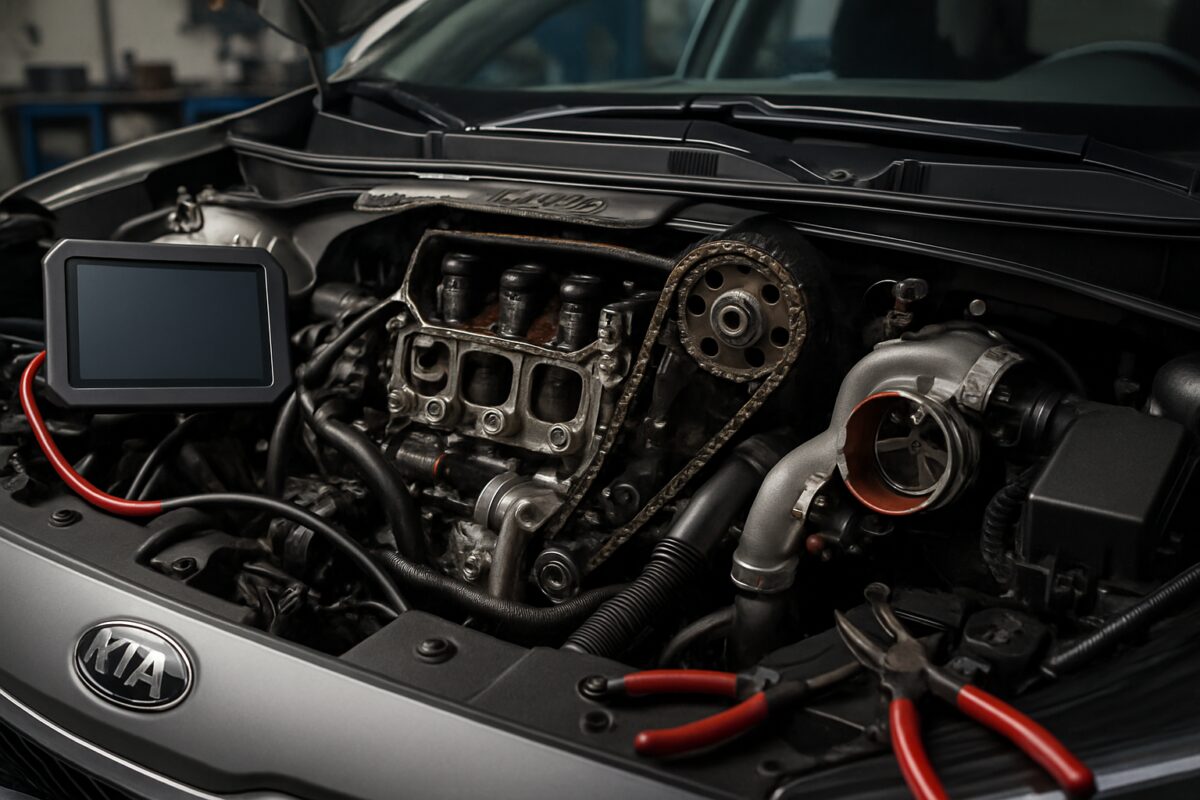
The KIA Stonic has become a popular crossover choice amongst UK drivers, but like any vehicle, it’s not immune to mechanical issues. Understanding the most common engine problems and breakdowns can help you spot trouble early and maintain your vehicle properly. Our AutoPartsPro specialists have identified key areas where Stonic owners frequently encounter difficulties.
Problem #1: Turbocharger failures in petrol engines
The 1.0-litre T-GDI petrol engine in the KIA Stonic is prone to turbocharger complications, particularly in vehicles with higher mileage. Early symptoms include reduced power output, excessive blue smoke from the exhaust, and unusual whistling sounds during acceleration.
Carbon build-up on the turbo vanes represents the primary culprit. This occurs when drivers frequently make short journeys without allowing the engine to reach optimal operating temperature. The restricted airflow reduces performance significantly and can cause complete turbo failure if ignored.
Oil starvation also contributes to premature turbocharger wear. When engine oil changes are delayed beyond recommended intervals, contaminated lubricant damages the turbo’s delicate internal components. The repair costs typically range from £1,200 to £2,500 for complete turbocharger replacement, making preventive maintenance essential.
Regular motorway driving helps burn off carbon deposits and keeps your turbocharger operating efficiently. Aim for at least one 20-minute high-speed journey weekly.
Problem #2: Direct injection system carbon fouling
Modern GDI (Gasoline Direct Injection) engines in the Stonic suffer from carbon accumulation on intake valves. Unlike port injection systems, GDI engines don’t wash fuel over the valves, allowing carbon deposits to build up over time.
Symptoms include rough idling, hesitation during acceleration, and reduced fuel economy. The problem becomes more pronounced after 60,000 miles, particularly in vehicles used primarily for urban driving. Carbon cleaning services cost between £300-£600, but neglecting the issue can lead to expensive valve damage.
The fuel filter also requires attention in GDI systems. Contaminated fuel accelerates carbon formation, making regular filter replacement crucial for system longevity.
Problem #3: Timing chain stretch in diesel variants
The 1.6-litre CRDi diesel engine experiences timing chain elongation, especially in high-mileage examples. Chain stretch occurs gradually, affecting valve timing and reducing engine performance. Warning signs include engine rattling on cold starts, reduced power, and increased fuel consumption.
Inadequate oil changes accelerate chain wear. Using incorrect oil viscosity or extending service intervals beyond manufacturer recommendations causes premature stretching. Complete timing chain replacement costs approximately £800-£1,400, including labour and related components.
The tensioner mechanism often fails simultaneously with chain stretch. When hydraulic pressure drops, the chain becomes loose, creating characteristic rattling noises. Early intervention prevents costly engine damage from jumped timing.
Warning signs your car has a problem
Recognising early symptoms helps prevent minor issues from becoming expensive repairs:
- Unusual engine noises (rattling, whistling, or grinding)
- Reduced power output or sluggish acceleration
- Excessive exhaust smoke (blue, black, or white)
- Rough idling or engine misfiring
- Dashboard warning lights illuminating
How to fix the problems
| Problem | DIY Solution | Professional Repair | Cost Range |
|---|---|---|---|
| Carbon Build-up | Use quality fuel additives | Professional walnut blasting | £300-£600 |
| Turbo Failure | Regular oil changes | Turbocharger replacement | £1,200-£2,500 |
| Timing Chain | Quality oil maintenance | Chain and tensioner replacement | £800-£1,400 |
| Fuel System | Replace fuel filter regularly | Injector cleaning service | £200-£400 |
Always use manufacturer-approved oil specifications and change intervals. Premium oil might cost more initially, but prevents expensive engine damage long-term.
When to see a mechanic
Immediate professional attention is required when you notice persistent engine warning lights, significant power loss, or unusual noises that don’t resolve after basic maintenance. Don’t ignore symptoms hoping they’ll disappear – early intervention saves money.
Book a diagnostic session if fuel consumption increases dramatically or the engine produces excessive exhaust emissions. Modern diagnostic equipment can identify developing problems before they cause complete failure.
Consider professional inspection after 40,000 miles for turbo engines and 60,000 miles for naturally aspirated variants. Preventive checks identify wear patterns and allow planned repairs rather than emergency breakdowns.
| Service Type | Frequency | Typical Cost |
|---|---|---|
| Engine Diagnostics | Annually or when issues arise | £80-£120 |
| Carbon Cleaning | Every 40,000 miles | £300-£600 |
| Timing Chain Inspection | Every 60,000 miles | £150-£250 |
Frequently Asked Questions (FAQ)
What oil should I use in my KIA Stonic engine?
Use 5W-30 fully synthetic oil meeting ACEA C3 specification. KIA recommends specific brands, but any oil meeting these standards works effectively.
How often should I service my Stonic’s turbo engine?
Service intervals are 12 months or 10,000 miles, whichever comes first. Severe driving conditions may require more frequent maintenance.
Can I use supermarket fuel in my KIA Stonic?
Yes, but premium fuel with cleaning additives helps prevent carbon build-up in GDI engines. Occasional premium fuel usage benefits long-term engine health.
What causes blue smoke from my Stonic’s exhaust?
Blue smoke indicates oil burning, often from worn turbo seals, damaged piston rings, or valve stem problems. Professional diagnosis determines the exact cause.
How long do KIA Stonic engines typically last?
With proper maintenance, Stonic engines achieve 150,000-200,000 miles. Regular servicing and quality parts significantly extend engine life and reliability.
Final recommendation
The KIA Stonic represents solid value in the crossover segment, but proactive maintenance prevents common engine problems. Regular oil changes using correct specifications, quality fuel, and timely professional inspections keep your engine running smoothly. Don’t wait for problems to develop – preventive care costs less than emergency repairs.
Our AutoPartsPro mechanics emphasise that most Stonic engine issues stem from neglected maintenance rather than design flaws. Follow manufacturer guidelines, address warning signs promptly, and your engine will provide reliable service for years. When repairs become necessary, choose quality replacement parts from reputable suppliers to maintain performance and longevity. The small investment in proper maintenance pays dividends in reduced breakdown costs and improved driving experience.

 Loading...