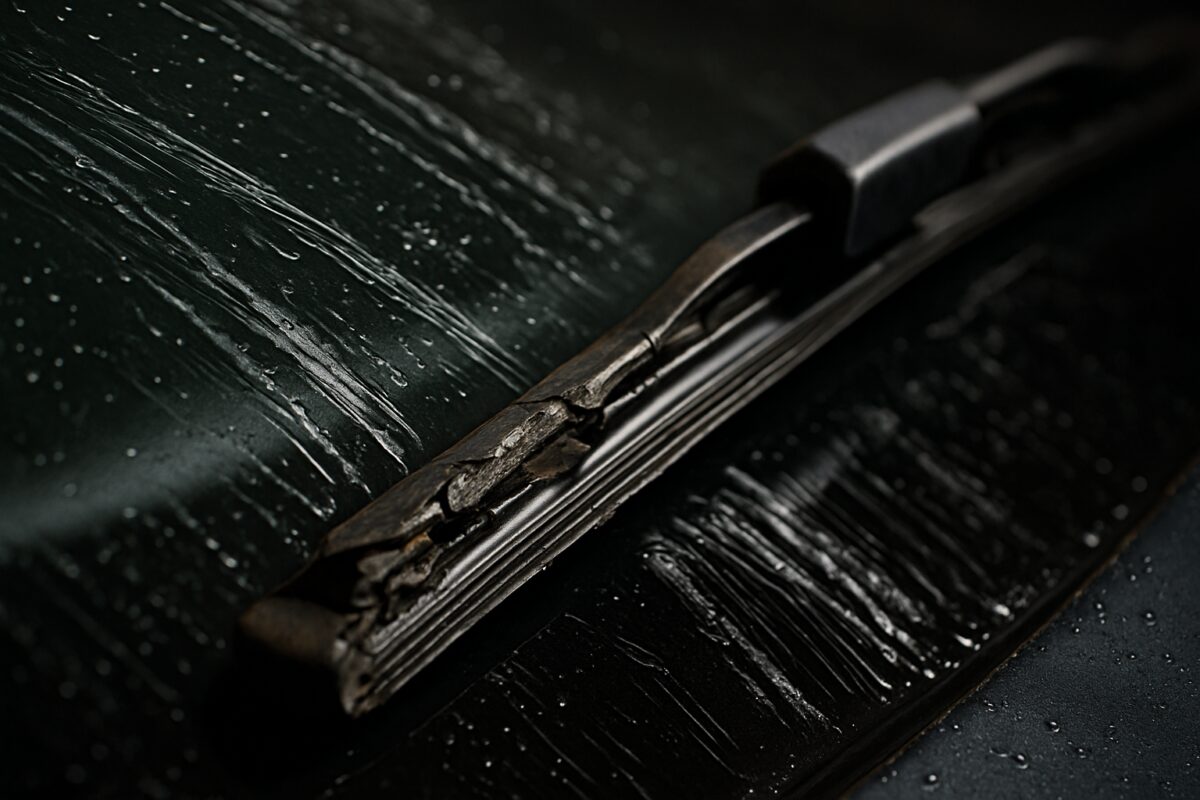
Wiper blade juddering occurs when worn rubber, contaminated windscreen surfaces, or incorrect blade tension cause the wipers to skip and chatter across the glass instead of gliding smoothly. This common problem reduces visibility, creates annoying noise, and can damage both the windscreen wipers and glass surface if left untreated.
Tools & parts required
Before attempting to fix juddering wiper blades, you’ll need the right equipment and replacement parts to ensure a successful repair.
Parts needed:
- New wiper blades (vehicle-specific size)
- Replacement wiper rubber refills
- Windscreen cleaning solution
- Microfibre cloths
Tools required:
- Flat-head screwdriver
- Needle-nose pliers
- Measuring tape
- Clean bucket for soapy water
- Soft-bristled brush
Always ensure your replacement blades match your vehicle’s specific requirements. Check your owner’s manual for the correct blade length and attachment type before purchasing.
Safety precautions
Working on wiper blades requires minimal safety measures, but proper precautions prevent damage to your windscreen and wiper mechanism.
Lift wiper arms gently to avoid over-extending the spring mechanism. Never force stuck components, as this can damage the wiper motor or arm assembly. Work in shade when possible, as direct sunlight can cause cleaning products to dry too quickly and leave streaks.
Wear safety glasses when using cleaning solvents to protect your eyes from splashes. Keep a clean cloth handy to wipe away excess cleaning solution before it drips onto painted surfaces.
Step-by-step instructions
Step 1: Diagnose the problem
Start by examining your wiper blades for visible wear signs. Look for cracked, torn, or hardened rubber edges that prevent smooth contact with the windscreen. Check for bent wiper arms that might cause uneven pressure distribution.
Test the wipers on a clean, wet windscreen to identify specific juddering patterns. Note whether the problem occurs across the entire sweep or only in certain areas.
Step 2: Clean the windscreen thoroughly
Mix warm water with quality windscreen cleaning solution in a bucket. Use a microfibre cloth to remove all dirt, grime, and residue from the glass surface. Pay special attention to areas where the wipers make contact.
For stubborn contamination, apply cleaning solution directly and let it sit for several minutes before wiping clean. Ensure no soap residue remains on the glass.
Step 3: Inspect and clean wiper blades
Lift each wiper arm carefully and examine the rubber blade edge. Clean the blade with soapy water and a soft cloth, removing any embedded dirt or debris that could cause juddering.
Check the blade’s flexibility by gently bending it. Rubber that feels hard or brittle needs immediate replacement. Look for uneven wear patterns that indicate alignment problems.
Step 4: Adjust blade tension
Many juddering issues stem from incorrect blade pressure against the windscreen. If your wipers have adjustable tension, use needle-nose pliers to carefully bend the wiper arm slightly.
Test the pressure by running your finger along the blade edge while it’s pressed against the glass. The contact should feel even across the entire length.
Step 5: Replace worn components
If cleaning and adjustment don’t resolve the juddering, replacement becomes necessary. Remove the old blade by releasing the clip mechanism and sliding it off the wiper arm.
Install the new blade by reversing the removal process. Ensure the blade clicks securely into place and moves freely across its full range of motion.
Common mistakes to avoid
Many car owners make costly errors when addressing wiper blade juddering. Here are the most frequent mistakes and how to avoid them.
Never use petroleum-based products on wiper blades, as these cause rubber deterioration and worsen juddering problems. Avoid using brake fluid or other automotive fluids as cleaning agents.
Don’t operate wipers on a dry windscreen, as this creates unnecessary friction and accelerates blade wear. Always ensure adequate moisture before testing wiper operation.
Resist the temptation to over-tighten wiper arm nuts, as excessive pressure can bend the arm and create permanent alignment issues. Use only the specified torque settings from your vehicle manual.
Avoid cheap replacement blades that may not fit properly or provide adequate performance. Quality blades last longer and provide better visibility in adverse weather conditions.
When should you replace them?
Understanding when to replace wiper blades helps maintain optimal visibility and prevents juddering problems from developing.
Replace wiper blades every 12-18 months under normal conditions, or sooner if you notice streaking, skipping, or juddering. Harsh weather conditions, frequent use, and exposure to extreme temperatures accelerate wear.
Look for these warning signs: chattering across the windscreen, streaking in wet conditions, visible cracks in the rubber, or metal components showing through worn areas. If your wipers leave sections of the windscreen uncleaned, immediate replacement prevents safety hazards.
Consider replacing blades before winter arrives, as freezing temperatures and ice can quickly damage worn rubber. Summer heat also degrades wiper rubber, making autumn an ideal replacement time.
Related maintenance you can do at the same time
Addressing wiper blade juddering provides an excellent opportunity to perform related maintenance tasks that improve overall visibility and vehicle safety.
Replace your cabin filter to improve air quality and defogger performance. A clean cabin filter reduces interior fogging that can worsen visibility issues.
Check and top up windscreen washer fluid levels. Consider upgrading to winter-grade fluid with antifreeze properties for year-round protection. Inspect washer nozzles for blockages that prevent proper fluid distribution.
Examine headlight condition and clean cloudy lenses that reduce night-time visibility. Replace any blown light bulbs to ensure optimal illumination during poor weather conditions.
This comprehensive approach ensures all visibility-related components work together effectively, reducing the likelihood of future problems.
Frequently asked questions
Why do my wipers judder only when it’s raining lightly?
Light rain doesn’t provide enough lubrication for worn wiper blades to glide smoothly across the windscreen, causing juddering that disappears in heavier rain.
Can I fix juddering wipers without replacing the blades?
Sometimes cleaning the windscreen and wiper blades thoroughly resolves minor juddering, but persistent problems usually require blade replacement for lasting results.
How do I know if my wiper arms are bent?
Bent wiper arms create uneven pressure distribution, causing juddering in specific areas. Visual inspection from the side shows obvious misalignment compared to the windscreen curve.
Is it safe to drive with juddering wipers?
Juddering wipers reduce visibility and can worsen quickly, creating safety hazards. Address the problem promptly, especially before driving in adverse weather conditions.
Do premium wiper blades prevent juddering better than standard ones?
Quality wiper blades typically feature better rubber compounds and more precise manufacturing, reducing the likelihood of juddering and extending service life significantly.
“From our experience at Autopartspro, most juddering problems stem from customers trying to extend blade life beyond reasonable limits. Replacing wipers annually prevents most visibility issues and saves money long-term.” – Autopartspro Technical Team
“We’ve found that cleaning both the windscreen and wiper blades monthly significantly extends blade life and prevents juddering. It’s simple preventive maintenance that many drivers overlook.” – Autopartspro Service Specialists
Addressing wiper blade juddering promptly ensures safe driving conditions and prevents more costly repairs. Quality replacement blades from reputable manufacturers, combined with regular cleaning and proper maintenance, provide reliable performance in all weather conditions. For additional guidance on vehicle maintenance, check out our comprehensive guide on changing windscreen wipers or explore our car maintenance resources. Remember that investing in proper DIY maintenance saves money while keeping your vehicle safe and reliable. When visibility matters most, quality components and proper installation make all the difference for confident driving in challenging weather conditions.

 Loading...