The power steering pump transforms your vehicle’s steering from a demanding physical workout into effortless control. When this crucial component fails, you’ll quickly appreciate how vital it is for safe driving. Understanding the warning signs and replacement costs helps you address problems before they leave you wrestling with an unresponsive steering wheel.
Noisy operation and whining sounds
A failing power steering pump typically announces its distress through distinctive whining or squealing noises. These sounds occur when the pump struggles to circulate hydraulic fluid through the system. The noise intensifies when turning the wheel, particularly during parking manoeuvres or tight corners.
Low hydraulic fluid levels often cause these sounds. As fluid drops below optimal levels, the pump begins drawing air into the system, creating cavitation. This process produces the characteristic whining sound that many drivers recognise as the first sign of trouble.
Worn internal components within the pump also generate unusual noises. The pump’s vanes, rotor, or housing may develop wear patterns that create grinding or rattling sounds. These mechanical noises indicate advanced wear and require immediate attention to prevent complete pump failure.
Temperature affects noise levels significantly. Cold mornings often amplify these sounds as thick hydraulic fluid places additional strain on the pump. If noises persist after the engine warms up, the pump likely needs professional diagnosis.
Steering difficulties and increased effort
Power steering problems manifest most obviously through increased steering effort. What once required minimal force suddenly demands significant physical strength. This change occurs gradually in most cases, making it easy to overlook until the problem becomes severe.
Pump failure affects steering response differently depending on driving conditions. Highway driving may seem relatively normal, whilst parking lot manoeuvres become increasingly difficult. The pump struggles most when maximum assistance is required, such as turning at low speeds or when stationary.
Complete power steering loss represents the most dangerous scenario. The steering wheel becomes extremely heavy, requiring considerable force to turn. This situation creates serious safety concerns, particularly during emergency manoeuvres or tight cornering situations.
Variable steering effort also indicates pump problems. The steering may feel normal one moment, then suddenly become heavy the next. This inconsistency suggests intermittent pump operation, often related to internal seal failures or irregular fluid pressure.
Fluid leaks and contamination issues
Power steering fluid leaks commonly indicate pump seal failures. These leaks typically appear near the pump housing, creating distinctive red or brown puddles beneath the vehicle. The fluid has a characteristic sweet smell that helps distinguish it from other automotive fluids.
Pump seal deterioration occurs naturally with age and mileage. High temperatures accelerate this process, particularly in vehicles subjected to extreme operating conditions. Regular fluid changes help preserve seal integrity and extend pump life.
Contaminated fluid also signals potential pump problems. Dark, dirty fluid indicates overheating or internal component wear. Metal particles in the fluid suggest advanced pump deterioration and immediate replacement necessity.
External leaks aren’t the only concern. Internal leaks within the pump reduce system pressure without visible fluid loss. These problems manifest through poor steering performance and inconsistent power assistance levels.
Warning signs your car has a problem
Recognising early warning signs prevents complete power steering failure and potential safety hazards. Several symptoms indicate developing pump problems before total failure occurs.
- Unusual noises during steering, particularly whining or squealing sounds
- Increased steering effort, especially during low-speed manoeuvres
- Fluid leaks beneath the vehicle near the front wheels
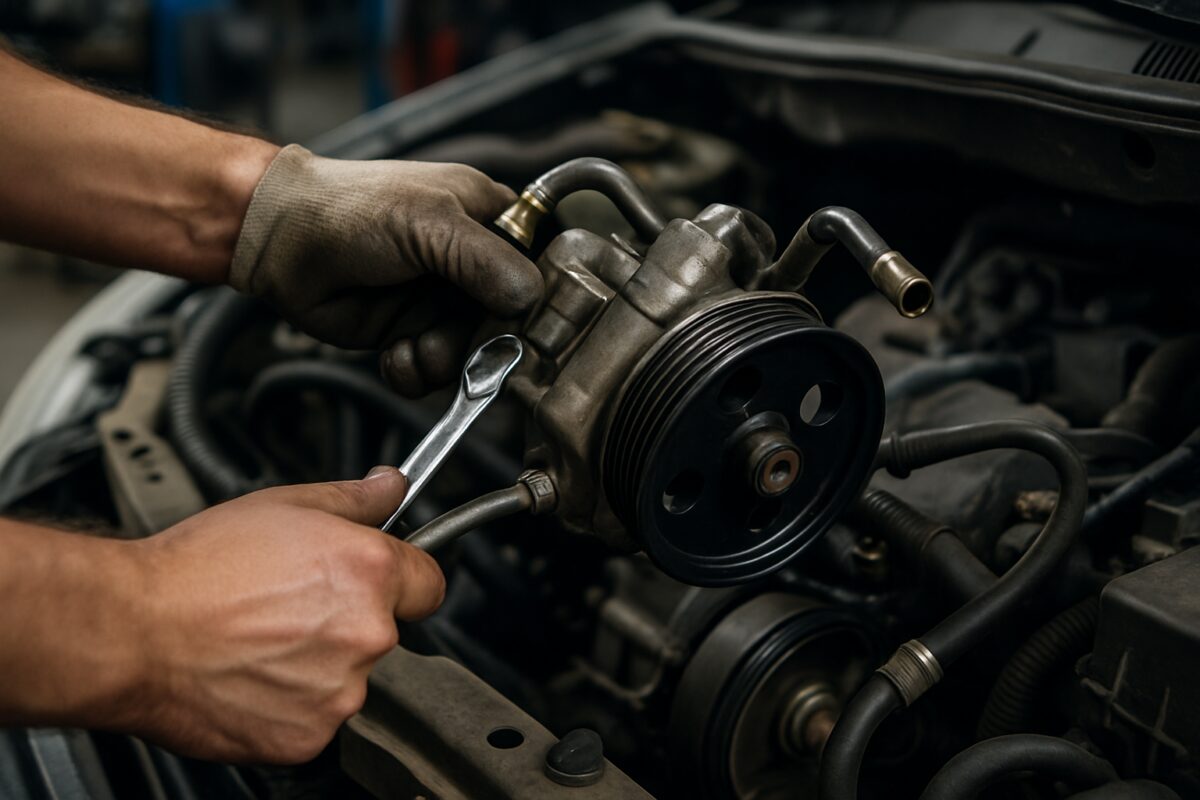
Visual inspection provides valuable diagnostic information. Check the engine radiator area for fluid stains or puddles. Examine the pump housing for signs of leakage or damage. Listen carefully for unusual sounds when starting the engine or turning the steering wheel.
- Steering wheel vibration or shuddering during turns
- Inconsistent power assistance levels
- Dark or contaminated power steering fluid
Professional diagnosis becomes essential when multiple symptoms occur simultaneously. Modern vehicles with electronic power steering systems require specialised diagnostic equipment to identify specific fault codes and component failures.
- Complete loss of power steering assistance
- Burning smell from the engine compartment
- Steering wheel won’t return to centre position
How to fix the problems
Power steering pump repairs range from simple fluid changes to complete unit replacement. The appropriate solution depends on the specific problem and pump condition.
| Problem | Solution | Cost Range |
|---|---|---|
| Low fluid level | Top up with correct fluid | £15-30 |
| Contaminated fluid | Complete fluid flush | £80-120 |
| Minor leaks | Seal replacement | £150-250 |
| Major pump failure | Complete pump replacement | £300-600 |
“Always use the manufacturer-recommended power steering fluid type. Mixing different fluid specifications can damage seals and reduce pump performance,” advises AutoPartsPro’s technical specialist.
Professional installation ensures proper system bleeding and pressure testing. Improper installation can introduce air bubbles, reducing system efficiency and causing premature pump failure.
| Component | Labour Hours | Parts Cost |
|---|---|---|
| Pump replacement | 2-4 hours | £200-400 |
| Fluid flush | 1 hour | £20-40 |
| Seal kit | 3-5 hours | £50-100 |
| Pressure hose | 1-2 hours | £80-150 |
“Regular maintenance significantly extends power steering pump life. Check fluid levels monthly and inspect for leaks during routine servicing,” recommends our senior automotive technician.
When to see a mechanic
Certain power steering problems require immediate professional attention. Don’t attempt DIY repairs when safety is compromised or specialised equipment is necessary.
Complete power steering failure demands urgent professional diagnosis. Driving without power assistance creates safety hazards and may damage other steering components. Schedule emergency service when steering becomes extremely heavy or unresponsive.
Unusual noises warrant professional evaluation, particularly grinding or metal-on-metal sounds. These symptoms suggest internal component failure requiring immediate attention. Continued operation may cause catastrophic pump failure and expensive collateral damage.
Fluid leaks need prompt professional assessment to determine their source and severity. External leaks can drain the system rapidly, whilst internal leaks reduce performance gradually. Both conditions require expert diagnosis to identify the most cost-effective repair approach.
Modern vehicles with electronic power steering systems need specialist diagnostic equipment. Professional mechanics can read fault codes, test system pressures, and verify component operation using manufacturer-specific tools and procedures.
How often should you replace a power steering pump?
Power steering pumps typically last 100,000-150,000 miles with proper maintenance. Regular fluid changes and system inspections significantly extend component life.
Can you drive with a failing power steering pump?
Driving with a failing pump is possible but dangerous. Steering effort increases dramatically, making emergency manoeuvres difficult and potentially causing accidents.
What causes power steering pump failure?
Common causes include low fluid levels, contaminated fluid, worn seals, and excessive system pressure. Regular maintenance prevents most failures.
How much does power steering pump replacement cost?
Replacement costs range from £300-600 including parts and labour. Premium vehicles and complex installations may cost more.
Can you repair a power steering pump instead of replacing it?
Some pumps can be rebuilt using gaskets and seal kits. However, replacement often proves more cost-effective for high-mileage vehicles.
Final recommendation
Power steering pump maintenance represents a small investment that prevents major repairs and safety hazards. Monitor fluid levels monthly, inspect for leaks regularly, and address unusual noises promptly. These simple steps significantly extend pump life and maintain optimal steering performance.
When problems arise, seek professional diagnosis early. Minor issues like fluid changes cost far less than complete pump replacement. Quality replacement parts from reputable suppliers ensure reliable performance and longevity. Don’t compromise on safety – address power steering problems before they escalate into dangerous situations that could affect your ability to control the vehicle safely.

 Loading...