Brake discs require replacement when they show visible scoring, excessive rust, thickness below manufacturer specifications, or cause vibration during braking. Key warning signs include grinding noises, steering wheel shake, increased stopping distances, and visible grooves on the disc surface. Most brake discs need replacement every 40,000-70,000 miles, depending on driving conditions and brake pad quality.
Visual inspection warning signs
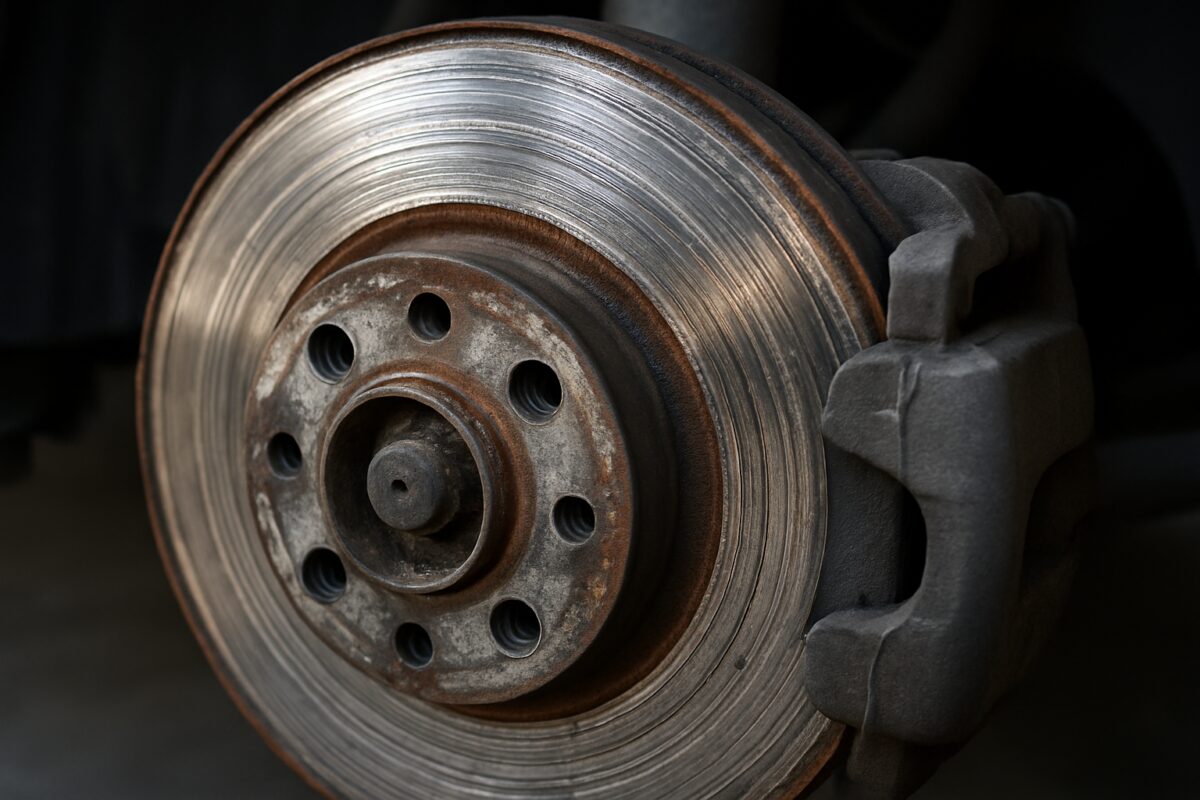
The most reliable method to assess brake disc condition involves visual inspection. Look for deep scoring marks, heavy rust deposits, or obvious warping. Fresh scoring appears as bright metal lines across the disc surface, while excessive wear creates a lip around the disc edge.
Check the disc surface for blue discolouration, which indicates overheating damage. This thermal stress compromises the metal’s structural integrity and requires immediate replacement. Cracks radiating from the disc centre or edges are also clear indicators of failure.
Compare both front discs for even wear patterns. Uneven wear suggests problems with the brake caliper, suspension components, or brake pads that need addressing alongside disc replacement.
Measuring disc thickness
Brake disc thickness directly affects braking performance and safety. Use a micrometer to measure thickness at several points around the disc. Compare readings against manufacturer specifications found in your service manual.
Most discs have minimum thickness markings stamped on the outer edge. When thickness approaches this limit, replacement becomes necessary. Uneven thickness measurements indicate warping, which causes brake pedal pulsation.
Professional tip from AutoPartsPro mechanics: Measure disc thickness at the thinnest point, not just the centre. Wear often varies across the disc surface, and the thinnest section determines replacement timing.
Record measurements for future reference. Gradual thickness reduction helps predict replacement intervals and maintenance scheduling.
Performance symptoms indicating worn discs
Brake pedal vibration during moderate to heavy braking typically indicates warped discs. This pulsation transfers through the steering wheel and brake pedal, becoming more pronounced at higher speeds.
Grinding noises suggest complete brake pad wear, allowing metal-to-metal contact with the disc. This damages both components and requires immediate attention. Squealing sounds may indicate worn pads approaching replacement time.
Increased stopping distances signal reduced braking efficiency. Test this safely in empty car parks or quiet roads. If your vehicle requires more pedal pressure or distance to stop, inspect the entire brake system including brake calipers and fluid levels.
Vehicle pulling to one side during braking indicates uneven disc wear or caliper problems. This creates dangerous handling characteristics requiring prompt investigation.
Disc surface condition assessment
Smooth, even disc surfaces provide optimal braking performance. Light surface scoring from normal wear is acceptable, but deep grooves compromise effectiveness and accelerate pad wear.
Run your fingernail across the disc surface. If it catches in grooves, the scoring is too deep for continued use. Professional resurface operations can address minor imperfections, but severely scored discs need replacement.
Heat spots appear as dark, discoloured patches on the disc surface. These hard spots create uneven braking forces and pedal vibration. Heat damage cannot be repaired and necessitates disc replacement.
Rust formation is normal on unused disc areas, but excessive corrosion affects structural integrity. Surface rust typically clears after initial brake applications, but deep pitting requires replacement.
Professional inspection recommendations
Annual brake inspections during MOT testing provide professional assessment of disc condition. However, more frequent checks benefit high-mileage drivers or those experiencing symptoms.
Garage inspections include measurements, surface analysis, and system pressure testing. Technicians assess brake balance, caliper operation, and fluid condition alongside disc evaluation.
AutoPartsPro specialists recommend brake system inspection every 12,000 miles or if any warning symptoms appear. Early detection prevents expensive damage to other components like calipers or brake lines.
Some garages offer free brake checks, particularly if purchasing replacement parts. This service identifies problems before they become safety hazards or cause additional damage.
Replacement timing and intervals
Typical brake disc replacement intervals range from 40,000 to 70,000 miles, depending on driving style, vehicle type, and brake pad quality. City driving with frequent stopping accelerates wear compared to motorway cruising.
Replace discs when thickness reaches minimum specifications, regardless of mileage. Safety regulations require adherence to manufacturer limits, and worn discs compromise stopping ability.
Consider replacing discs with brake pads for optimal performance. New pads on worn discs reduce efficiency and accelerate pad wear. Similarly, old pads on new discs create uneven contact patterns.
Monitor disc condition more frequently as vehicles age. Older brake systems may develop problems requiring earlier replacement than standard intervals suggest.
Related brake system maintenance
When replacing brake discs, inspect related components for wear or damage. Check brake calipers for proper operation, leaks, or sticking pistons that could damage new discs.
Replace brake fluid if contaminated or overdue for service. Old fluid contains moisture that reduces braking performance and corrodes system components.
Examine brake hoses for cracks, swelling, or deterioration. Flexible hoses connect rigid brake lines to moving components and require periodic replacement for safety.
Consider upgrading to higher-performance discs if experiencing frequent brake fade or driving in demanding conditions. Ventilated discs improve heat dissipation compared to solid alternatives.
Can I replace just one brake disc?
Replace brake discs in pairs to maintain even braking performance. Mismatched discs create uneven stopping forces and vehicle handling problems.
How much does brake disc replacement cost?
Brake disc replacement costs vary by vehicle type and disc quality, typically ranging from £150-400 including labour and parts for both front discs.
What happens if I ignore worn brake discs?
Continued use of worn brake discs reduces stopping ability, damages other brake components, and creates dangerous driving conditions that could result in accidents.
How long does brake disc replacement take?
Professional brake disc replacement typically takes 1-2 hours per axle, depending on vehicle complexity and whether additional components require attention.
Do I need to replace brake pads with discs?
New brake pads are recommended with disc replacement to ensure proper contact and optimal braking performance from the refreshed system components.
Regular brake disc inspection ensures optimal vehicle safety and prevents costly damage to other brake system components. Understanding these warning signs helps maintain reliable stopping performance and protects your investment. When replacement becomes necessary, choosing quality brake rotors ensures long-lasting performance and peace of mind on the road.

 Loading...