To clean alloy wheels effectively, you’ll need a specialised wheel cleaner, microfibre cloths, soft-bristled brushes, and protective equipment. Start by rinsing wheels with cold water, apply the cleaner, agitate with brushes, rinse thoroughly, and dry completely before applying a protective coating.
Tools & parts required
Getting your alloy wheels sparkling clean requires the right equipment. Having proper tools ensures you won’t damage the delicate finish whilst achieving professional results.
Parts needed:
- pH-neutral wheel cleaner or iron fallout remover
- Microfibre washing mitts and drying cloths
- Wheel wax or ceramic coating
- Tyre shine product
Tools required:
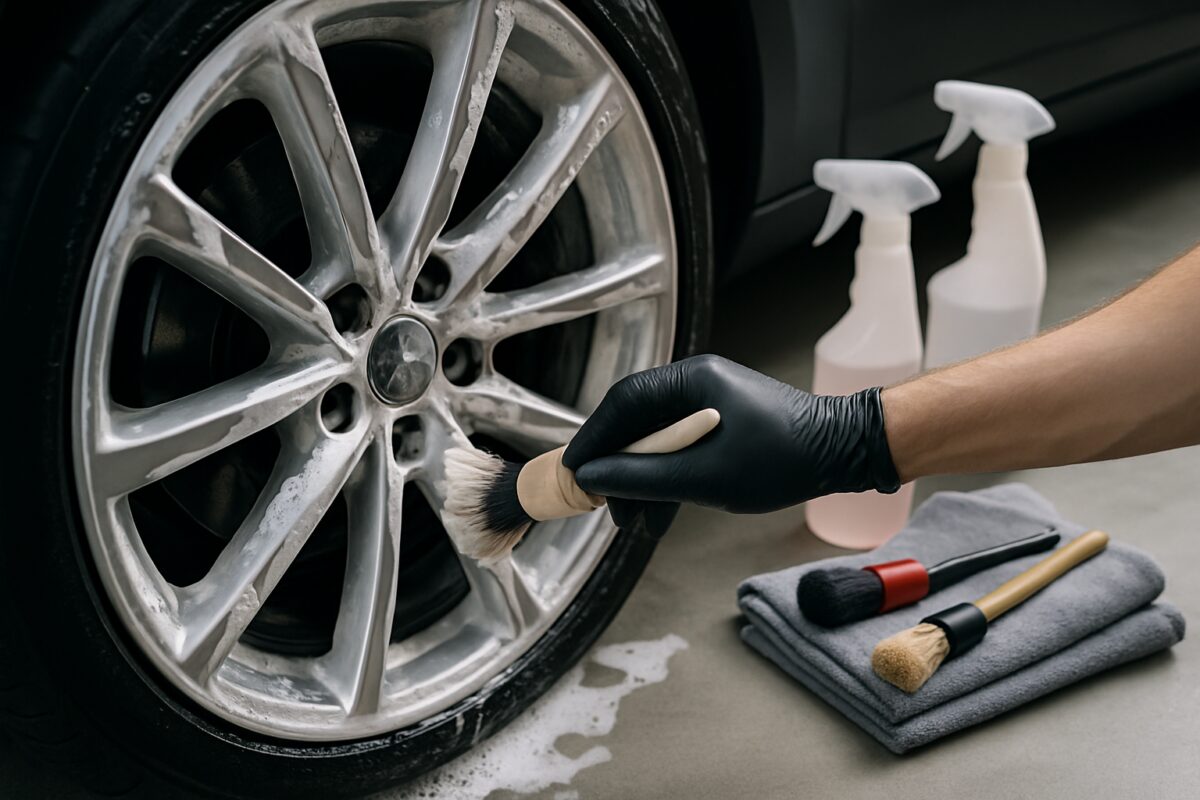
- Soft-bristled wheel brushes (various sizes)
- Pressure washer or garden hose
- Bucket for washing solution
- Plastic wheel woolies for spokes
- Detailing brushes for intricate areas
- Clean water supply
Always ensure your wheel cleaner is compatible with your specific alloy type, as some acidic cleaners can damage certain finishes permanently.
Safety precautions
Working with wheel cleaners requires proper safety measures to protect both yourself and your vehicle’s finish.
Work in a shaded area away from direct sunlight to prevent rapid drying. Wear chemical-resistant gloves and safety glasses when handling cleaning products. Ensure adequate ventilation if working indoors. Keep pets and children away from the work area.
Never clean hot wheels immediately after driving. Allow them to cool completely to prevent thermal shock and cleaning product effectiveness issues.
Step-by-step instructions
Follow this systematic approach to achieve professional-grade results whilst protecting your alloy wheels from damage.
Step 1: Initial rinse and preparation
Begin by thoroughly rinsing the wheels with cold water to remove loose dirt and road debris. This prevents scratching during the cleaning process.
Position your vehicle on level ground and engage the handbrake. Remove any wheel bolts if you’re planning to clean behind the wheels for a thorough job.
Step 2: Apply wheel cleaner
Spray your chosen wheel cleaner evenly across the entire wheel surface. Work from bottom to top to prevent streaking. Allow the product to dwell according to manufacturer instructions, typically 30-60 seconds.
For heavily contaminated wheels, consider using an iron fallout remover that changes colour as it works, indicating the breakdown of embedded brake dust particles.
Step 3: Agitate and scrub
Use soft-bristled brushes to gently agitate the cleaner, working systematically around each wheel. Pay particular attention to spoke joints and the barrel area where brake dust accumulates.
Employ different brush sizes for various areas – larger brushes for face cleaning and smaller detailing brushes for intricate spoke patterns and wheel hub areas.
Step 4: Clean the tyre and inner barrel
Don’t neglect the tyre sidewalls and inner wheel barrel. Use a dedicated tyre cleaner and appropriate brushes to remove browning and road grime.
For the inner barrel, use wheel woolies or long-handled brushes to reach areas behind the spokes where heavy brake dust buildup occurs.
Step 5: Thorough rinse and inspection
Rinse thoroughly with high-pressure water, ensuring all cleaning product residue is removed. Any remaining cleaner can cause staining or etching.
Inspect each wheel carefully for missed spots or stubborn contamination that may require additional attention before proceeding to drying.
Step 6: Dry and protect
Dry wheels immediately using clean microfibre cloths to prevent water spots. Work systematically to avoid missing areas.
Apply wheel wax or ceramic coating according to product instructions. This protective layer helps repel brake dust and makes future cleaning easier.
Common mistakes to avoid
Several common errors can damage your alloy wheels or compromise cleaning effectiveness.
Never use household cleaners like washing-up liquid or bleach, which can strip protective coatings. Avoid aggressive scrubbing with stiff brushes that can scratch the alloy surface.
Don’t clean wheels in direct sunlight, as rapid drying prevents proper cleaning action and can cause water spotting. Using dirty cloths or brushes transfers contaminants back onto clean surfaces.
Failing to rinse thoroughly leaves chemical residues that can cause permanent staining or etching of the wheel finish.
Professional tip from our mechanics: Always test new cleaning products on an inconspicuous area first to ensure compatibility with your specific wheel finish.
When should you clean alloy wheels?
Regular cleaning maintains both appearance and wheel longevity whilst preventing permanent damage from brake dust accumulation.
Clean wheels weekly during normal driving conditions, or bi-weekly for light use vehicles. Increase frequency to every few days during winter months when road salt and harsh conditions accelerate contamination.
Signs requiring immediate attention include visible brake dust buildup, discolouration, or pitting. Heavy contamination becomes progressively harder to remove and may eventually cause permanent damage.
After track days or spirited driving sessions, clean wheels immediately whilst brake dust hasn’t had time to bake onto the surface from repeated heat cycles.
Related maintenance you can do at the same time
Wheel cleaning presents an excellent opportunity to address other related maintenance tasks efficiently.
Check brake pads for wear whilst the wheels are exposed. Inspect brake rotors for scoring or excessive wear patterns.
Examine suspension components for damage or wear. Clean and inspect wheel bearings housing for contamination or damage signs.
Consider applying brake fluid inspection whilst components are accessible. Check ABS sensors for cleanliness and proper positioning.
Frequently asked questions
Can I use normal car shampoo to clean alloy wheels?
Regular car shampoo isn’t effective against brake dust and iron contamination. Use dedicated wheel cleaners designed for alloy surfaces instead.
How often should I apply wheel protection products?
Apply wheel wax every 4-6 weeks or ceramic coatings every 3-6 months, depending on driving conditions and product specifications.
Is it safe to use pressure washers on alloy wheels?
Yes, but maintain appropriate distance and pressure settings. Avoid direct high-pressure spray on brake calipers and sensitive components.
Why do my wheels still look dirty after cleaning?
Persistent staining usually indicates etched-in brake dust or incorrect cleaning products. Consider professional restoration or stronger iron fallout removers.
Can I clean wheels whilst they’re still on the car?
Absolutely. Most wheel cleaning can be accomplished without removal, though removal provides access to inner areas for thorough cleaning.
Maintaining clean alloy wheels enhances your vehicle’s appearance whilst protecting your investment from corrosive brake dust damage. Regular cleaning with proper techniques and quality products ensures your wheels remain in pristine condition. Remember that consistent maintenance prevents the need for aggressive restoration procedures that might compromise the wheel’s protective finish.

 Loading...