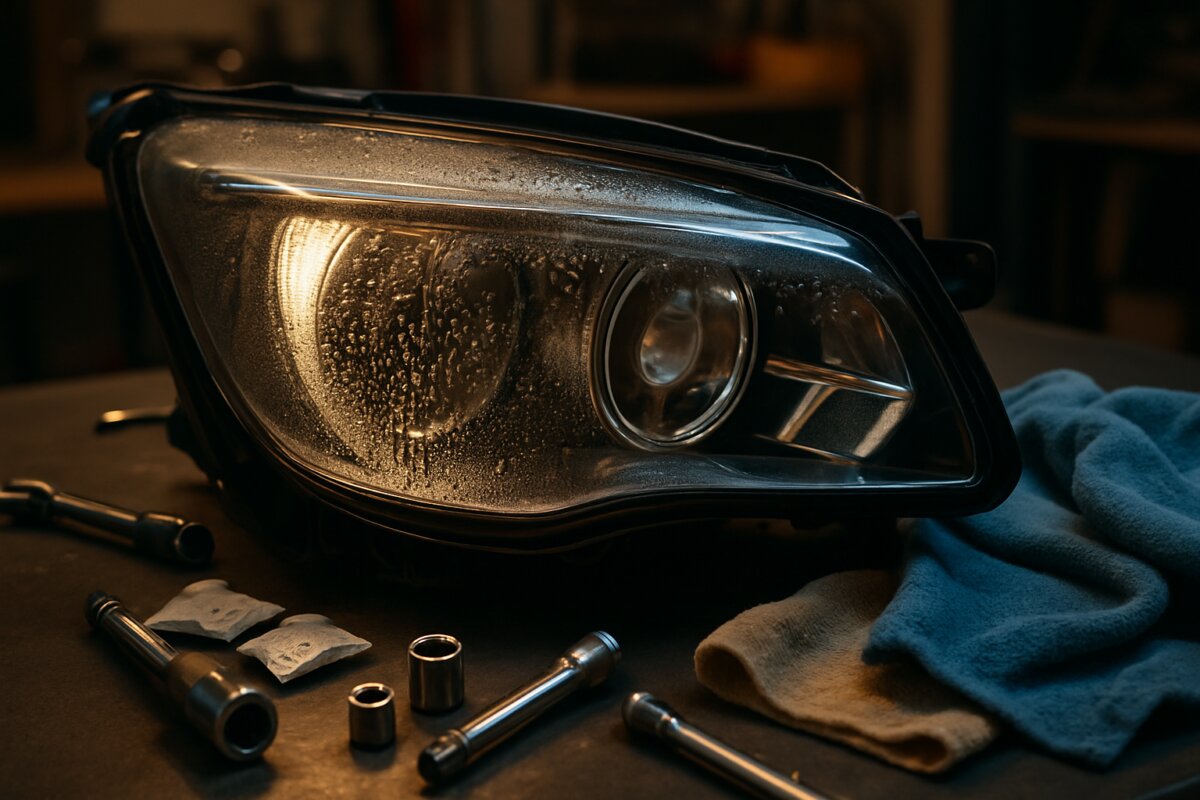
Condensation in headlights occurs when warm, moist air meets cooler headlight housing surfaces, creating water droplets inside the lens. This happens due to damaged seals, blocked ventilation systems, or temperature fluctuations. Professional removal costs £80-£200, whilst DIY methods using silica gel sachets or gentle warming typically cost £10-£30.
Tools & parts required
Tackling condensation in headlights requires specific tools and materials depending on your chosen approach. Having the right equipment ensures effective moisture removal without damaging delicate headlight components.
Parts needed:
- Silica gel sachets (automotive grade)
- Replacement headlight seals
- Sealant compound (polyurethane-based)
- Microfibre cloths
- Distilled water
Tools required:
- Hair dryer or heat gun (low setting)
- Socket set for headlight removal
- Torx screwdrivers
- Vacuum pump (for severe cases)
- Digital thermometer
- Inspection torch
Always ensure replacement seals match your specific headlight model and year of manufacture. Generic seals often fail prematurely, leading to recurring condensation issues.
Safety precautions
Working with headlight assemblies requires careful attention to safety protocols. Modern headlights contain delicate electronics and high-intensity discharge (HID) components that demand proper handling procedures.
Always disconnect the battery before removing headlight assemblies to prevent electrical shorts. Work in a well-ventilated area when using heat sources or chemical sealants. Wear safety glasses and nitrile gloves to protect against glass fragments and chemicals. Never use excessive heat on plastic headlight housings, as temperatures above 80°C can cause permanent warping or cracking.
Step-by-step instructions
Removing condensation from headlights follows a systematic approach that addresses both immediate moisture removal and long-term prevention. The process varies slightly depending on headlight design and severity of condensation buildup.
Step 1: Assess the condensation severity
Begin by examining the extent of moisture accumulation inside your headlight housing. Light condensation appears as a thin film, whilst severe cases show visible water droplets or pooling. Document the affected areas with photographs for reference during reassembly.
Check for obvious seal damage around the headlight perimeter and look for missing or displaced ventilation caps. Use an inspection torch to identify any cracks in the housing or lens that might allow moisture ingress.
Step 2: Remove the headlight assembly
Access the headlight mounting bolts through the engine bay or wheel arch, depending on your vehicle design. Use your socket set to carefully remove the retaining bolts, typically three or four per headlight. Disconnect the electrical connectors, noting their positions for correct reassembly.
Support the headlight weight whilst removing the final mounting point to prevent damage to the housing or surrounding bodywork. Place removed headlights on a clean, padded surface away from direct sunlight.
Step 3: Create controlled ventilation
Position the headlight assembly in a warm, dry environment with good airflow. Remove any access panels or ventilation caps that can be safely detached. This allows trapped moisture to escape naturally through the headlight’s existing ventilation system.
For stubborn condensation, place silica gel sachets near the ventilation openings and use a hair dryer on low heat setting to gently warm the housing. Maintain a distance of at least 30cm to prevent overheating.
Step 4: Apply vacuum extraction
If natural evaporation proves insufficient, connect a vacuum pump to the headlight’s ventilation system. This creates negative pressure that draws moisture out more effectively than passive methods. Monitor the process carefully to avoid damaging internal reflectors or light bulbs.
Professional workshops often use specialised equipment for this step, but careful DIY application using aquarium pumps can achieve similar results for persistent moisture problems.
Step 5: Seal and test
Once completely dry, inspect all sealing surfaces for damage or deterioration. Replace compromised seals with OEM-specification components to ensure proper fitment. Apply fresh sealant compound to mounting surfaces, following manufacturer torque specifications during reassembly.
Reconnect electrical connections and test all headlamp functions before final installation. Check beam alignment and ensure no warning lights appear on your dashboard after reconnecting the battery.
Common mistakes to avoid
Many DIY attempts at condensation removal fail due to preventable errors that can worsen the problem or damage expensive headlight assemblies. Understanding these pitfalls saves both time and money whilst ensuring lasting results.
Never drill holes in headlight housings for drainage, as this compromises structural integrity and creates multiple leak points. Avoid using compressed air at high pressure, which can force moisture deeper into the assembly or damage delicate internal components.
Don’t ignore the root cause by simply removing visible moisture. Failing to replace damaged seals or clear blocked ventilation systems guarantees condensation will return. Excessive heat application exceeding 80°C can warp plastic housings permanently, requiring complete headlight replacement.
Using household desiccants like rice or standard silica gel packets is ineffective and potentially harmful. These materials aren’t designed for automotive applications and may introduce contaminants into your headlight assembly.
When should you replace headlight seals?
Headlight seals typically require replacement every 5-7 years or 60,000-80,000 miles, depending on driving conditions and climate exposure. However, several indicators suggest immediate seal replacement regardless of age or mileage.
Recurring condensation within weeks of clearing indicates seal failure that won’t resolve with temporary measures. Visible cracking, hardening, or separation of rubber seals around the headlight perimeter demands immediate attention to prevent water ingress and electrical damage.
Vehicles frequently driven in coastal areas or regions with extreme temperature variations experience accelerated seal degradation. Salt exposure and thermal cycling break down rubber compounds faster than normal wear patterns.
If you notice condensation appearing after car washes or heavy rain, this suggests compromised sealing that allows direct water entry rather than atmospheric moisture buildup.
Related maintenance you can do at the same time
When addressing headlight condensation, several related maintenance tasks can be completed efficiently during the same service session. This approach maximises your time investment and ensures comprehensive headlight system care.
Replace your cabin filter if it shows signs of moisture damage or musty odours, as this often indicates broader ventilation system issues. Check and clean the windscreen washer jets whilst working in the front end area.
Inspect radiator hoses for signs of deterioration, particularly where they pass near headlight assemblies. Heat and moisture cycles that cause headlight condensation also accelerate rubber hose degradation.
Consider upgrading to LED bulbs if your headlights still use halogen technology. LEDs generate significantly less heat, reducing thermal cycling that contributes to seal degradation and condensation formation.
Our AutoPartsPro specialists recommend inspecting headlight seals during routine MOT preparations, as moisture ingress often worsens during winter months when temperature differentials are greatest.
Frequently asked questions
How long does headlight condensation take to clear naturally?
Light condensation typically clears within 2-4 hours of driving with headlights on. Severe moisture buildup may require 24-48 hours of dry conditions or active intervention methods.
Can I use a microwave to dry out headlight assemblies?
Never use microwaves for headlight drying. Microwave energy can damage electronic components and create dangerous hot spots in plastic housings that cause permanent warping or cracking.
Will condensation damage my headlight’s internal components?
Extended moisture exposure can corrode electrical contacts, damage reflective coatings, and promote fungal growth. Early intervention prevents permanent damage and maintains optimal light output performance.
Is headlight condensation covered under vehicle warranty?
Most manufacturers consider condensation a wear item after the first year. However, manufacturing defects causing premature seal failure may qualify for warranty coverage if documented properly.
Can I prevent headlight condensation from occurring?
Regular seal inspection, parking in covered areas when possible, and addressing minor leaks immediately significantly reduce condensation risk. Complete prevention isn’t possible due to natural thermal cycling.
Professional headlight restoration combines moisture removal with comprehensive seal replacement for long-lasting results. Using quality replacement components and proper installation techniques ensures your headlights remain clear and functional through all driving conditions.

 Loading...