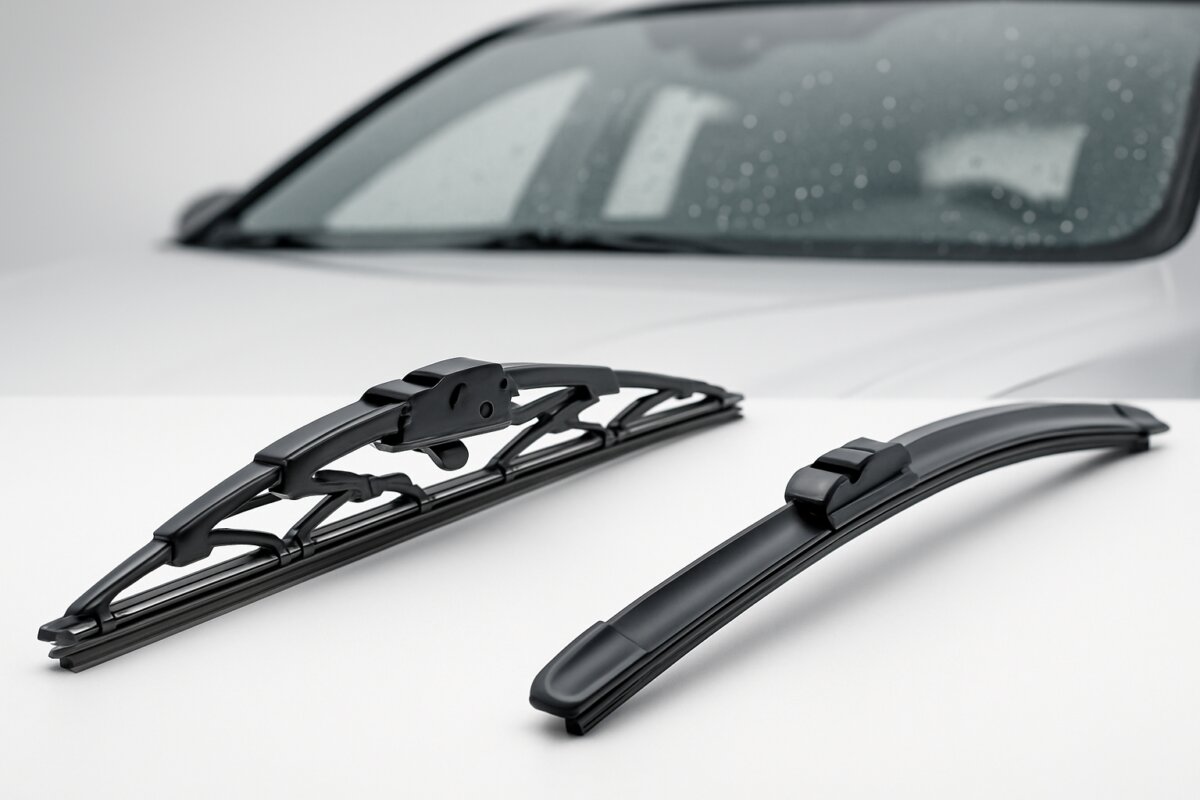
When comparing Bosch AeroEco vs Bosch Aerotwin, the fundamental difference lies in design and price: Aerotwin features a premium frameless beam blade construction with superior aerodynamics and quieter operation, whilst AeroEco offers conventional framed blade technology at a more budget-friendly price point. Both deliver reliable wet-weather performance, but Aerotwin typically lasts 25-30% longer and suits drivers wanting the best possible visibility, whereas AeroEco serves cost-conscious motorists perfectly well for standard daily driving conditions.
Quick comparison table
| Feature | Bosch AeroEco | Bosch Aerotwin |
|---|---|---|
| Price range | £8-£15 per blade | £18-£35 per blade |
| Construction | Framed metal structure | Frameless beam design |
| Durability | 6-12 months typical | 12-18 months typical |
| Performance | Good in standard conditions | Excellent in all weather |
| Noise level | Moderate (occasional chatter) | Very quiet operation |
| Maintenance | Standard cleaning needed | Minimal maintenance required |
| Best use case | Budget-conscious daily drivers | Premium cars and demanding conditions |
Bosch AeroEco overview
The Bosch AeroEco represents the manufacturer’s economical solution for drivers who need dependable wiper performance without breaking the bank. This conventional blade design has served motorists reliably for decades, proving that traditional engineering still has its place in modern motoring.
AeroEco blades use a metal frame structure with multiple pressure points that distribute force across the windscreen. The natural rubber compound delivers consistent wiping action, whilst the galvanised steel framework resists corrosion from road salt and harsh weather. This straightforward design makes them particularly easy to fit, with most drivers managing replacement in under five minutes.
From a technical perspective, the AeroEco employs six to eight pressure points depending on blade length. These contact points ensure even pressure distribution, preventing the annoying streaking that occurs with cheaper alternatives. The rubber compound includes graphite coating, which reduces friction and extends operational life beyond basic aftermarket options.
Pricing sits between £8-£15 per blade, making them roughly half the cost of premium alternatives. Our mechanics at AutoPartsPro notice that drivers replacing windscreen wipers frequently choose AeroEco when they’re maintaining older vehicles or simply want reliable performance without premium pricing.
Pros of Bosch AeroEco
- Significantly lower purchase price makes budget management easier
- Simple frame design allows quick DIY installation
- Wide vehicle compatibility across most makes and models
- Proven technology with decades of reliability data
- Replacement parts readily available at most auto shops
Cons of Bosch AeroEco
- Metal frame can ice up during winter conditions
- Higher wind noise at motorway speeds compared to beam blades
- Shorter operational lifespan requires more frequent replacement
- Rubber compound hardens faster in extreme temperatures
- Less effective pressure distribution on curved windscreens
Ideal drivers for AeroEco
AeroEco blades suit drivers with older vehicles where original equipment specifications called for conventional frame wipers. They’re perfect for second cars, commercial vehicles with regular service schedules, or anyone maintaining multiple vehicles on a fixed budget. If you’re covering modest annual mileage—say under 10,000 miles yearly—and don’t face extreme weather regularly, these represent sensible value.
Top tip: Replace both AeroEco blades simultaneously rather than individually. Mismatched wear patterns between old and new blades create uneven clearing performance that frustrates drivers unnecessarily.
Bosch Aerotwin overview
Aerotwin represents Bosch’s flagship wiper technology, incorporating lessons learned from original equipment partnerships with premium manufacturers. These beam blades eliminate the traditional metal framework entirely, using a flat spring steel strip encased within the rubber element itself.
This frameless construction delivers consistent pressure distribution across the entire blade length, adapting to modern curved windscreen profiles far more effectively than framed alternatives. The absence of external framework means snow and ice cannot accumulate on metal joints, maintaining full functionality during harsh winter conditions that would cripple conventional designs.
The rubber compound in Aerotwin blades includes advanced polymers with dual rubber technology. This engineering approach combines a firm base layer for structural integrity with a softer wiping edge for superior contact. Power Protection Plus coating adds weather resistance, whilst precision-moulded spoiler elements generate downforce at higher speeds, preventing blade lift-off that causes streaking.
Installation uses Bosch’s Quick-Clip system, accommodating various wiper arm attachment types without additional adapters in most cases. Pricing ranges from £18-£35 per blade depending on length and vehicle application, positioning Aerotwin firmly in the premium segment.
Our AutoPartsPro specialists observe that customers upgrading to Aerotwin rarely revert to conventional blades afterwards. The performance difference becomes particularly noticeable during heavy rainfall or after several months of use when cheaper alternatives begin deteriorating.
Pros of Bosch Aerotwin
- Frameless design prevents ice accumulation in winter weather
- Significantly quieter operation eliminates annoying blade chatter
- Superior pressure distribution suits modern curved windscreens
- Extended service life reduces replacement frequency and hassle
- Pre-assembled design speeds up installation process considerably
- Integrated spoiler improves high-speed stability and contact
Cons of Bosch Aerotwin
- Higher initial investment may deter budget-conscious buyers
- Limited compatibility with older vehicle wiper systems
- Cannot replace individual components if one section fails
- Some older drivers prefer familiar conventional blade styling
Ideal drivers for Aerotwin
Aerotwin suits drivers with modern vehicles featuring curved windscreens, particularly premium marques where these often come as factory equipment. If you’re covering high annual mileage, frequently driving in challenging weather, or simply value the best possible visibility and refinement, the additional investment pays dividends. Company car drivers and those maintaining newer vehicles benefit most from the extended service intervals and superior performance.
Top tip: Check your vehicle’s handbook before purchasing Aerotwin blades. Some older wiper arm designs lack the necessary attachment points, requiring retrofit adapters that may affect blade positioning and performance.
Compatibility considerations
Vehicle compatibility represents the primary concern when selecting between these Bosch options. AeroEco blades typically fit the widest range of vehicles, accommodating standard hook fittings, side pins, and bayonet connections found on models from the 1990s through mid-2010s. This versatility makes them excellent universal replacements.
Aerotwin compatibility focuses on vehicles manufactured from approximately 2005 onwards, particularly those with aerodynamic designs and curved windscreens. Many premium manufacturers specify Aerotwin as original equipment on their production lines, meaning these vehicles were engineered specifically for beam blade technology.
When checking fitment, you’ll need three pieces of information: your vehicle’s make, model, and year of manufacture. Blade length requirements differ between driver and passenger sides on most cars. The driver’s side typically requires a longer blade—often 24-26 inches—whilst the passenger side uses 16-20 inches. Getting these measurements wrong results in either inadequate coverage or interference between blades.
Model year considerations matter tremendously. Manufacturers often change wiper specifications during mid-cycle refreshes or facelifts. A 2008 Ford Focus may require different blades than a 2010 model despite appearing identical. Always verify against your specific registration year rather than assuming compatibility based on similar models.
OEM specifications matter for maintaining warranty coverage on newer vehicles. If your car is still under manufacturer warranty, using approved blade types prevents potential disputes about maintenance compliance. Many premium brands specify beam blade technology as mandatory, making Aerotwin the appropriate choice regardless of preference.
Installation notes for both types are straightforward but differ slightly. AeroEco requires you to select the correct adapter for your vehicle’s wiper arm type, then slide the blade into position until the locking clip engages. Aerotwin’s integrated Quick-Clip system self-adjusts to most arm types, though older vehicles may need retrofit adapters.
Our mechanics recommend cleaning the windscreen washer jet openings when fitting new blades. Clogged jets reduce cleaning effectiveness, forcing you to run wipers on dry glass, which accelerates rubber deterioration regardless of blade quality. Similarly, inspect your windshield washer pump operation to ensure proper fluid delivery.
Final verdict and buying recommendation
Choose Bosch AeroEco if you’re maintaining an older vehicle, managing a tight maintenance budget, or replacing blades on a second car that sees limited use. These conventional blades deliver dependable performance for standard driving conditions, particularly when you’re not covering significant motorway mileage or facing extreme weather regularly. They’re also sensible for commercial fleet vehicles where replacement frequency matters less than initial cost.
Select Bosch Aerotwin when driving a modern vehicle with a curved windscreen, covering high annual mileage, or simply wanting the best possible visibility and refinement. The premium investment delivers tangible benefits: quieter operation, longer service life, superior wet-weather performance, and winter reliability. If your car originally came with beam blades, stick with Aerotwin specification to maintain the performance the manufacturer intended.
For drivers maintaining multiple vehicles, consider a mixed approach: fit Aerotwin to your primary car driven daily in all conditions, whilst AeroEco serves weekend vehicles or those garaged during winter months. This strategy balances performance where it matters most with budget consciousness for occasional-use vehicles.
The long-term cost analysis favours Aerotwin despite higher initial pricing. If AeroEco lasts eight months and costs £12, you’ll spend approximately £36 over two years on three replacement sets. Two Aerotwin blades at £25 each, lasting 18 months, total £50 but require just one replacement cycle. Factor in the hassle reduction and superior performance, and Aerotwin represents genuine value for regular drivers.
From our AutoPartsPro experience with thousands of customers, we notice that drivers who upgrade from conventional to beam blades rarely revert. The improvement in visibility during heavy rain and elimination of blade chatter significantly enhance driving comfort and safety. However, if budget constraints make Aerotwin unviable, AeroEco remains vastly superior to generic aftermarket alternatives.
Don’t forget to maintain other visibility-related components. Check your cabin filter regularly, as a clogged pollen filter reduces demisting effectiveness, working against even the best wiper blades. Similarly, verify that your blower motor operates correctly to maintain clear glass in all weather conditions.
Frequently asked questions
Can I mix AeroEco and Aerotwin on the same vehicle?
Technically possible but strongly discouraged. Different blade technologies create mismatched wiping patterns and pressure distribution. One blade clearing effectively whilst the other leaves streaks proves more distracting than having matched pairs of either type. Always fit identical blade types to both positions for optimal performance.
How often should I replace Bosch wiper blades?
Replace AeroEco blades every 6-12 months depending on usage intensity and weather exposure. Aerotwin typically lasts 12-18 months under similar conditions. Visual indicators include streaking, chattering noise, or visible rubber deterioration. Don’t wait for complete failure; degraded blades reduce visibility dangerously during sudden downpours.
Do Aerotwin blades work better in winter conditions?
Absolutely. The frameless design prevents ice and snow accumulation on metal joints that freeze conventional blades solid. The enclosed spring steel maintains flexibility in sub-zero temperatures whilst the rubber compound resists hardening. This makes Aerotwin substantially more reliable during British winter weather compared to framed alternatives like AeroEco.
Are cheaper supermarket wiper blades just as good as Bosch?
Not remotely comparable. Budget blades use inferior rubber compounds that harden quickly and cheaper frames that corrode faster. Bosch invests heavily in material science and testing. Our mechanics see budget blades failing within weeks whilst quality Bosch products deliver months of reliable service. The small saving isn’t worth compromised visibility and safety.
Will Aerotwin blades fit my older car?
Possibly, but check compatibility carefully. Vehicles manufactured before 2005 typically used hook-style connections that may require retrofit adapters. The wiper linkage mechanism must also provide adequate clearance for beam blade thickness. Consult fitment guides or contact AutoPartsPro specialists to verify before purchasing to avoid disappointment and returns.

 Loading...