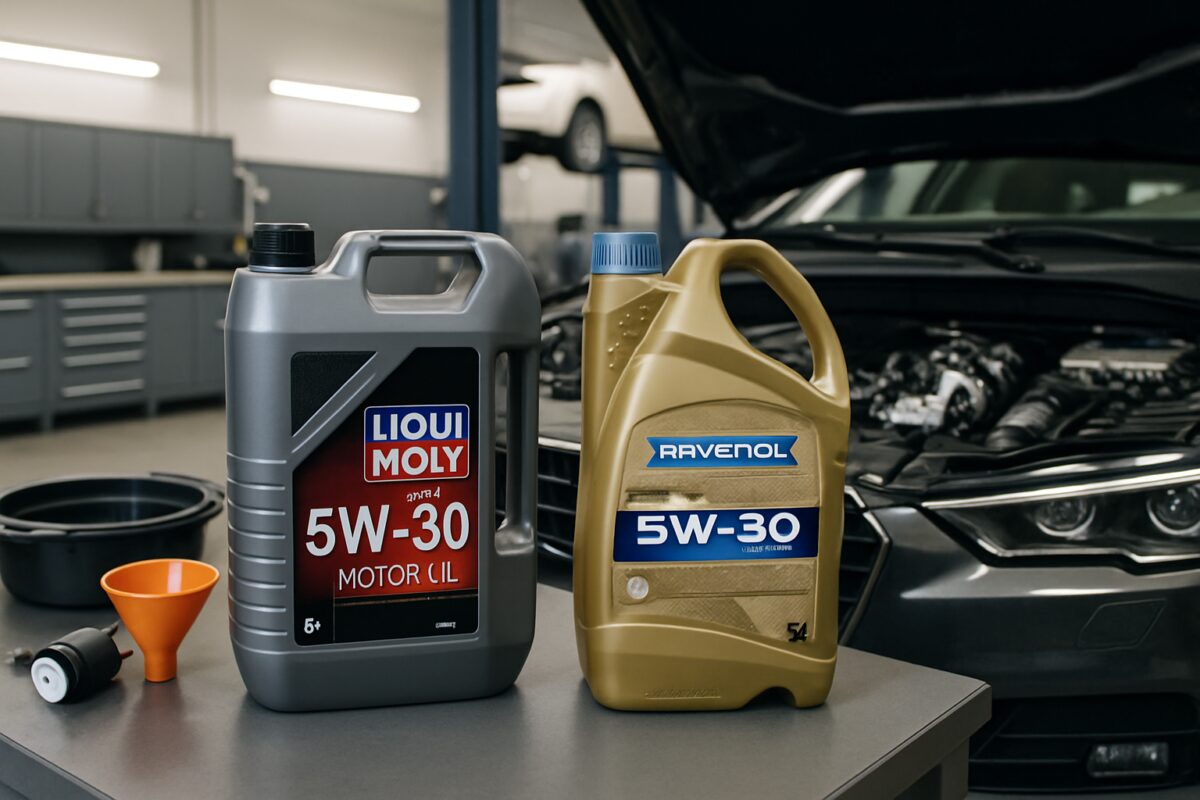
Both Liqui Moly and Ravenol represent premium German lubricant technology, but they excel in different areas. Liqui Moly offers superior additive technology with excellent cold-start protection, whilst Ravenol provides outstanding high-temperature stability and extended service intervals. For most UK drivers, Liqui Moly delivers better value for daily driving conditions, while Ravenol suits high-performance and commercial applications where maximum durability is essential.
Quick comparison table
| Feature | Liqui Moly | Ravenol |
|---|---|---|
| Price range | £25-45 per 5L | £30-55 per 5L |
| Cold start protection | Excellent (-40°C) | Very good (-35°C) |
| High temp performance | Very good (150°C) | Excellent (160°C) |
| Service intervals | 15,000-20,000km | 20,000-30,000km |
| Additive technology | MoS2, Ceratec | CleanSynto, PAO |
| Best use case | Daily driving, older engines | High performance, commercial |
Liqui Moly overview
Liqui Moly represents one of Germany’s most innovative lubricant manufacturers, renowned for their unique additive technology. The company’s signature molybdenum disulphide (MoS2) additives create a protective film on engine oil contact surfaces, reducing friction even when the oil film breaks down.
Their product range spans from conventional minerals to full synthetics, with popular grades including 5W-30, 5W-40, and 10W-40 formulations. Typical prices range from £25-45 for 5 litres, positioning them in the premium segment without reaching ultra-premium pricing.
Pros:
- Exceptional cold-start protection down to -40°C
- Unique MoS2 additive technology reduces wear
- Excellent compatibility with older engine seals
- Comprehensive product range for all applications
- Strong brand reputation in European markets
Cons:
- Higher pricing than mainstream brands
- Some additives may cause issues with certain sensors
- Shorter service intervals compared to competitors
Liqui Moly suits drivers seeking proven German engineering for daily driving conditions. Their oils work particularly well in older vehicles where seal compatibility matters, and in regions with harsh winter conditions where cold-start protection is crucial.
Ravenol overview
Ravenol specialises in high-performance synthetic lubricants using advanced PAO (polyalphaolefin) and ester base stocks. Their CleanSynto technology combines synthetic bases with carefully selected additives to deliver exceptional thermal stability and extended drain intervals.
The brand focuses on professional and enthusiast markets, offering oils that meet the strictest OEM approvals from Mercedes, BMW, Volkswagen, and Porsche. Pricing typically ranges from £30-55 for 5 litres, reflecting their position as a premium specialist brand.
Pros:
- Outstanding high-temperature stability up to 160°C
- Extended service intervals up to 30,000km
- Excellent shear stability maintains viscosity
- Wide range of OEM-approved specifications
- Superior performance in turbocharged engines
Cons:
- Higher cost per litre than most competitors
- Limited availability in some UK regions
- May be over-specification for basic engines
Ravenol targets performance-oriented drivers, commercial operators, and owners of high-specification vehicles. Their oils excel in demanding conditions where maximum protection and extended service life justify the premium cost.
Compatibility considerations
Both brands offer comprehensive vehicle compatibility, but specific considerations apply for UK drivers. Liqui Moly provides excellent coverage for European manufacturers, with particular strength in Volkswagen Group, BMW, and Mercedes approvals.
For model year considerations, vehicles from 2010 onwards typically require low-SAPS (sulphated ash, phosphorus, sulphur) formulations to protect particulate filter systems. Both brands offer appropriate specifications like ACEA C3 and C4.
OEM specifications vary significantly between manufacturers. Volkswagen’s 502.00/505.00 standards differ from BMW’s Longlife-04 requirements, whilst Mercedes’ MB 229.52 specification demands specific additive packages. Always verify the exact specification required for your vehicle before purchase.
Professional tip: Check your owner’s manual for the specific ACEA grade and OEM approval codes. Using incorrect specifications can void warranty coverage and potentially damage modern emissions control systems.
Installation considerations include oil filter compatibility and drain intervals. Some high-performance oils require specific filter types to maintain their extended service capabilities.
Final verdict
Choose Liqui Moly for daily driving scenarios where proven additive technology and cold-start protection matter most. Their oils offer excellent value for typical UK driving conditions, particularly in older vehicles or those operating in challenging weather.
Select Ravenol for high-performance applications, commercial use, or vehicles requiring extended service intervals. Despite higher costs, their superior thermal stability and longevity can provide better long-term value in demanding applications.
For most UK drivers operating modern vehicles under normal conditions, Liqui Moly’s 5W-30 Top Tec 4200 provides optimal balance of performance and cost. Performance car enthusiasts should consider Ravenol’s VMP 5W-30 for maximum protection under extreme conditions.
Expert insight: At AutoPartsPro, our mechanics frequently recommend Liqui Moly for customers seeking reliable protection without premium pricing, whilst specifying Ravenol for high-performance builds where maximum protection justifies the additional cost.
Frequently asked questions
Which oil provides better fuel economy?
Both brands offer low-friction formulations, but Liqui Moly’s MoS2 additives typically provide slightly better fuel economy improvements in older engines through reduced internal friction.
Can I mix Liqui Moly with Ravenol oils?
Whilst both are high-quality synthetic oils, mixing different brands isn’t recommended as additive packages may interact unpredictably, potentially reducing performance benefits.
Which brand offers longer service intervals?
Ravenol generally supports longer drain intervals up to 30,000km in suitable applications, compared to Liqui Moly’s typical 15,000-20,000km recommendations.
Do these oils work in older vehicles?
Liqui Moly typically offers better seal compatibility for vehicles over 10 years old, whilst Ravenol’s advanced synthetics may cause seal swelling in very old engines.
Which provides better winter starting?
Liqui Moly excels in cold-start conditions with protection down to -40°C, making it superior for UK winter driving compared to Ravenol’s -35°C rating.

 Loading...