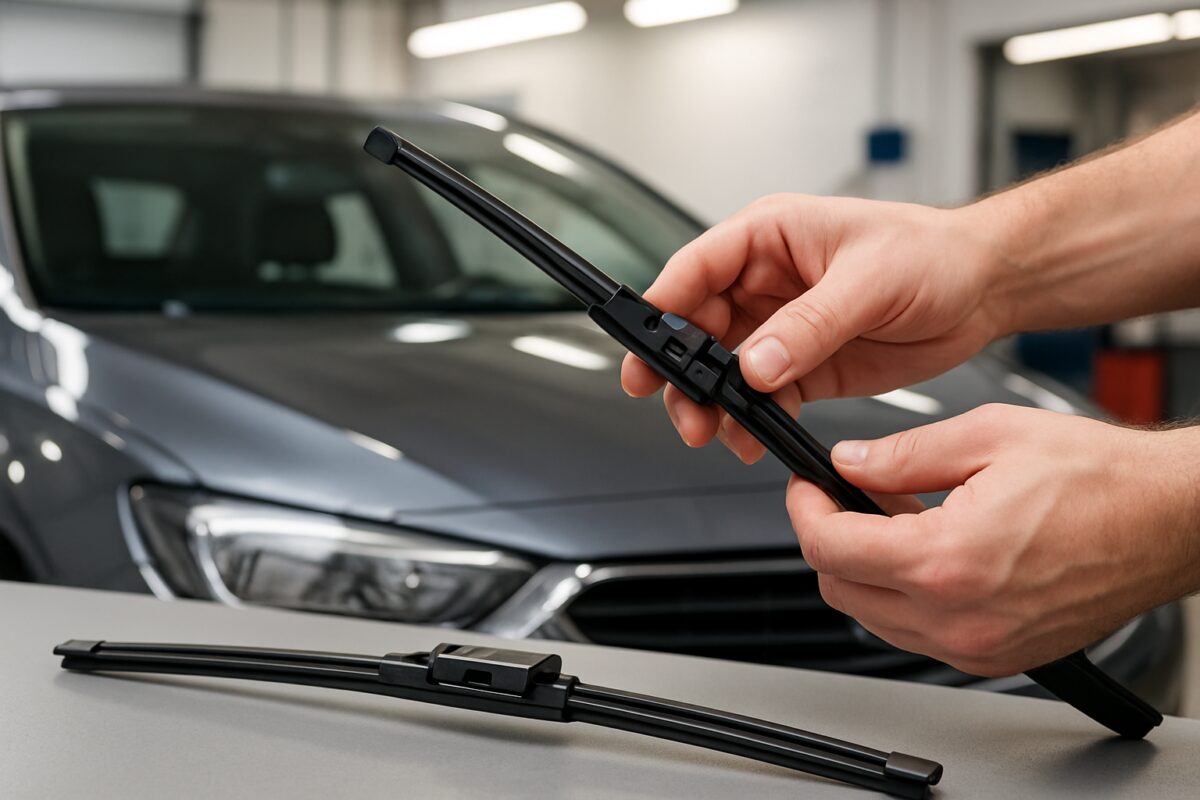
Replacing windshield wipers involves removing the old wiper arm and blade assembly, then installing new wipers that match your vehicle’s specifications. This straightforward maintenance task requires basic tools and typically takes 10-15 minutes per wiper. Most vehicles use either hook, pin, or bayonet-style attachment mechanisms.
Tools and parts required
Before starting your wiper replacement, gather the necessary components. Having everything ready saves time and prevents interruptions during the installation process.
Parts needed:
- Windscreen wipers (vehicle-specific size and fitment)
- Replacement wiper arms (if damaged)
- Protective caps or covers (some premium models)
Tools required:
- Clean microfibre cloth
- Glass cleaning solution
- Small flathead screwdriver (for some clip types)
- Measuring tape (if unsure of sizes)
- Work gloves (optional but recommended)
Safety precautions
Exercise caution when lifting wiper arms, as they can spring back forcefully against the windscreen. Handle the arms gently to prevent damage to the glass or wiper mechanism. Work in a well-lit area and ensure the vehicle is parked on level ground with the engine switched off.
Step-by-step instructions
Step 1: Position the wiper arms
Turn your ignition to the accessory position and activate the wipers. When they reach the middle of their sweep cycle, switch off the ignition. This positions the arms for easier access and removal.
Carefully lift each wiper arm away from the windscreen. Most arms will hold their position when lifted, but some may require gentle support to prevent them falling back.
Step 2: Remove the old wiper blades
Locate the attachment point where the blade connects to the arm. Common types include hook-style clips, pin connections, and bayonet fittings. For hook-style attachments, look for a small tab or lever that releases the blade.
Press the release mechanism whilst sliding the blade away from the hook. Pin-type connections require pushing a small button or pressing tabs whilst pulling the blade free. Handle this step carefully to avoid bending the attachment points.
Step 3: Prepare the new wipers
Unpack your new wipers and identify the correct orientation. Most blades have a slight curve that should follow the windscreen’s contour. Check that the attachment mechanism matches your wiper arm design.
Some premium wipers include multiple adapter pieces. Select the appropriate adapter for your vehicle’s arm type before proceeding with installation.
Step 4: Install the new wipers
Align the new blade with the wiper arm attachment point. For hook-style arms, slide the blade onto the hook until you hear or feel it click into place. The release tab should snap down to secure the connection.
Pin-type connections require aligning the blade’s socket with the arm’s pin, then pushing firmly until the locking mechanism engages. Test the connection by gently tugging the blade to ensure it’s properly secured.
Step 5: Test and adjust
Lower both wiper arms carefully back onto the windscreen. Start the engine and test the wipers at different speeds. Listen for unusual noises and watch for proper contact across the entire windscreen surface.
If the wipers chatter or leave streaks, check that they’re properly seated and haven’t been installed upside down. Some adjustment may be needed to achieve optimal performance.
Professional tip: Always replace wipers in pairs, even if only one appears worn. Mismatched wipers can cause uneven cleaning and premature wear of the newer blade.
Common mistakes to avoid
Installing the wrong size wipers is a frequent error that reduces cleaning effectiveness. Always verify blade lengths before purchase, as front wipers often differ in size.
Forcing the attachment mechanism can damage both the blade and wiper arm. If the connection doesn’t slide together easily, double-check that you’re using the correct orientation and adapter piece.
Dropping the wiper arm onto the windscreen without a blade attached can cause glass damage. Always maintain control of the arm throughout the replacement process.
Neglecting to clean the windscreen before testing new wipers can mask performance issues. Dirt and debris can make even new wipers appear ineffective.
Expert insight: Our mechanics at AutopartsPro recommend checking wiper fluid levels when replacing blades. Clean wipers work best with proper lubrication from quality washer fluid.
When should you replace windshield wipers?
Replace wipers every 6-12 months, depending on usage and weather conditions. Signs that indicate replacement time include streaking, chattering, or incomplete cleaning of the windscreen.
Visible wear such as cracked rubber, bent frames, or missing pieces of the cleaning edge means immediate replacement is necessary. Wipers that skip across the glass or leave large unwiped areas have exceeded their useful life.
Environmental factors like extreme temperatures, frequent use, and exposure to UV radiation accelerate wiper deterioration. Vehicles parked outdoors typically need more frequent replacements than garage-kept cars.
Related maintenance you can do at the same time
While replacing wipers, consider servicing other visibility-related components. Check and replace your cabin filter to improve interior air quality and defogger performance.
Inspect headlights for clarity and proper function. Clean or replace headlamp units that show signs of yellowing or damage.
Service the windscreen washer system by cleaning jets and checking fluid levels. Replace any damaged washer jets that don’t spray effectively.
Check the condition of wiper motor operation by testing all speed settings. Unusual noises or erratic movement may indicate pending motor failure.
Frequently asked questions
How often should I replace my windshield wipers?
Most wipers need replacement every 6-12 months. However, harsh weather conditions, frequent use, and prolonged sun exposure can reduce this timeframe significantly.
Can I replace just one wiper blade?
While possible, it’s recommended to replace both front wipers together. Mismatched wear patterns and cleaning performance can result from using one new and one old blade.
What size wipers does my car need?
Wiper sizes vary by vehicle model and year. Check your owner’s manual, measure existing blades, or consult AutopartsPro’s vehicle compatibility tool for accurate sizing.
Why do my new wipers streak?
New wipers may streak due to windscreen contamination, incorrect installation, or manufacturing residue on the rubber. Clean the windscreen thoroughly and allow new blades time to conform.
Can I install wiper blades myself?
Yes, wiper replacement is a straightforward DIY task requiring no special tools. Most drivers can complete the job in 15-20 minutes with basic preparation and care.
Proper wiper maintenance ensures clear visibility during adverse weather conditions. Quality replacement blades, correct installation, and regular inspection keep your windscreen cleaning system functioning optimally. Investing in premium wipers and following manufacturer specifications delivers reliable performance and enhanced driving safety throughout the year.

 Loading...